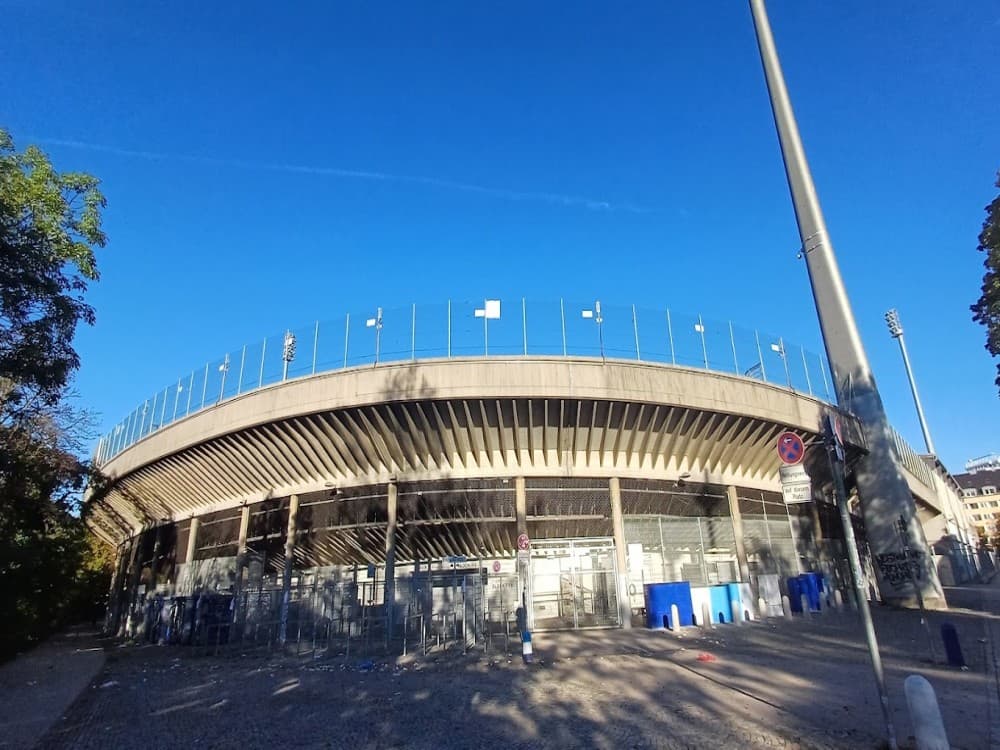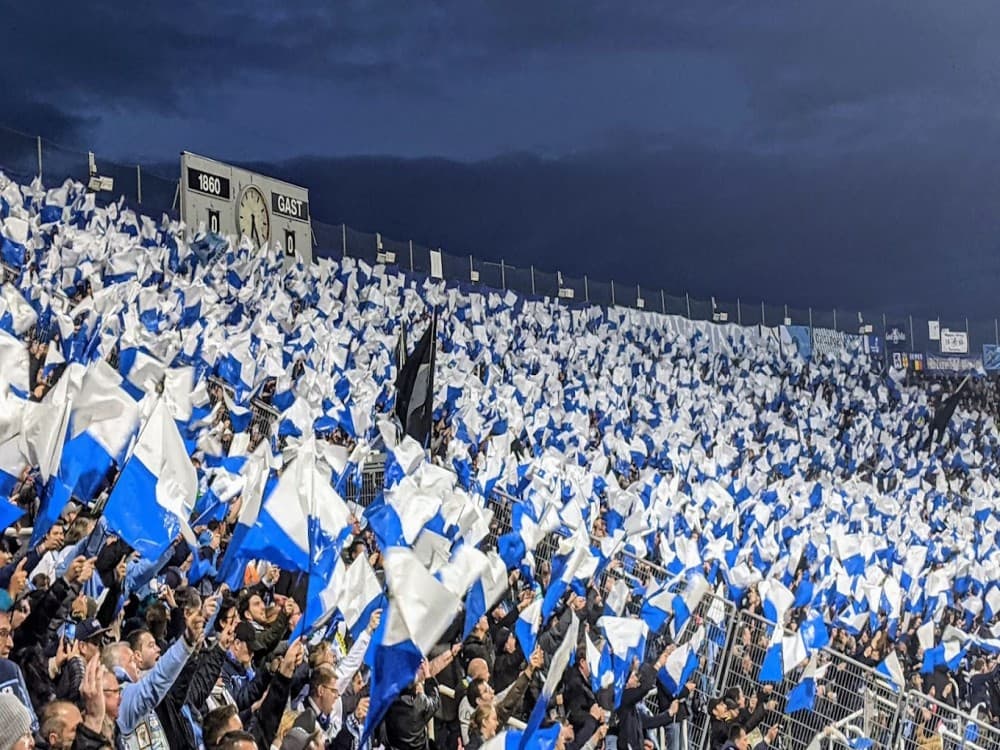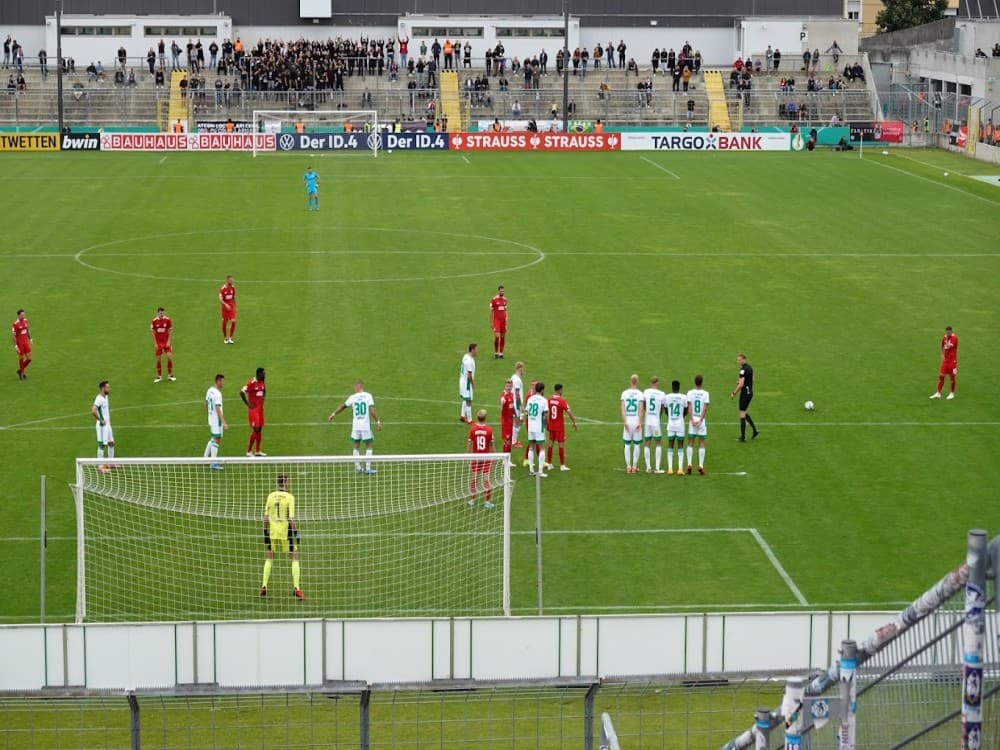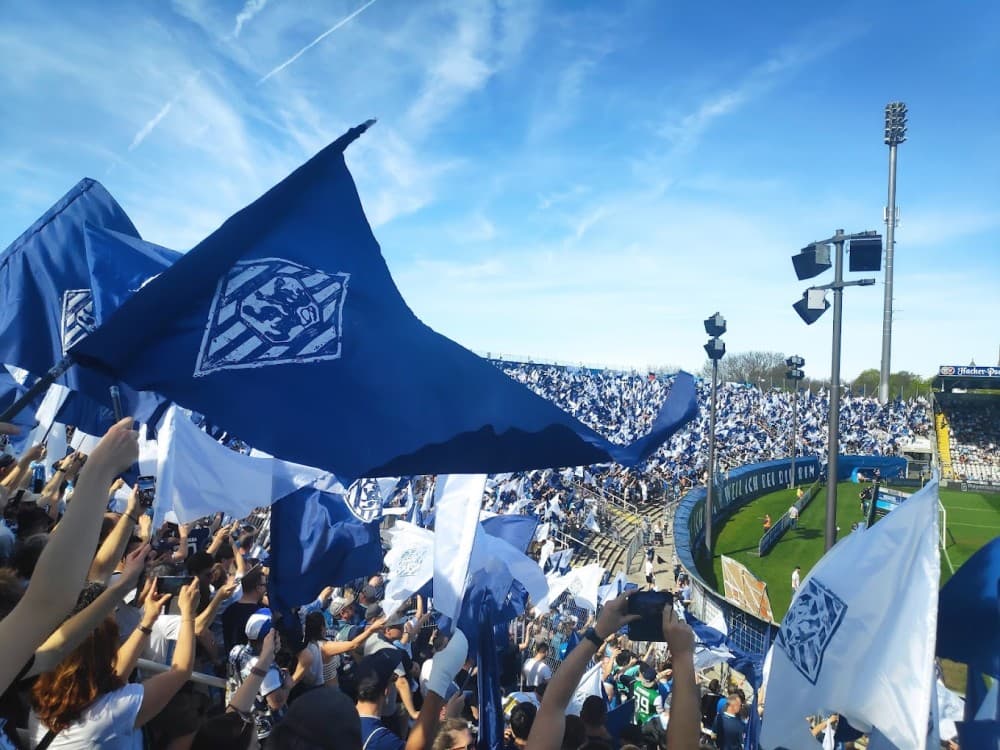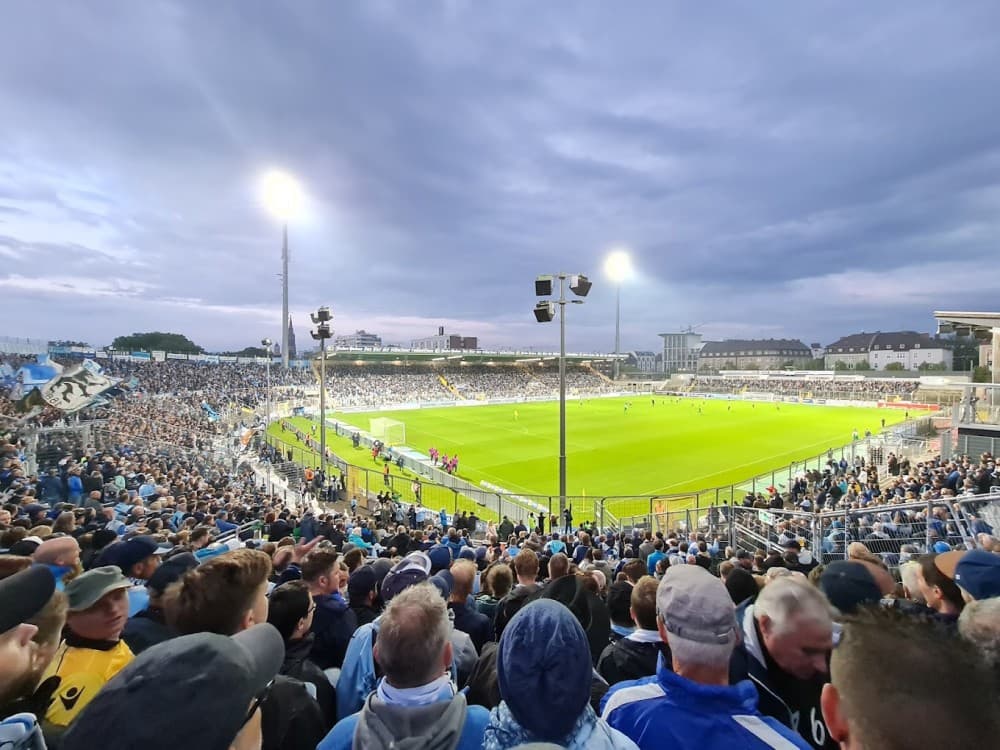
The Gruenwalder Stadion, affectionately known as the Sechzgerstadion, is a legendary football ground that serves as the spiritual home of TSV 1860 Munich. Built in 1911, it is the city's third-largest stadium and stands as a stark, authentic contrast to the hyper-modern Allianz Arena. Located on a high ridge in the Giesing district, the stadium is famous for its classic steep stands and the manual scoreboard that still operates today. It provides an intense, old-school matchday experience where the roar of the fans echoes through the residential streets. For holidaymakers, it offers a rare glimpse into the deep-rooted local football culture and the passionate loyalty of the "Lions" supporters, far removed from the commercial glitz of top-tier global football.
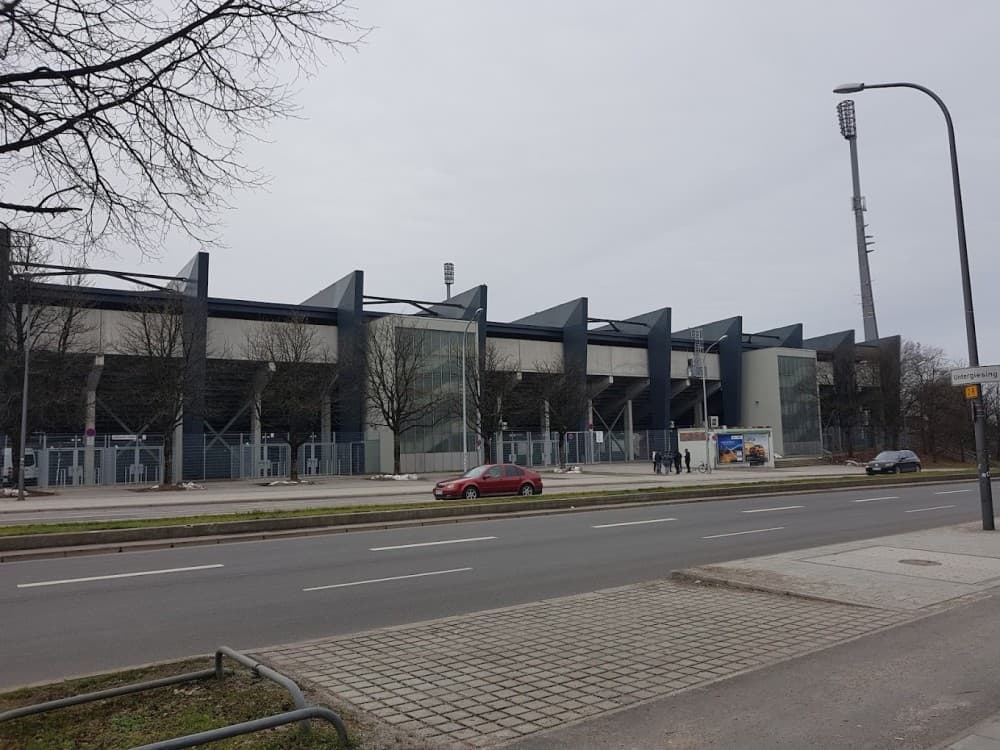
Es gibt noch keine Touren in Gruenwalder Stadion.
The stadium is located at Gruenwalder Strasse 4 in the Giesing neighborhood. It has a capacity of approximately 15,000 spectators, with a large portion of the stadium dedicated to standing areas, which is central to its traditional atmosphere. Tickets for TSV 1860 Munich games are highly sought after and frequently sell out, so booking online well in advance is essential. Prices are generally affordable, typically ranging from 16 Euro for standing spots to 33 Euro for seats. Aside from the main team, the stadium also hosts matches for FC Bayern Munich’s reserve and women’s teams. On matchdays, the surrounding kiosks and mobile stands offer classic stadium fare like Bratwurst and local beer at reasonable prices.
The Gruenwalder Stadion is an open-air venue with limited roofing, so checking the weather forecast and dressing accordingly is vital for a comfortable visit. It is primarily a standing stadium, so wear comfortable shoes and be prepared to be on your feet for several hours. While the atmosphere is famously friendly, the Westkurve is the heart of the hardcore "Ultras," so if you prefer a quieter view, look for tickets in the main grandstand or the Stehhalle. Many of the food and drink stalls inside still operate on a cash-only basis, so carry some Euros to avoid long ATM searches. Lastly, remember that late entry is rarely a problem, but arriving early is better to soak up the pre-match songs and rituals.
Reaching the stadium from central Munich is incredibly efficient using the city's subway system. The most direct route is taking the U1 line from the Main Station (Hauptbahnhof) or Sendlinger Tor toward Mangfallplatz, getting off at the Wettersteinplatz station. From the exit, it is a simple five-minute walk to the stadium gates. Alternatively, you can take the U2 line to Silberhornstrasse, which involves a slightly longer but pleasant ten-minute walk through the local neighborhood. For those coming from the eastern city center, Tram lines 15 or 25 stop at Tegernseer Landstrasse, which is just a four-minute walk from the entrance. Driving is highly discouraged as there is almost no public parking available in the surrounding residential streets.
To experience the true magic of the Sechzgerstadion, aim to arrive in the Giesing district at least two hours before kickoff. This allows you to witness the "pilgrimage" of fans in blue shirts heading toward the heights of the stadium. The local pubs around Tegernseer Landstrasse become packed with supporters, creating a festive pre-match vibe. If you want to explore the architecture without the matchday rush, a weekday morning is a peaceful time for a walk around the exterior. Visiting during an evening match under the floodlights is particularly special, as the stadium glows like a beacon over the city. Note that the stadium is busiest during the traditional football season from August to May, with a winter break usually occurring in January.