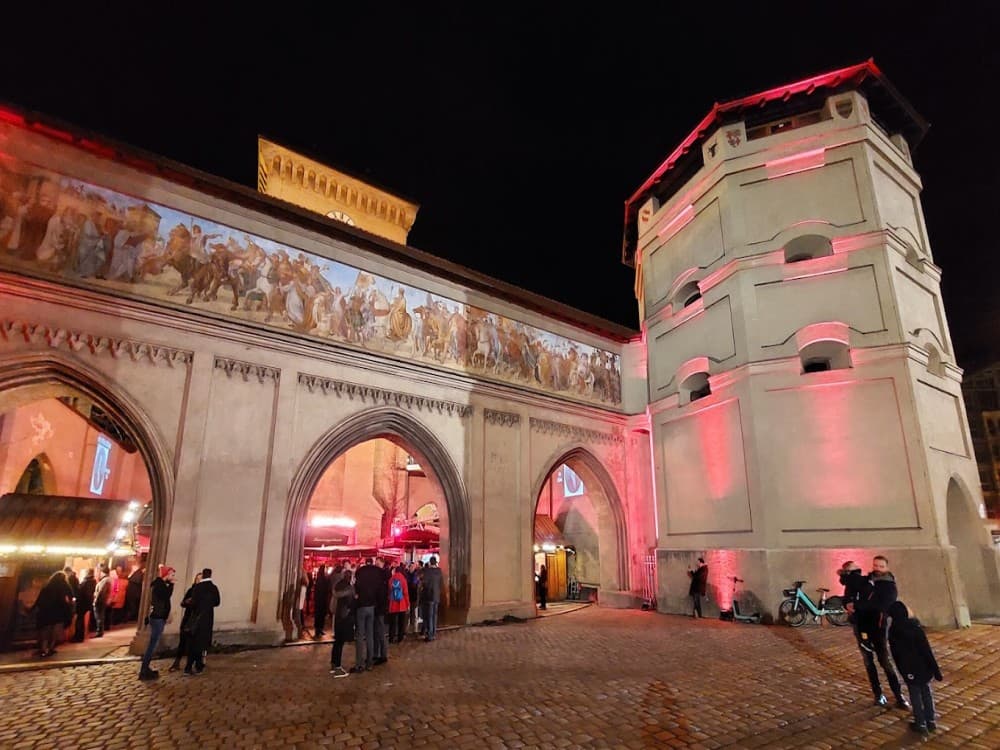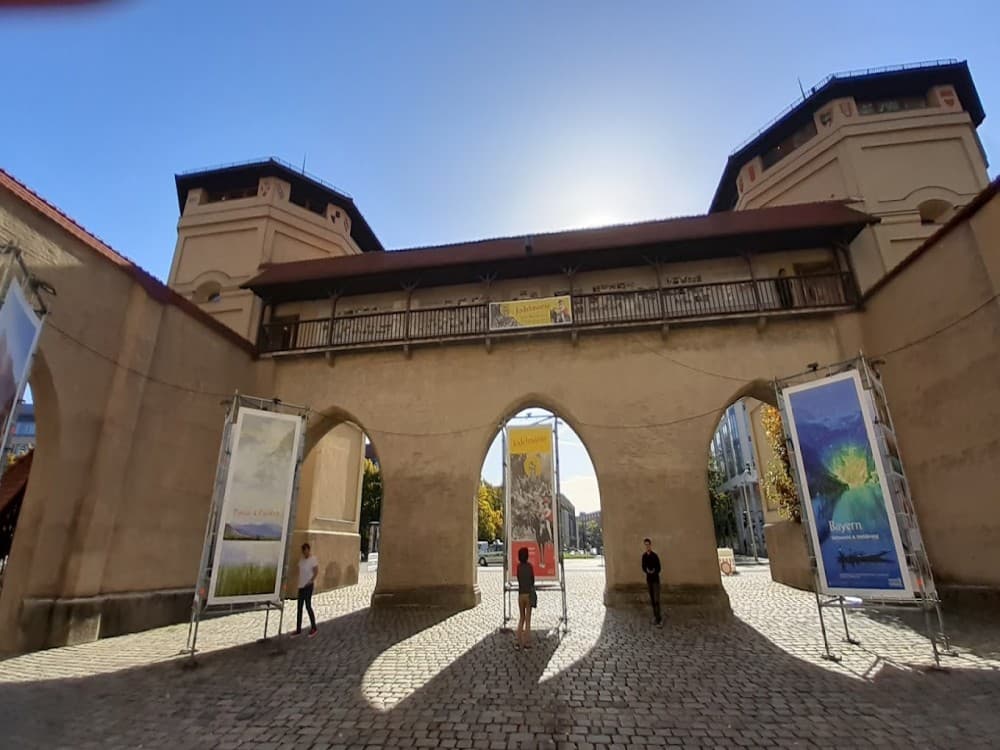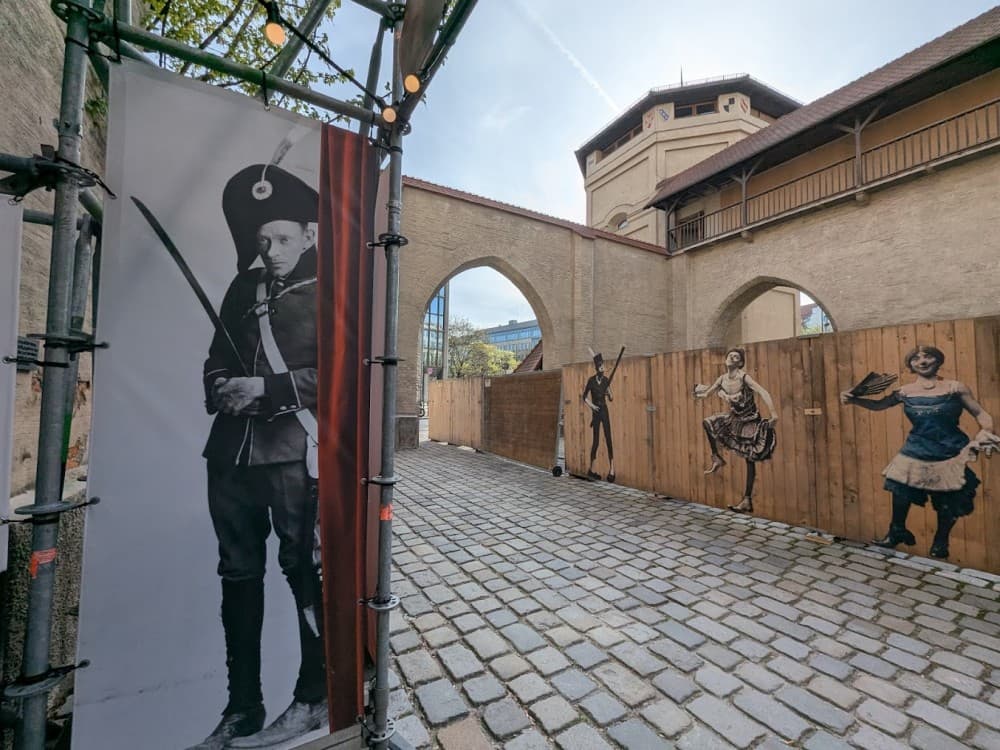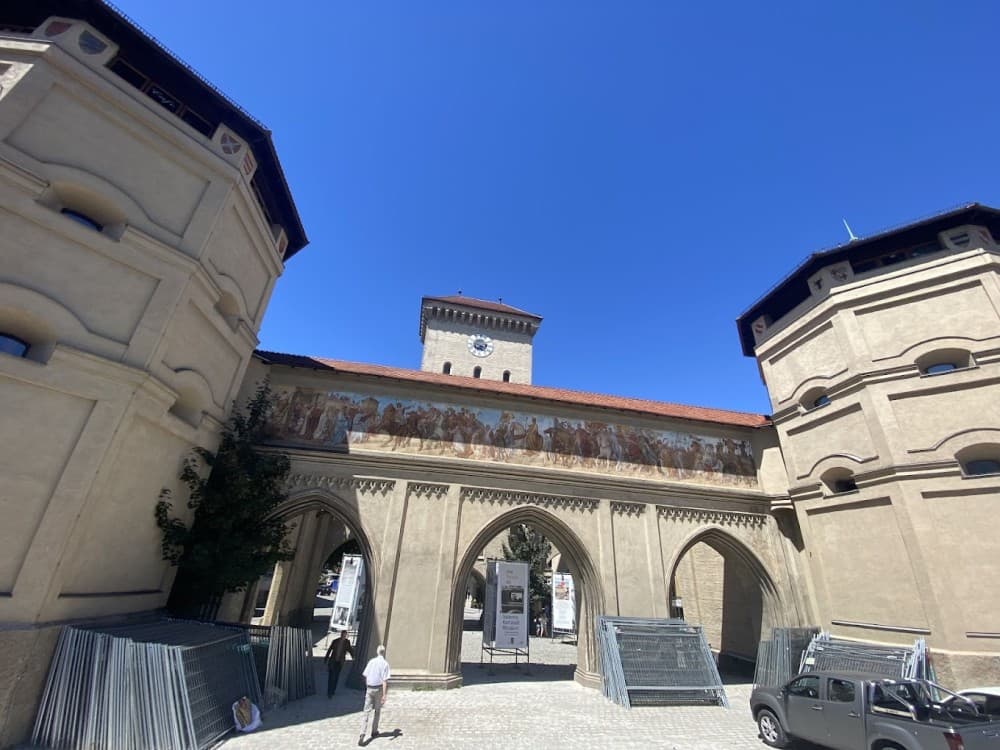
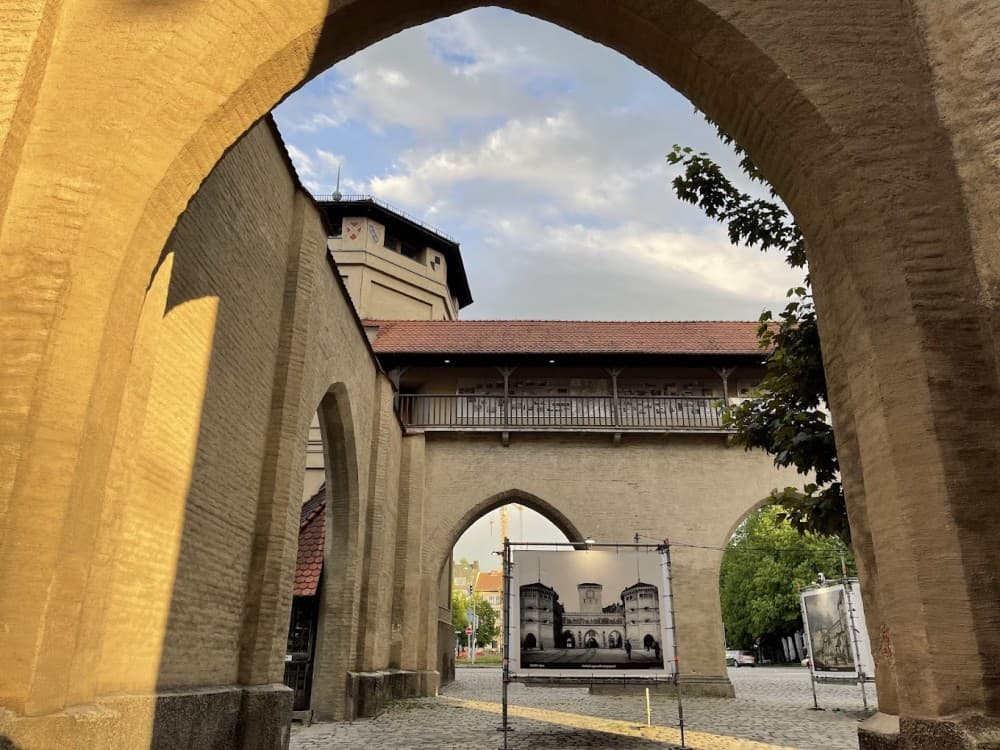
The Isar Gate, or Isartor, is one of Munich's three remaining historic city gates and serves as the eastern entrance to the old town. Constructed in the 14th century under Emperor Ludwig the Bavarian, it was once the primary entry point for salt trade coming from the Alps. The structure consists of a grand central tower and two smaller octagonal side towers connected by a courtyard. What makes this gate truly unique is the meticulously restored fresco on its eastern facade, which depicts the triumphant homecoming of Emperor Ludwig after the Battle of Ampfing in 1322. It is the only gate in Munich that has preserved its original medieval dimensions and basic structure, providing a powerful visual link to the city's ancient fortifications and its historical importance.
Es gibt noch keine Touren in Isar Gate.
Isartor is located at the intersection of the street called Tal and the city's inner ring road. Because it is a public monument and a functional part of the city's infrastructure, there is no fee to walk through its arches or view the exterior frescoes. The gate is most famous for housing the Valentin-Karlstadt-Musäum within its towers, which is dedicated to the absurdist comedian Karl Valentin. While the gate itself is always open, the museum typically welcomes visitors from 11:01 to 17:59. At the top of the south tower, you will find a small, cozy cafe that offers a unique view over the rooftops of Munich. The gate also features a famous backwards-running clock on the western side, reflecting the quirky humor associated with the site.
When visiting Isartor, pay close attention to the clock on the western facade; the numbers and hands move counter-clockwise as a tribute to Karl Valentin’s unconventional logic. The frescoes on the eastern side are best viewed from across the street to appreciate the full scale of the historical scene. If you plan to visit the museum or the cafe inside the towers, be prepared for narrow, steep staircases that are not suitable for those with significant mobility issues. While the gate is in a busy traffic area, the inner courtyard is a surprisingly quiet pedestrian zone. It is a very safe area to explore, but as with any major transit hub in a big city, it is always wise to stay mindful of your personal belongings while taking photos.
Getting to Isartor is incredibly simple as it has its own dedicated station on the S-Bahn "Stammstrecke" or main line. You can take any S-Bahn train from S1 through S8 directly to the Isartor stop. Once you exit the underground station, the massive medieval towers will be immediately visible. If you are already in the city center, it is a very pleasant ten-minute walk from Marienplatz down the Tal shopping street. Additionally, Tram lines 16 and 18 stop right at the gate, providing a scenic overground route from other parts of the city. For those staying near the main train station, a five-minute S-Bahn ride will bring you straight to the gate, making it one of the most accessible landmarks in Munich for holidaymakers.
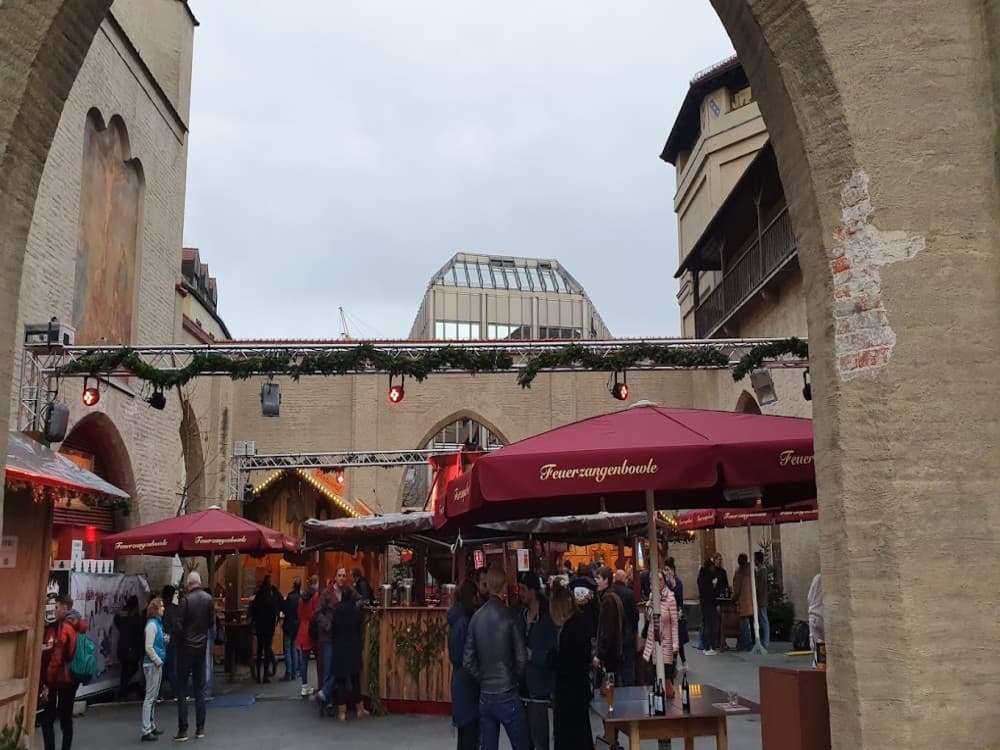
The best time to visit Isartor for photography is in the morning when the sun illuminates the historic frescoes on the eastern facade. To experience the site at its most vibrant, arrive around 11:00 as the museum and the tower cafe open their doors. During the winter months, the square in front of the gate often hosts a small, traditional Feuerzangenbowle market, where you can watch a giant cauldron of mulled wine being prepared under the glow of festive lights. Weekday afternoons are generally quieter if you want to study the architectural details without the rush of commuters. If you prefer a more energetic atmosphere, Saturday is the perfect day to combine a visit with a stroll through the nearby markets and boutiques of the city center.