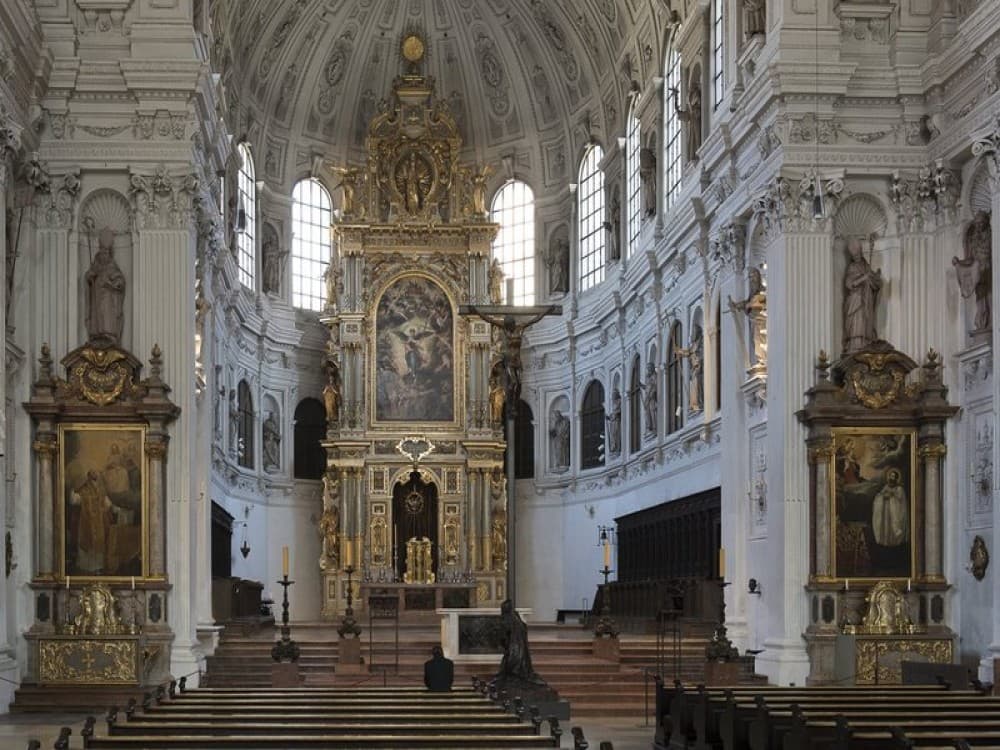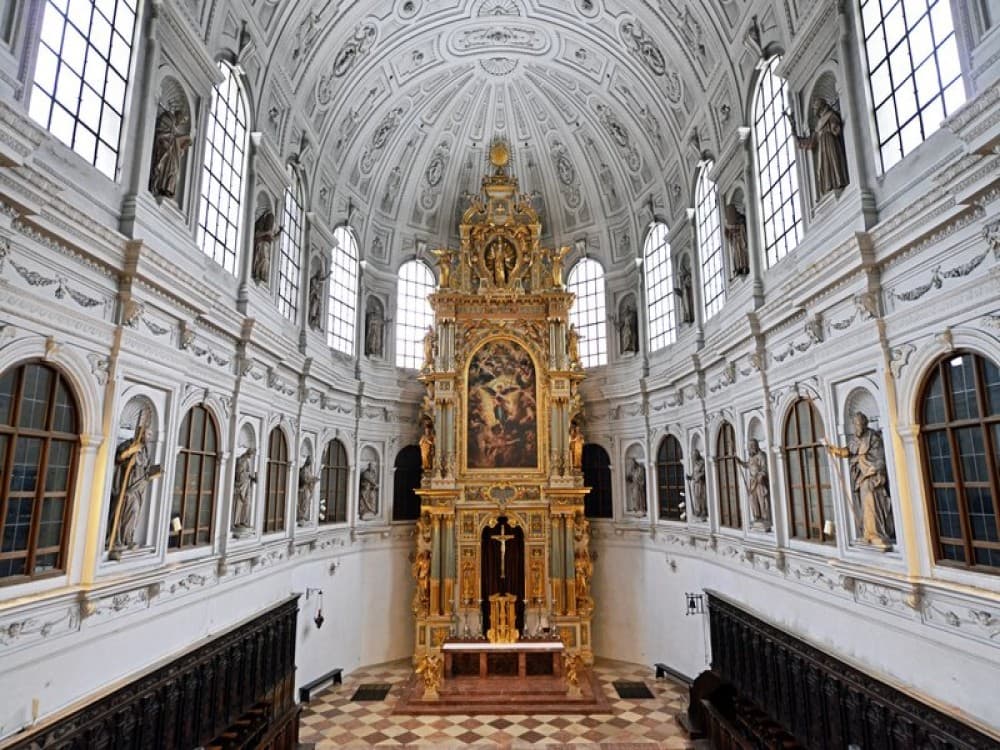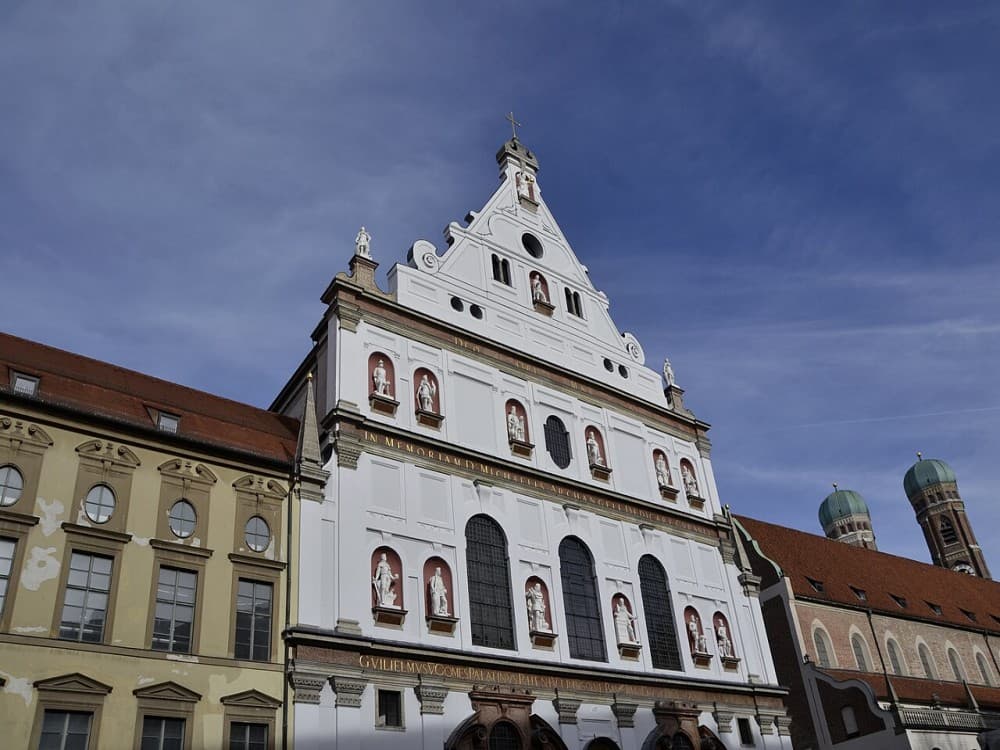
St. Michael in Munich is a monumental Jesuit church that stands as the largest Renaissance church north of the Alps. Built between 1583 and 1597 by Duke Wilhelm V, it was designed as a spiritual fortress for the Counter-Reformation. The facade is instantly recognizable, featuring 15 statues of Bavarian rulers and a dramatic bronze sculpture of the Archangel Michael slaying a dragon at the entrance. Inside, the church boasts a world-famous barrel-vaulted ceiling, which was the second largest in the world after St. Peter's in Rome at the time of its construction. The interior is a bright, white, and gold sanctuary of quiet beauty, offering a peaceful escape from the busy shopping streets just outside its doors. It is not just a place of worship but a living museum of Bavaria’s royal and religious history.
Es gibt noch keine Touren in St. Michael Munchen.
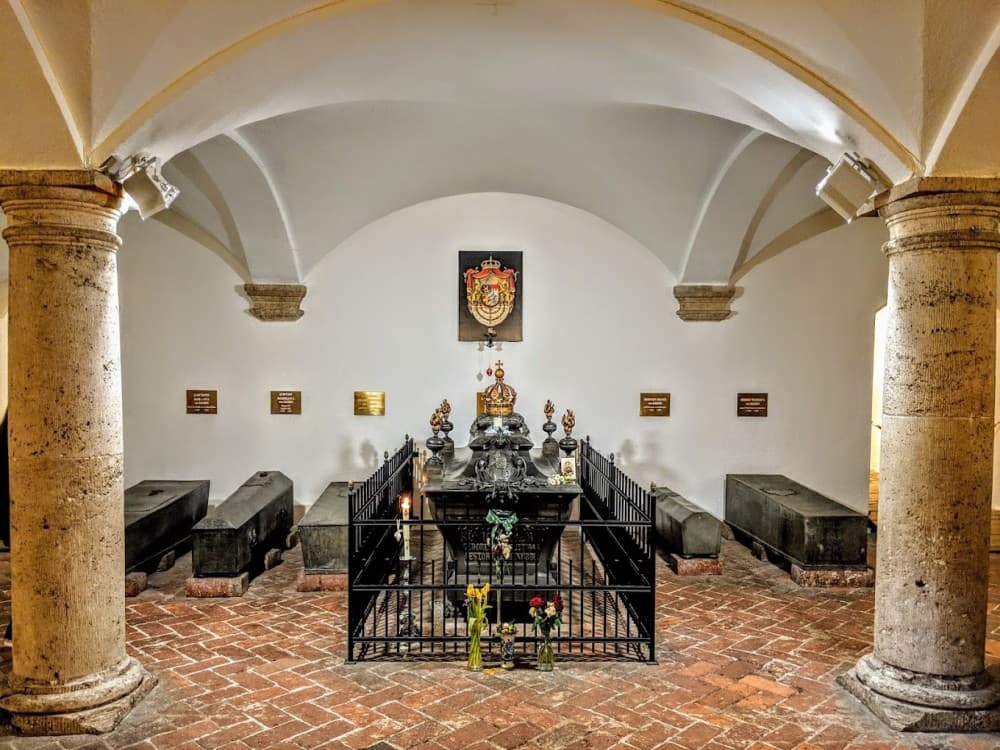
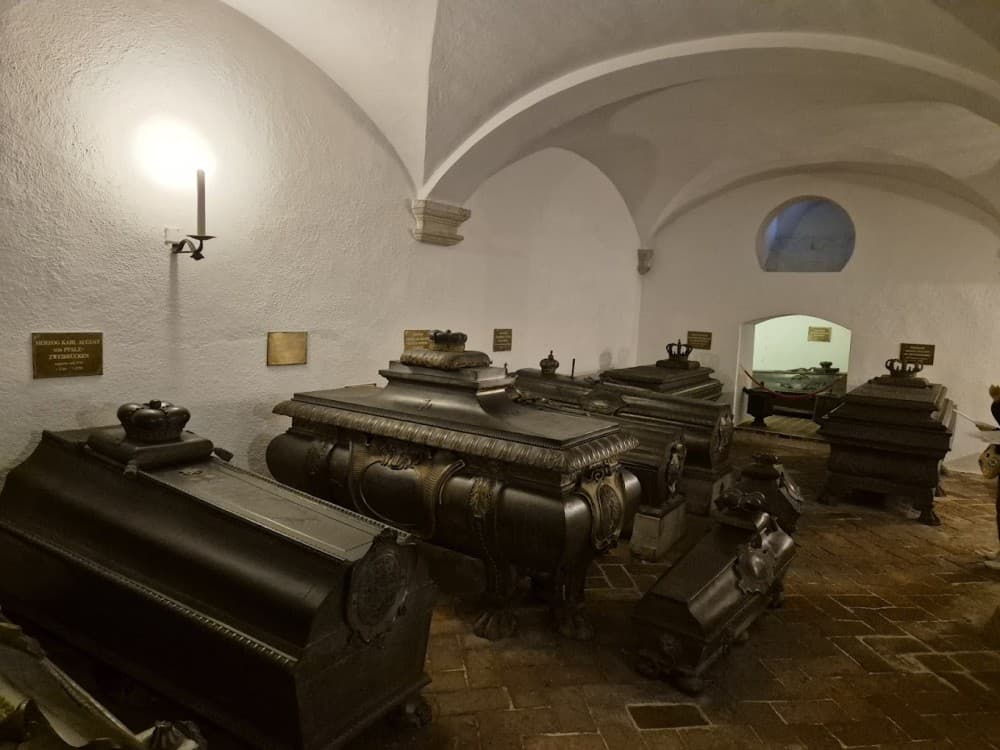
The church is located at Neuhauser Strasse 6, right in the heart of Munich's pedestrian shopping zone. Admission to the main church is free, though a small donation of 2 euros is kindly requested to help with the preservation of the historic site. For most of 2026, the church is open daily from early morning until late evening, typically from 07:30 to 19:00, except on Sundays when it stays open until 22:00. A highlight for many visitors is the Wittelsbach Princely Crypt, which requires a separate ticket costing 2 euros for adults and 1 euro for children. This crypt is the final resting place for many Bavarian royals, including the legendary King Ludwig II. Guided tours are occasionally available and are usually arranged through the Munich Education Center for a small fee.
As St. Michael is an active Catholic church, visitors are asked to maintain a respectful silence and refrain from sightseeing during scheduled masses. If you want to visit the royal crypt, keep in mind that its hours are slightly shorter than the church’s, typically closing by 16:30 on weekdays and 14:30 on weekends. Photography is allowed but must be done without a flash to preserve the artwork and respect the solemnity of the space. One of the most unique aspects of the church is its connection to King Ludwig II; you will often find fresh flowers left by locals at his sarcophagus in the crypt. Also, check the church’s musical calendar, as it is famous for its high-quality choral and organ music, often featuring professional ensembles during the weekend solemn masses.
Getting to St. Michael is incredibly straightforward because it is situated on Munich’s main pedestrian artery between Karlsplatz and Marienplatz. If you are taking the subway or suburban trains, the easiest way is to use the S-Bahn or the U4/U5 lines and get off at Karlsplatz-Stachus. From there, it is a short five-minute walk east into the pedestrian zone. Alternatively, you can get off at Marienplatz using the S-Bahn or U3/U6 lines and walk west for about seven minutes. The church’s entrance is on the left side of the street as you walk toward the center. Tram lines 19 and 21 also stop at Karlsplatz-Stachus, making it accessible from almost any part of the city. Since the church is in a car-free zone, public transport is the only way to get directly to the site.
To experience the church at its most peaceful, try to visit on a weekday morning before 10:00 when the shopping crowds are still light. If you are a fan of classical music, the 10:00 High Mass on Sundays is a spectacular time to visit, as the church’s choir and orchestra often perform major works by composers like Haydn or Mozart. On Tuesdays, the church has extended evening hours until 20:00, which is perfect for a quiet, contemplative visit after a long day of sightseeing. If your visit falls during Holy Week in 2026, be aware that the church hosts unique events like the Way of the Cross of Nations on Good Friday, which begins at the church and leads to Marienplatz. In the winter, the interior provides a warm and quiet sanctuary away from the cold of the pedestrian zone.