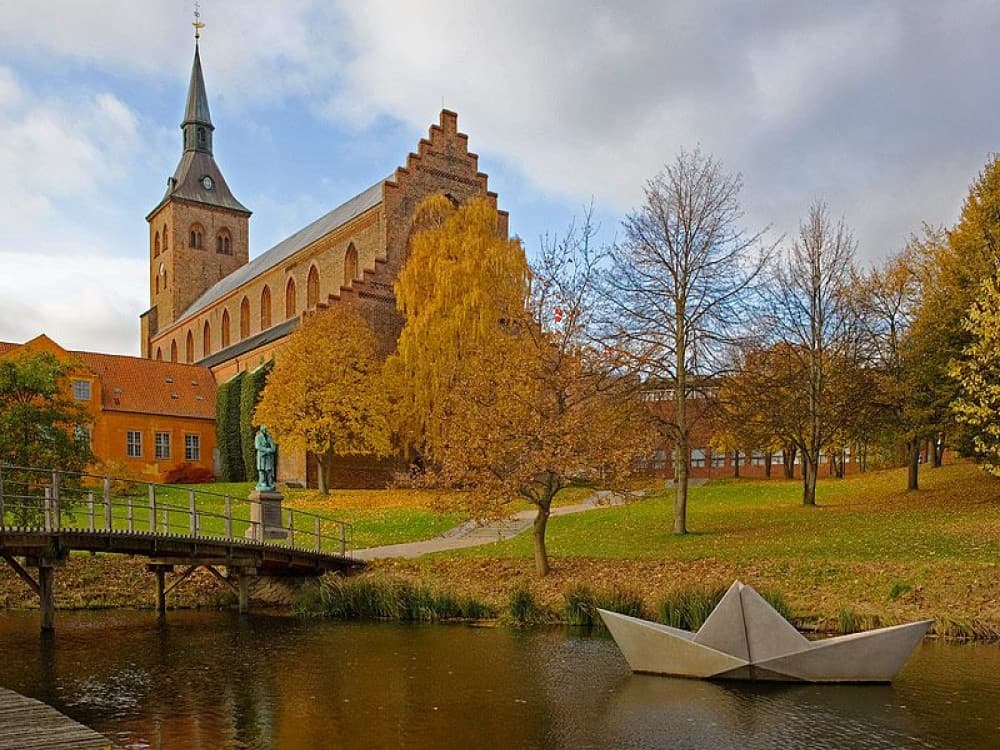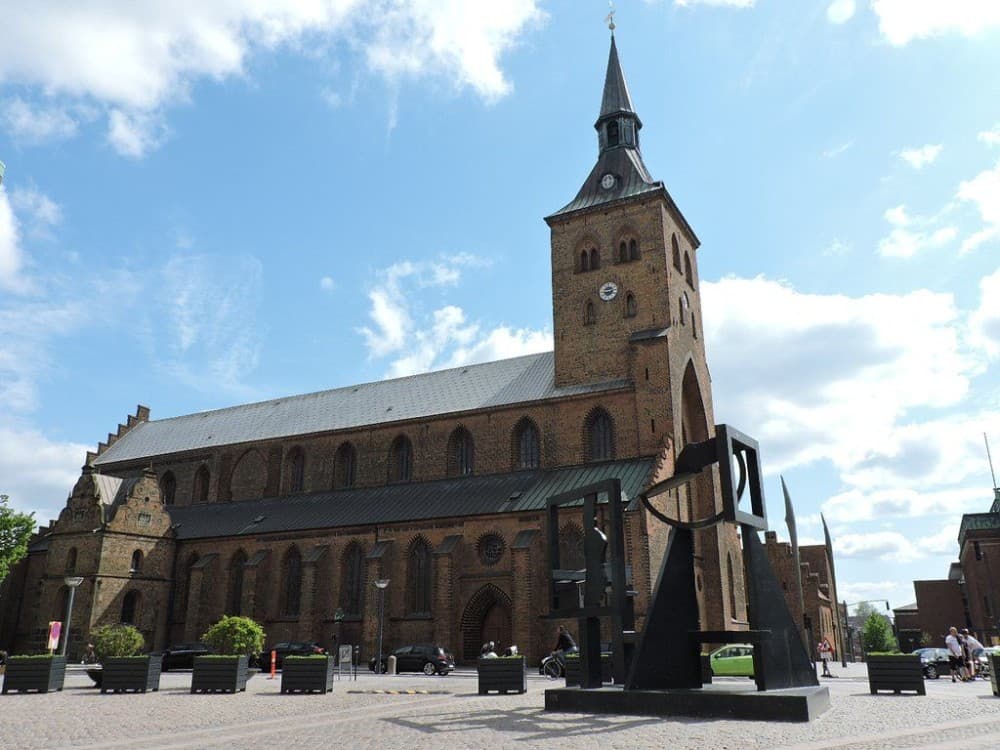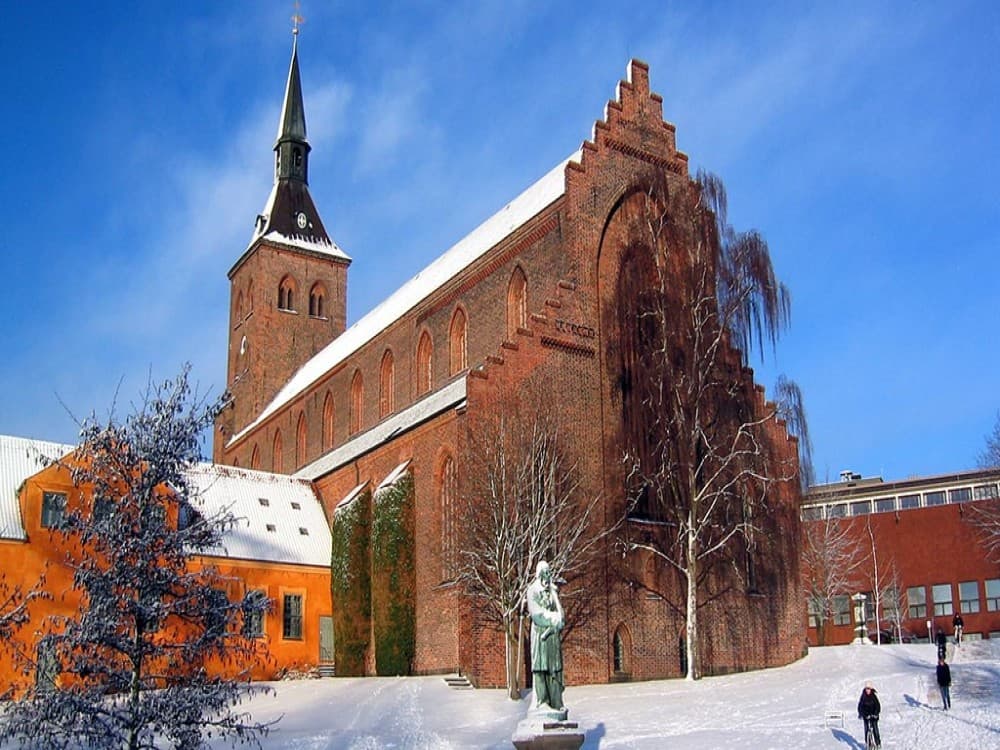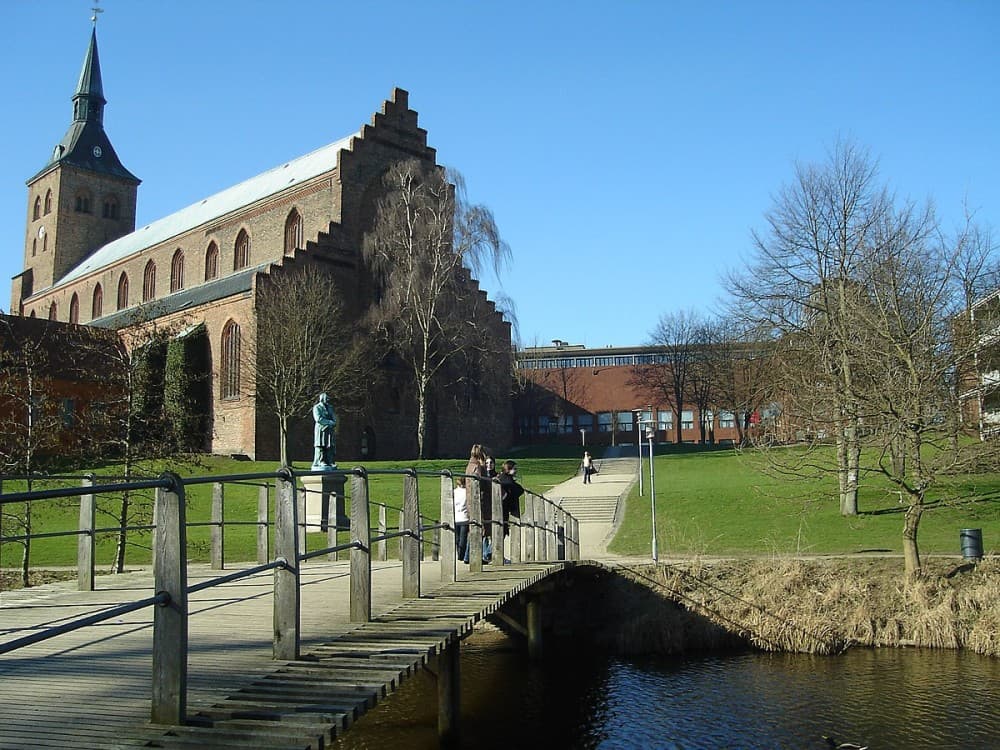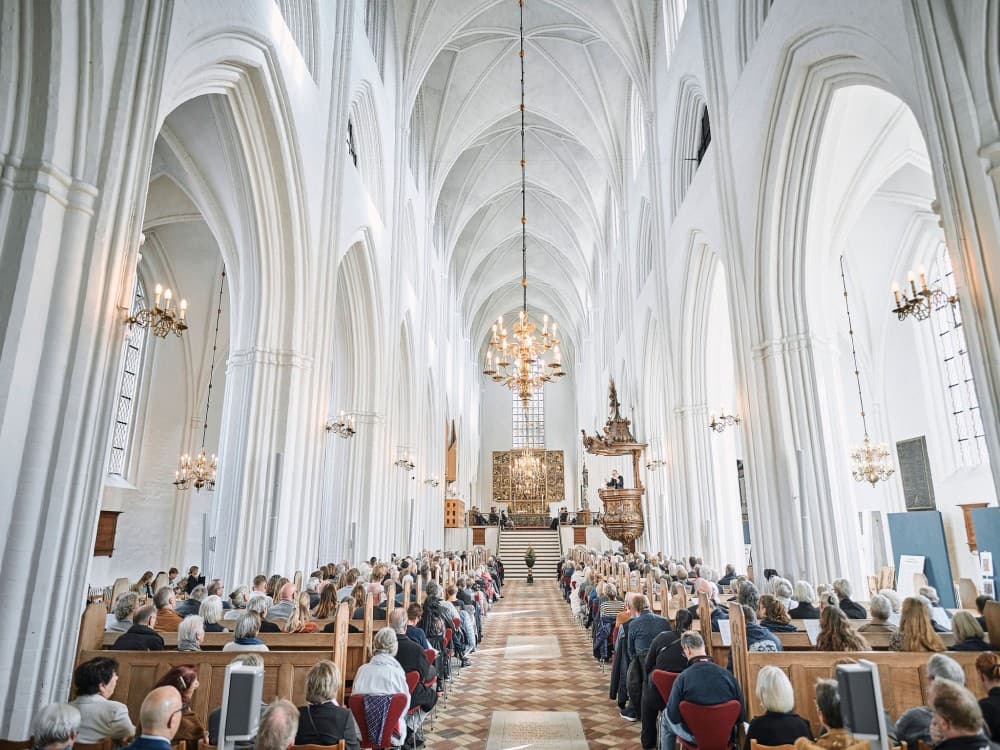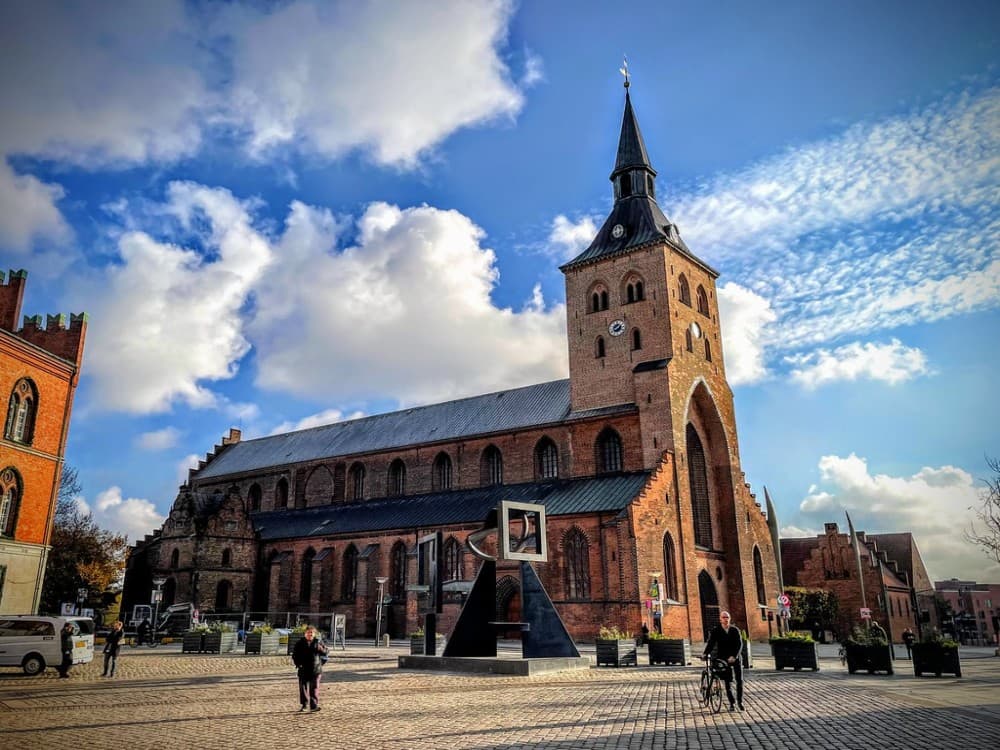
Odense Cathedral, also known as Sct. Knuds Church, is a striking Gothic brick cathedral in the historic centre of Odense. It stands on a gentle hill and is dedicated to King Canute IV, later canonised as Canute the Saint. Inside, visitors find soaring vaulted ceilings, peaceful whitewashed walls and an impressive altarpiece carved by Claus Berg in the early 1500s. One of the most memorable areas is the crypt, where the remains of King Canute and his brother are preserved, adding a powerful historical depth to the visit.
Es gibt noch keine Touren in Odense Cathedral - Sct. Knuds Church.
Sct. Knuds Church is the main cathedral of Funen and one of Denmark’s finest examples of Gothic brick architecture. The current structure dates largely from the 13th to 15th centuries, though the cathedral’s origins stretch back more than 900 years. The building is usually open during the day, with hours that can vary depending on religious services. English descriptions and signs inside make it easy for international visitors to understand the cathedral’s history and art. The cathedral is suitable for all ages and is easily combined with nearby cultural attractions.
As an active church, the cathedral may limit access during services or special events, so some areas can be temporarily closed. The crypt is a major highlight, offering a solemn space where you can view the royal remains. Photography is generally allowed, but visitors should be respectful, especially in the crypt. The cathedral interior is brighter than many Gothic churches, giving it a calm and airy feel. Take time to look closely at the richly detailed altarpiece, which is considered one of Denmark’s finest.
Odense Cathedral is located in the city centre and is easy to reach on foot from most central hotels and attractions. Public buses and the light rail have stops close to the old town, making access simple for travellers staying farther out. Cycling is another popular and convenient option thanks to Odense’s excellent network of bike paths. Parking in the area is limited, so walking or using public transport is usually the easiest way to visit.
The cathedral is most peaceful in the morning or late afternoon, making these times ideal for visitors who want a quiet, reflective experience. Summer offers long daylight hours and beautiful lighting inside the church, though it can be busier. Spring and early autumn bring comfortable temperatures and fewer crowds. Winter visits offer a serene atmosphere with soft natural light, though the surrounding gardens are less colourful.