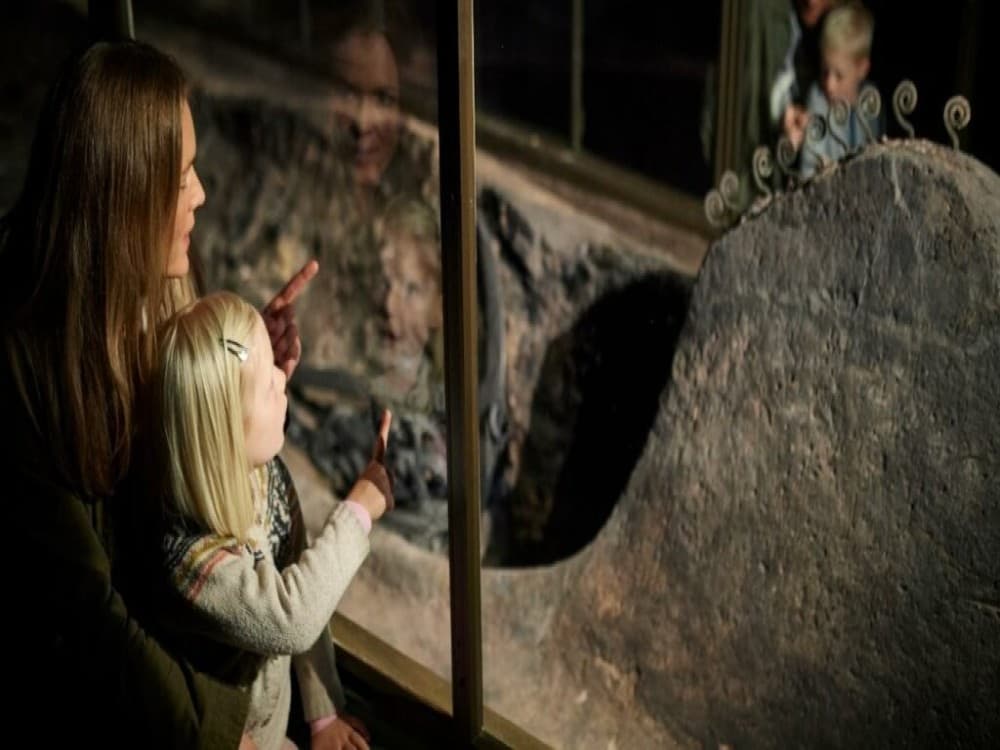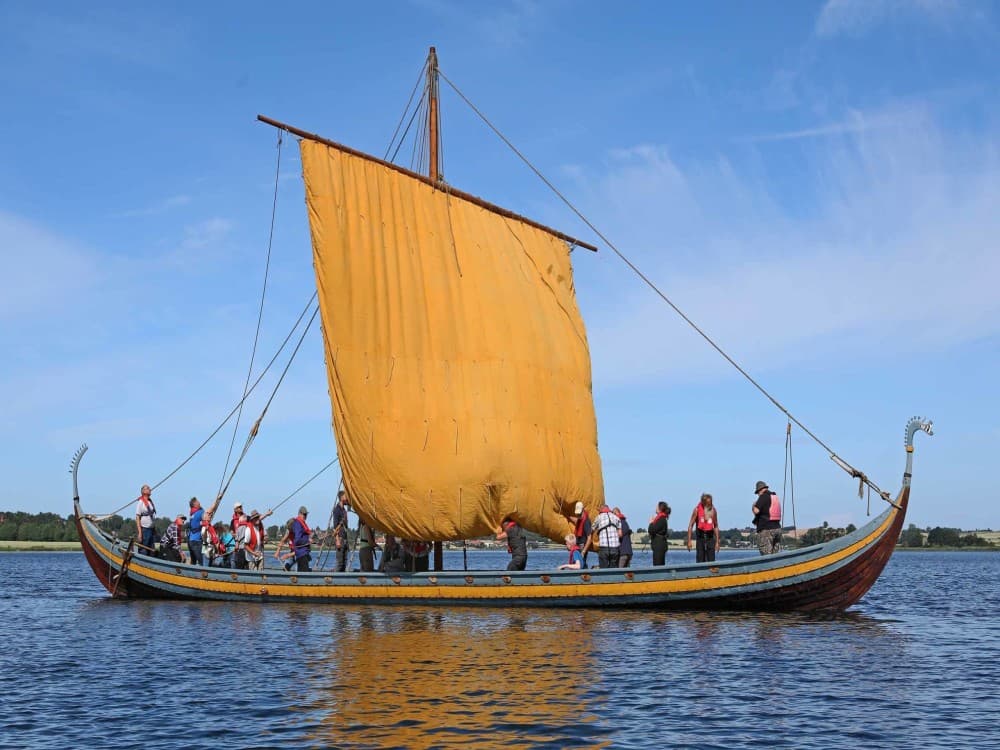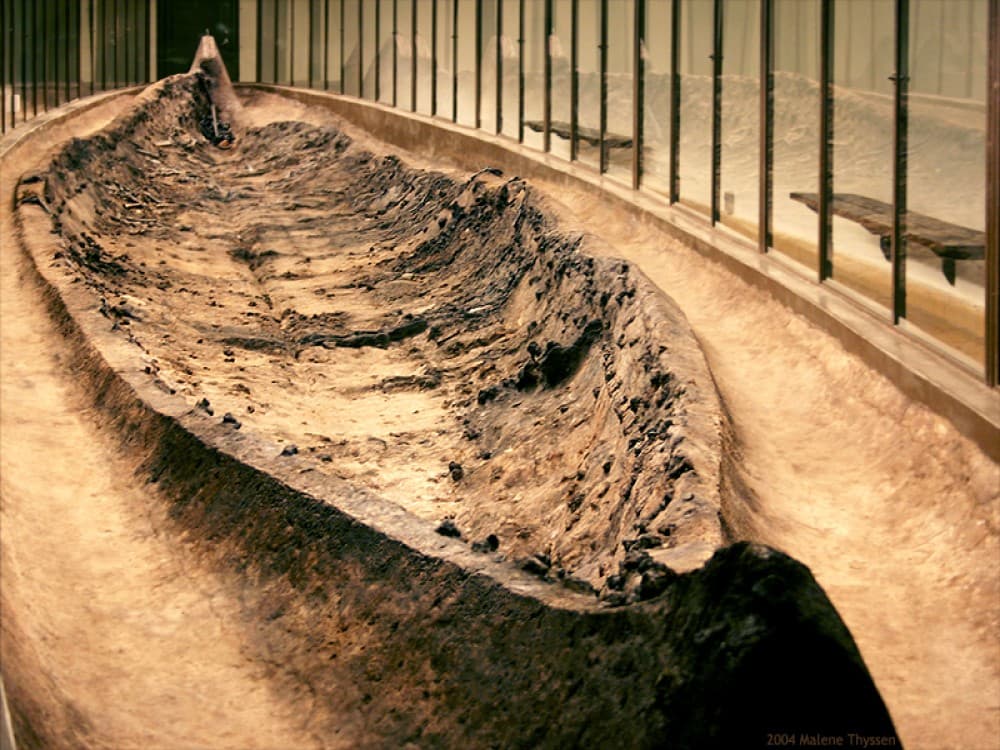
Ladbyskibet is the only Viking ship burial discovered in Denmark a real piece of Viking royalty. Around the year 925, a powerful Viking chieftain (or “king”) was laid to rest aboard this longship, together with his eleven horses, several dogs, and rich grave goods. The burial site was later covered with a grassy mound, and today you can enter the mound to stand above the ship’s outline, marked out by thousands of preserved iron rivets. The atmosphere is quiet and reflective, with dim lighting and a sense of reverence for the past.
Es gibt noch keine Touren in Ladbyskibet.
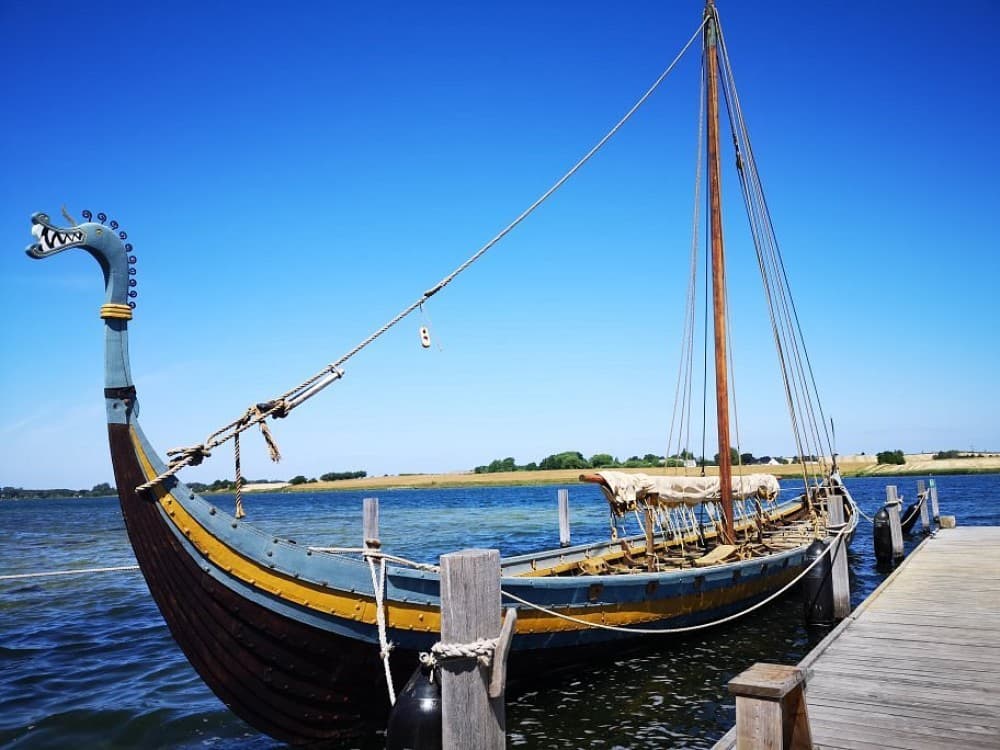
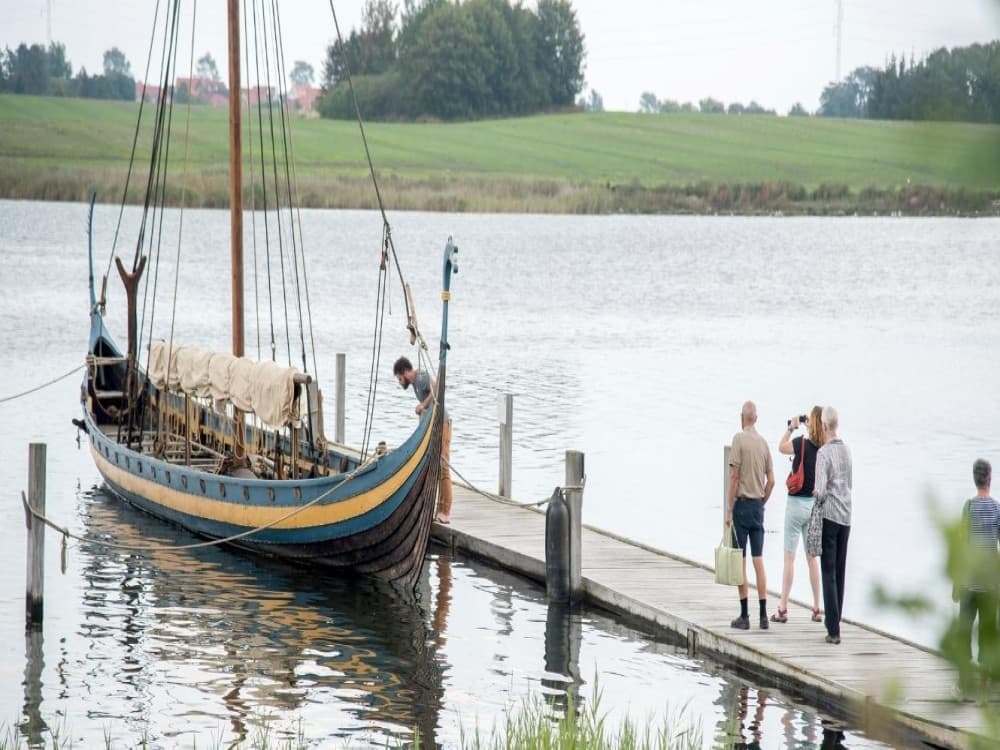
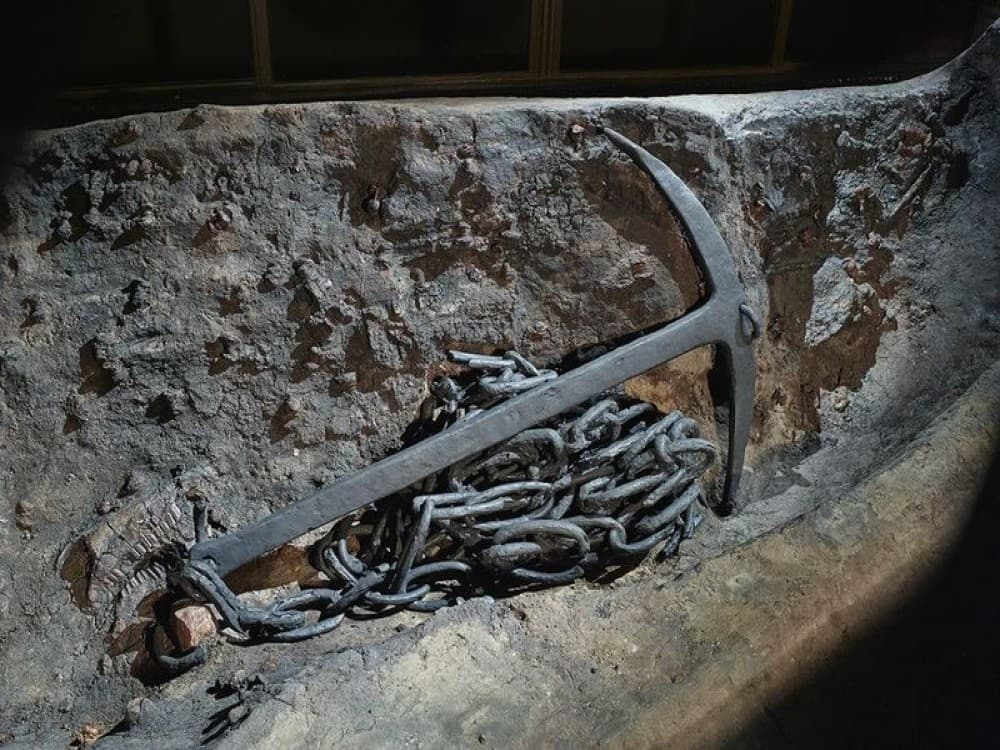
The original ship measured about 21.5 meters long and nearly 3 meters wide, with space for 30–32 oars. Though the wood has rotted away, archaeological excavations preserved the pattern of its construction from iron nails and rivets. Decorations reveal that the ship’s prow and stern were likely carved into dragon shapes. Among the finds is a large iron anchor with an 11-meter chain, a rare artifact in Viking archaeology. The burial mound has been converted into a museum, where you can view the ship’s outline and learn about its construction and the burial ritual.
Be prepared for a tour that is both peaceful and evocative: inside the mound, lighting is low and the space is somewhat enclosed. Wear comfortable shoes — the path inside is narrow and steps can be uneven. Photography is allowed, but flash may be restricted to preserve the delicate atmosphere. Because this is a burial site, the tone is respectful rather than celebratory, and visitors are encouraged to behave quietly. If you’re interested in Viking architecture or funerary practices, a guided tour will enrich your visit by giving deeper insights.
Ladbyskibet is located at the Viking Museum in Ladby, near Kerteminde on the island of Funen. From Odense, you can drive there in roughly 25 to 30 minutes through scenic countryside. If you prefer public transport, regional buses run between Odense and Kerteminde, and you’ll need to get off near Ladby and walk to the museum. Parking is available for visitors arriving by car, and the paths leading to the mound are clearly marked.
The museum is open mostly during the warmer months when the site is most accessible. Visiting in late spring or summer gives you the best experience: the grass mound is green, and daylight lingers longer, making entry into the burial chamber more atmospheric. Early mornings or weekday visits tend to be quieter. On busy summer days, check for guided tour times to ensure you can enter the mound when you wish.