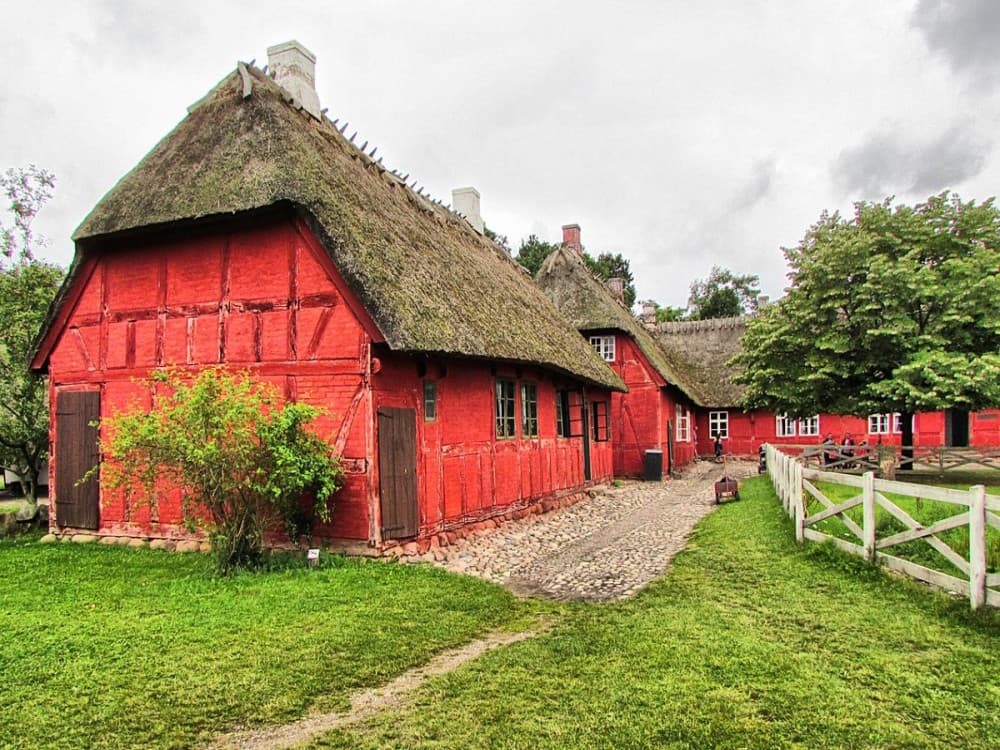
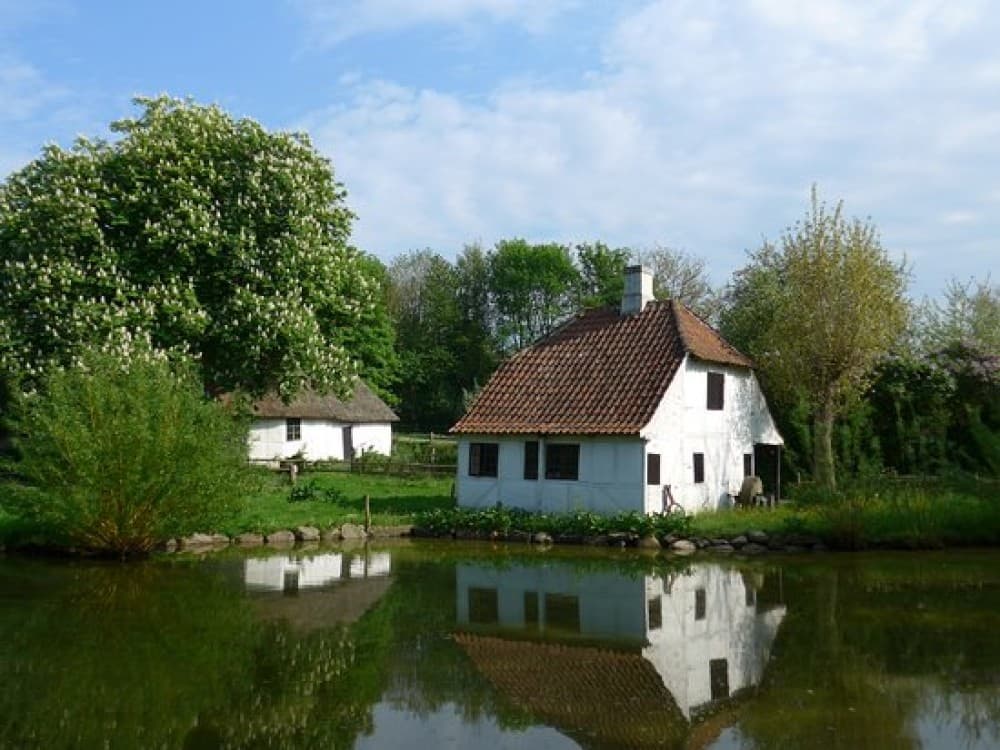
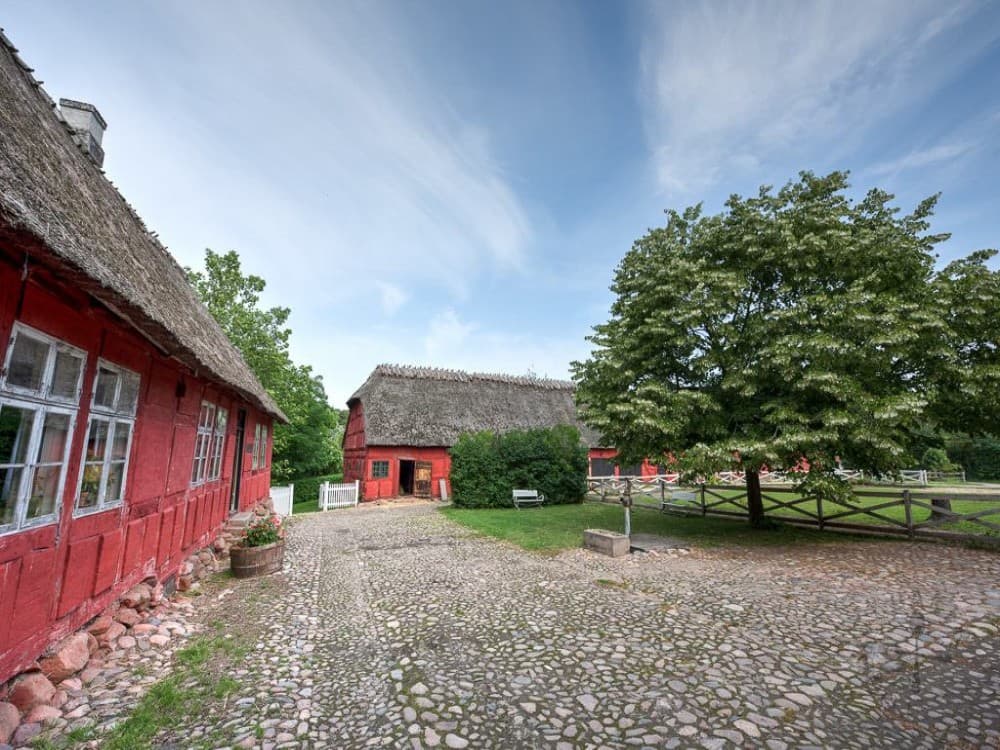
The Funen Village is a charming, open‑air living history museum set in the forested area of Fruens Bøge in Odense. It recreates rural life on the island of Funen in the 18th and 19th centuries, with about 25 historic houses relocated from all over Funen. Timber-framed, thatch-roofed cottages, a windmill, a watermill, a school, and a parsonage give the village an authentic feel. Gardens with old fruit trees, farm fields, and heritage livestock red Danish cattle, landrace sheep, goats and pigs bring the site to life as a real working village.
Es gibt noch keine Touren in The Funen Village.
This living museum showcases traditional building techniques and sustainable rural life. Craftsmen maintain the buildings using period‑correct methods, using materials like wood, clay, straw, and lime. The village illustrates self-sufficiency, with gardens growing heirloom crops, farmers working in fields, and farm animals involved in everyday life. Visitors can explore homesteads, see blacksmiths at work, and watch brewing, weaving, or food preparation. Costumes are worn by volunteers on certain days, which helps immerse you in the past.
Bring comfortable shoes many paths are gravel or uneven. You can take photos freely, but avoid commercial setups without checking. Dogs are welcome on leashes, and families can bring picnics: there are areas to sit inside and outside. Strollers are allowed, and for convenience, the visitor centre offers free pull carts. If you want a deeper experience, consider joining a guided or audio tour to learn about how people lived sustainably centuries ago.
From Odense city centre, The Funen Village is easily reached by car, bus or bike. The site has free parking, including for buses. If you take public transport, several local buses stop nearby. The paths inside the village are well maintained and accessible; wheelchairs can get around most of the site, though some older houses have uneven thresholds.
The best time to visit The Funen Village is during the warmer months, when the gardens are in bloom and the living history activities are most active. On summer days, you’ll likely encounter volunteers dressed in traditional costume, working in the fields or chatting about old crafts. Weekdays tend to be quieter than weekends, making it the ideal time for a peaceful walk. If you visit in early autumn, you might catch special seasonal events or performances at the outdoor amphitheatre.