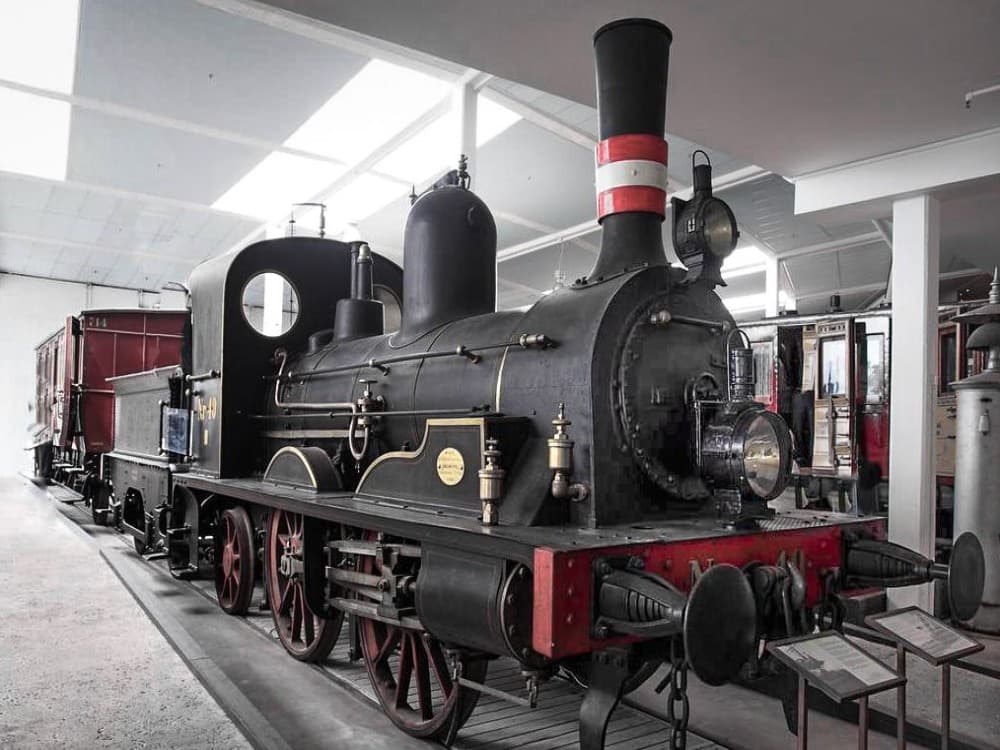
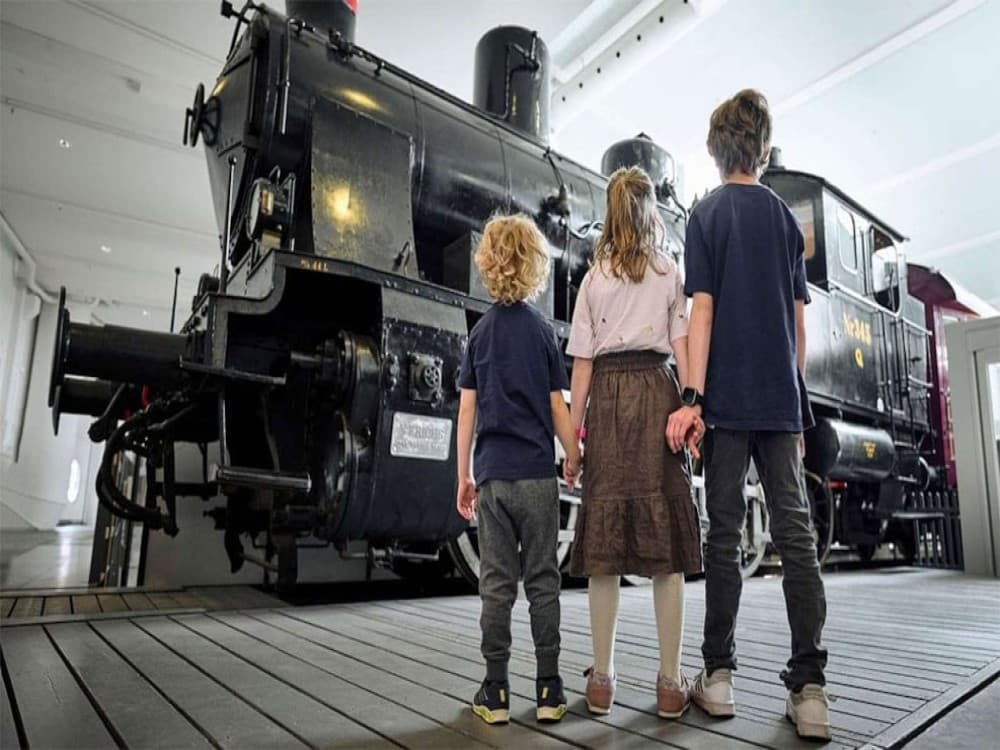
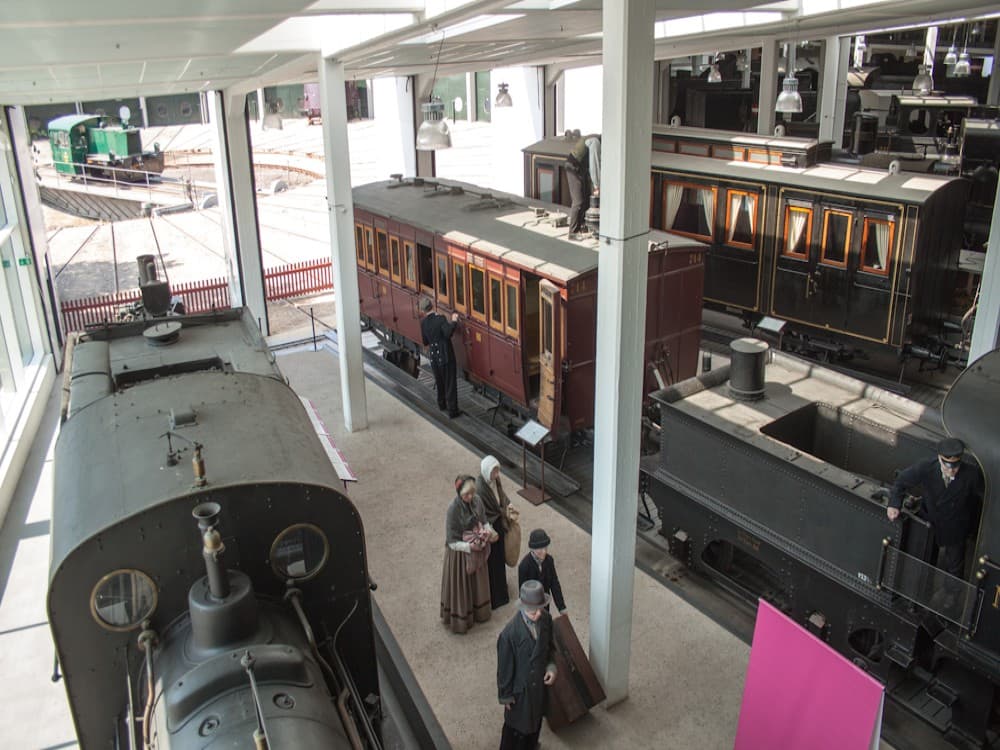
The Danish Railway Museum is a fascinating walk through 150 years of Denmark’s rail history. Set in a former roundhouse beside Odense’s train station, it feels like entering a giant open depot filled with towering steam engines, classic diesel locomotives, vintage carriages, and even royal saloons. Visitors can climb aboard several trains, explore restored wagons, and see how travel once looked across the country. With wide halls, outdoor tracks, and plenty of hands-on displays, the museum offers an engaging and nostalgic experience for all ages.
Es gibt noch keine Touren in The Danish Railway Museum.
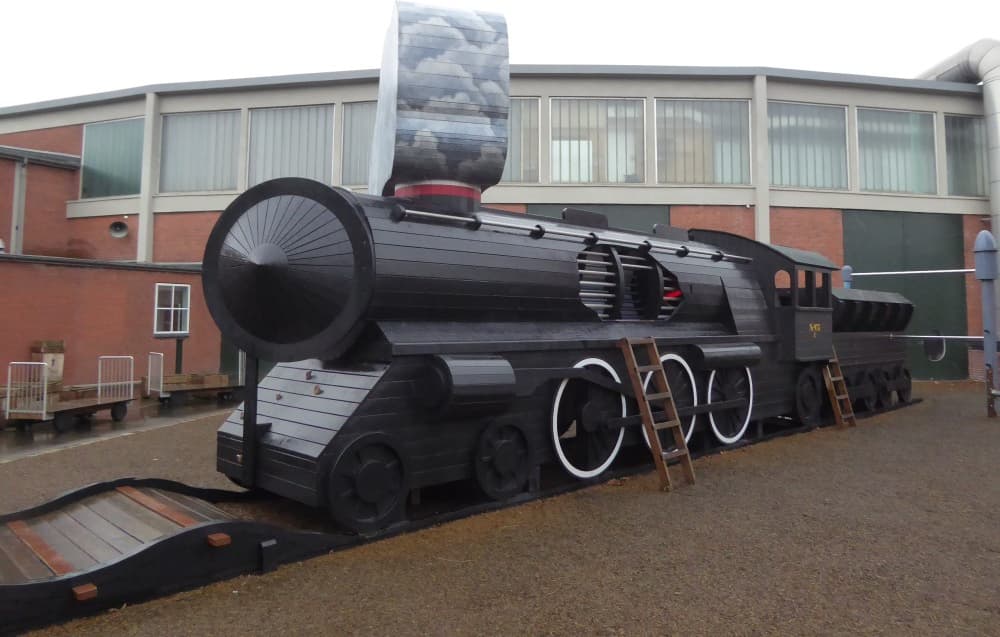
Covering around 10,000 square meters, the Danish Railway Museum is Scandinavia’s largest train museum. More than 50 locomotives and carriages are displayed across 20 tracks, ranging from early steam giants to modern diesel units. Families will appreciate the three play zones, including a large outdoor play engine and an indoor “station” where kids can pretend to drive, sell tickets, or load cargo. There’s a small café open on busy days, plus indoor and outdoor picnic areas, lockers, and full accessibility for visitors with mobility needs.
Plan to spend at least two to three hours here there’s a lot to explore. Wear comfortable shoes, as you’ll walk across gravel, platforms, and rail tracks. Vintage train rides run only on selected days, mostly during school holidays, so check ahead if this is important for your visit. Photography is welcomed, but flash and large equipment may be restricted. If you are travelling with children, the play areas are a highlight and can easily extend your visit.
Reaching the museum from Odense is extremely easy. It sits just behind the main train station, only a few minutes’ walk from the central platforms. If you are staying elsewhere in the city, local buses stop nearby, and taxis can drop you directly at the entrance. Drivers will find paid parking close to the station area. The museum has ramps and lifts, making it fully accessible.
The museum is open throughout the year, with slightly longer hours in the summer season. Weekday mornings are usually the quietest times, offering plenty of room to explore the large engines without crowds. Families may prefer afternoons or weekends when more activities and the mini-train rides are likely to operate. In winter, indoor exhibits make this an excellent rainy-day attraction.