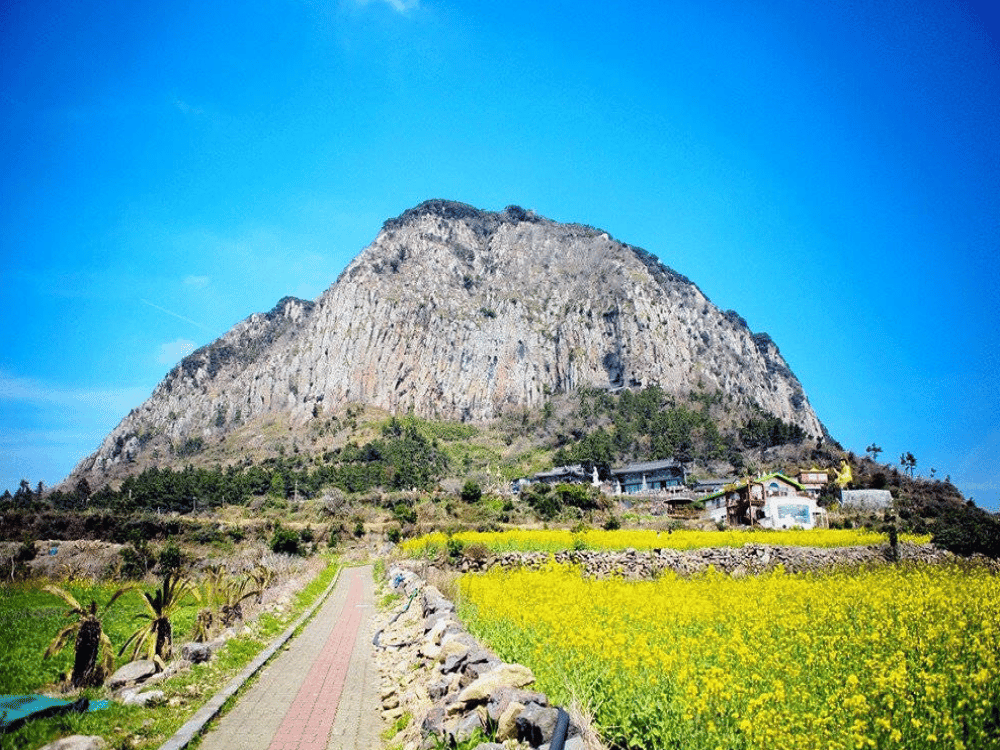
Sanbangsan is an impressive volcanic lava dome rising 395 meters above sea level on the southwest coast of Jeju Island. Its name means “mountain with a cave,” and it stands as one of the island’s most iconic natural landmarks. The slopes are covered with lush greenery, and at its center lies the cliffside Sanbanggulsa Temple. Visitors climb stone steps to reach the grotto, enjoying peaceful sea views. In spring, surrounding fields bloom with bright yellow canola flowers, creating a stunning natural backdrop.
Es gibt noch keine Touren in Sanbangsan.
Sanbangsan is located in Andeok-myeon, Seogwipo, Jeju Island. The mountain rises about 395 meters and is part of Jeju’s UNESCO Global Geopark. Trails around the grotto are open year-round without an entry fee, though some observatories and areas near Yongmeori Coast may require a small fee. Facilities at the base include parking, restrooms, cafes, and convenience stores. Access to the summit is restricted to preserve the environment, but visitors can enjoy walking paths and scenic lookouts.
The summit of Sanbangsan is currently closed for conservation, so visitors can only hike up to Sanbanggulsa Temple. Trails are steep and require comfortable shoes. The best views are from the temple area and coastal lookouts, where telescopes are often available. Weather on Jeju’s southwest coast can be windy and rainy, so it’s advisable to check forecasts before visiting.
From Jeju City, take an intercity bus to Seogwipo and transfer to a local bus heading to Sanbangsan, stopping a short walk from the base. From Seogwipo, buses 202 or 282 go directly to the area. Driving or taking a taxi is convenient, with parking available near the mountain. For bus travel, a T-money card or Naver Maps is recommended to navigate routes efficiently.
Spring is ideal for visiting, when the surrounding fields of canola flowers are in full bloom. Summer brings lush greenery and warm weather, though short rain showers may occur. Autumn offers crisp skies and mild temperatures, perfect for walking and photography. Winter is quieter and peaceful, but windy. Early mornings and late afternoons provide softer light and more comfortable walking conditions.