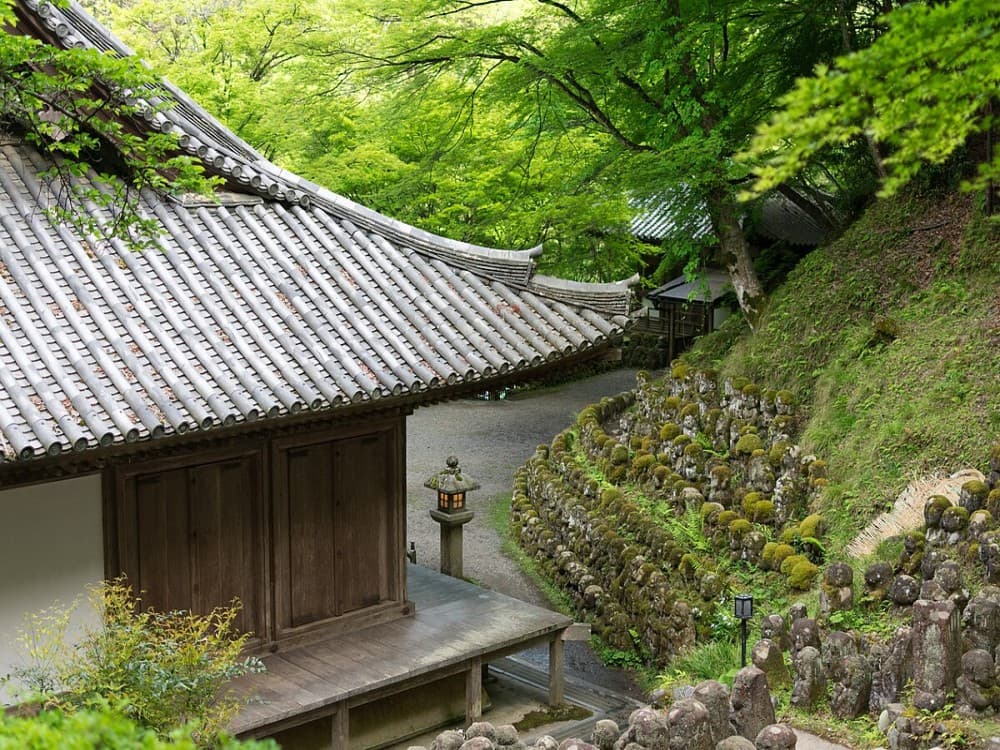
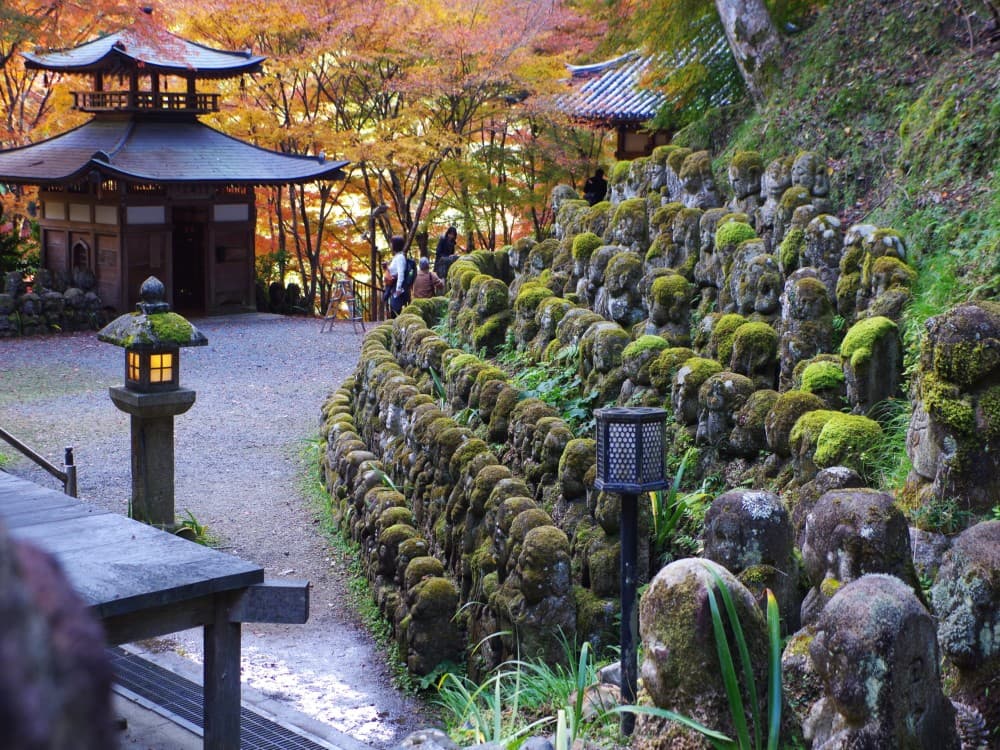
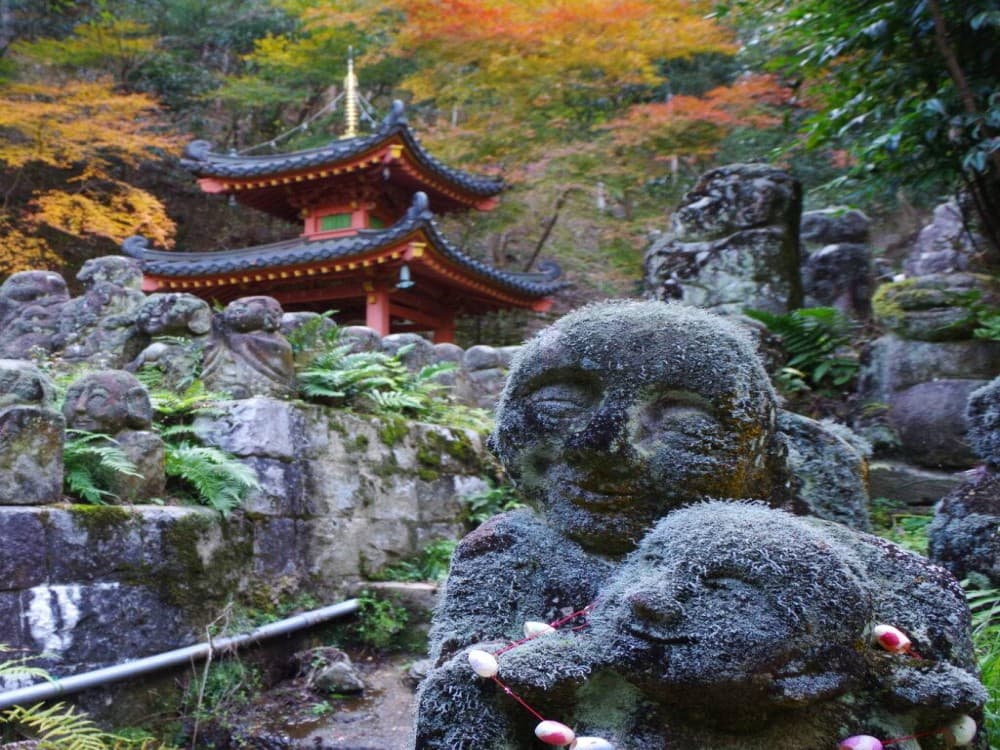
Otagi Nenbutsuji Temple is a charming and slightly hidden Buddhist temple located in the quiet hills of Arashiyama, western Kyoto. It is famous for its 1,200 stone Rakan statues, each carved with a unique facial expression, ranging from peaceful smiles to playful looks. Unlike Kyoto’s grand temples, Otagi Nenbutsuji feels intimate and welcoming, offering visitors a calm and almost whimsical atmosphere. For travelers on holiday in Kyoto, it provides a memorable and photogenic experience away from the busiest tourist routes.
Es gibt noch keine Touren in Otagi Nenbutsuji Temple.
The temple belongs to the Shingon sect of Buddhism and dates back over a thousand years, although it was relocated to its current site in the 20th century. The main attraction is the open-air collection of Rakan statues spread across the temple grounds. Admission requires a small fee, and the visit usually takes about 30 to 45 minutes. The temple grounds are compact but slightly uneven, set against a natural hillside backdrop that enhances its peaceful feel.
Wear comfortable walking shoes, as the paths include stone steps and uneven ground. The temple is outdoors, so check the weather and bring appropriate clothing. Photography is allowed and encouraged, but visitors should be respectful, as this is an active place of worship. The area is quiet, so keep voices low. Facilities are limited, so it’s best to use restrooms before arriving. Cash is recommended for admission.
From Kyoto Station, take the JR Sagano Line to Saga-Arashiyama Station, then transfer to a bus or taxi toward Otagi Nenbutsuji. The final stretch involves a scenic walk through a traditional residential area. Alternatively, visitors can walk from the Arashiyama Bamboo Grove, which takes about 30 minutes uphill. Taxis are a convenient option if you want to save time and energy.
Late morning to early afternoon is a pleasant time to visit, when natural light brings out the details of the stone statues. Spring and autumn offer comfortable temperatures and beautiful surroundings. Summer can be hot, so visiting earlier in the day is recommended. The temple is generally quiet year-round, but weekdays are especially peaceful.