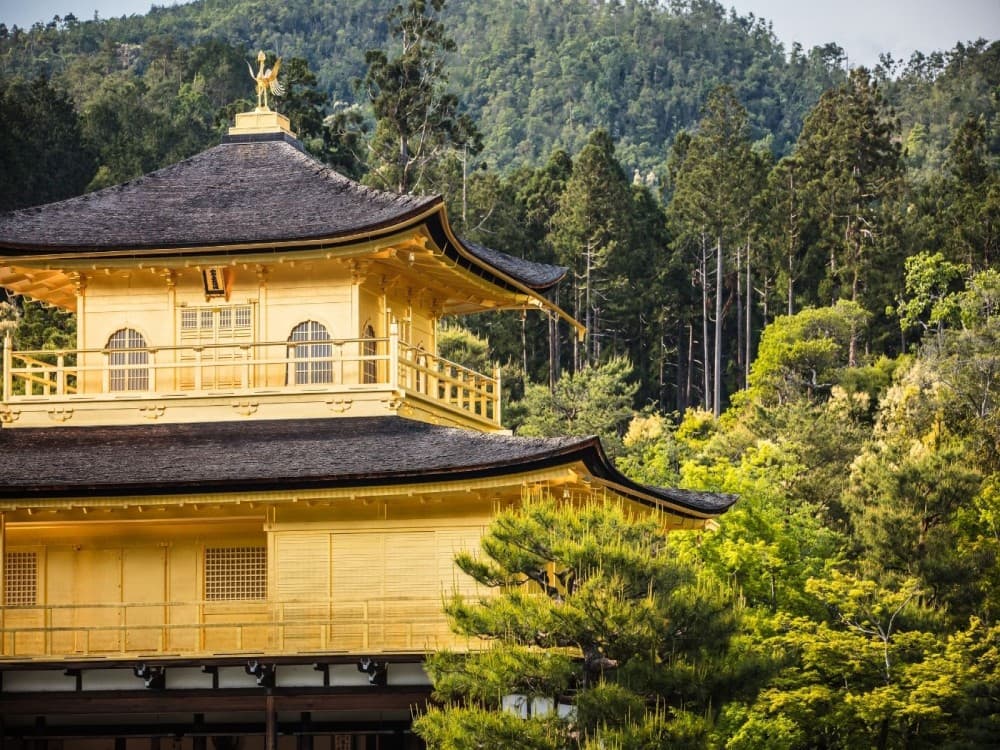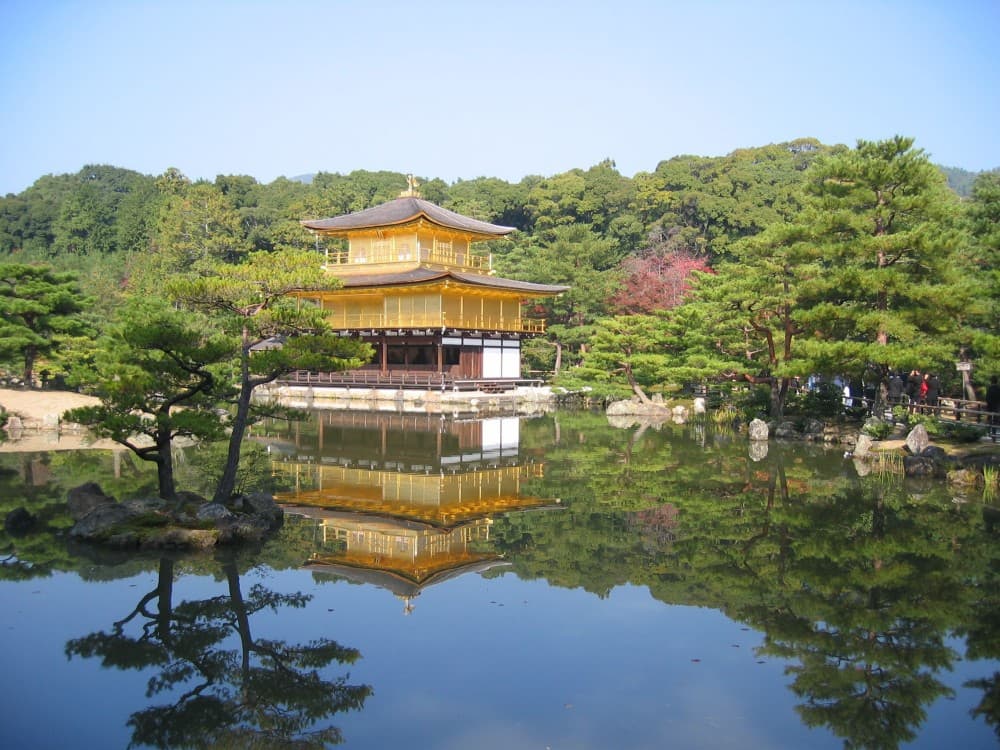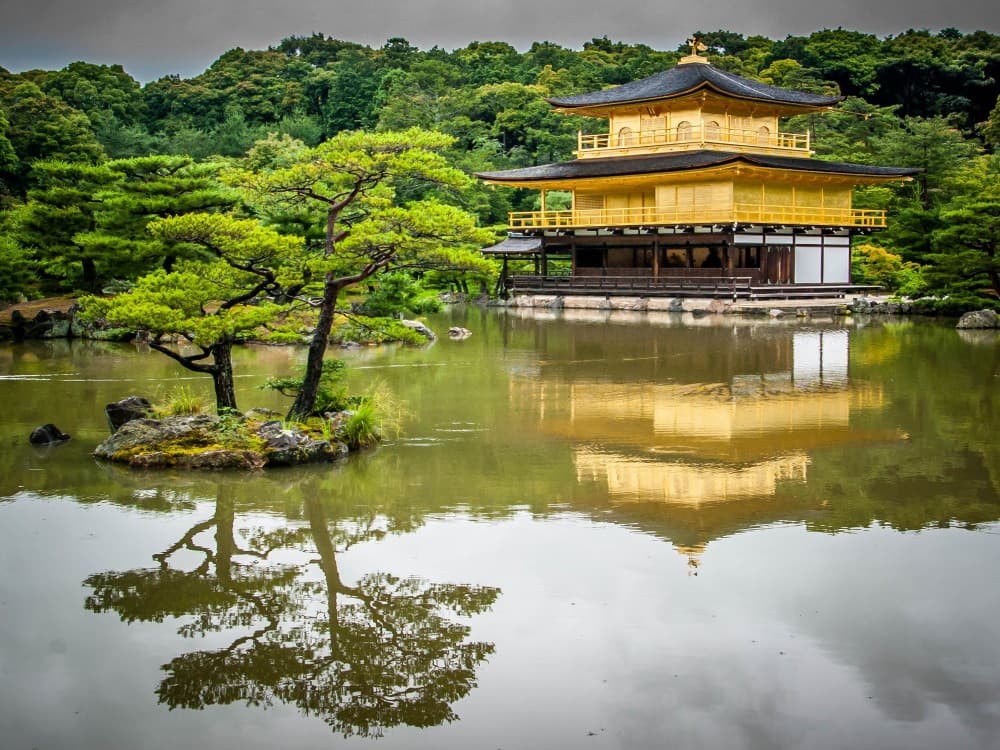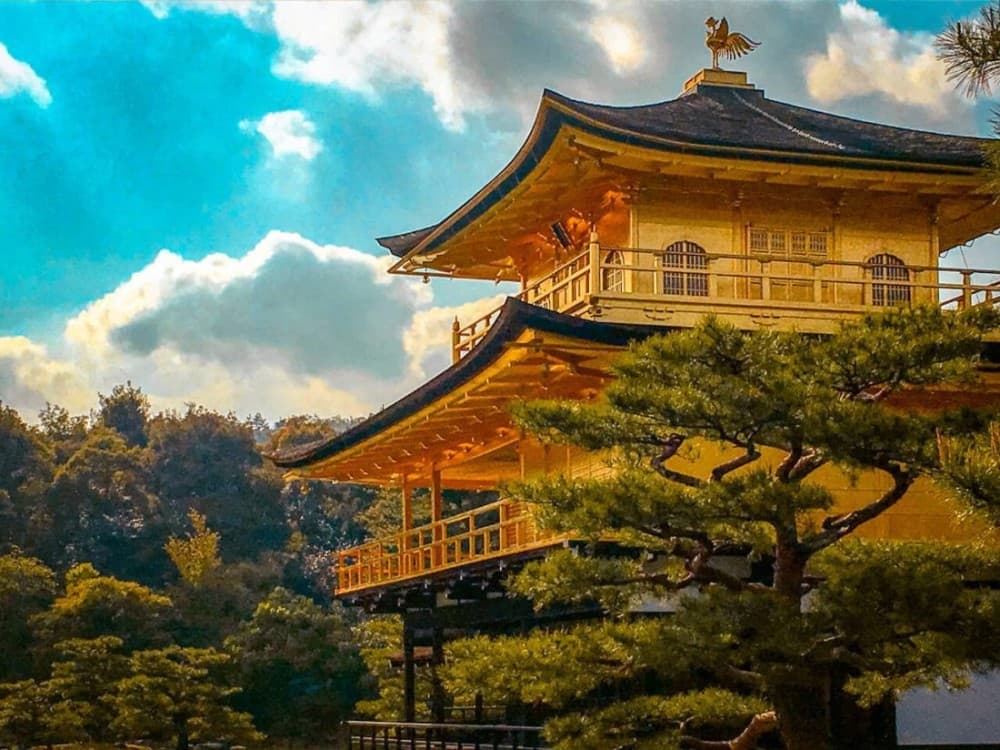
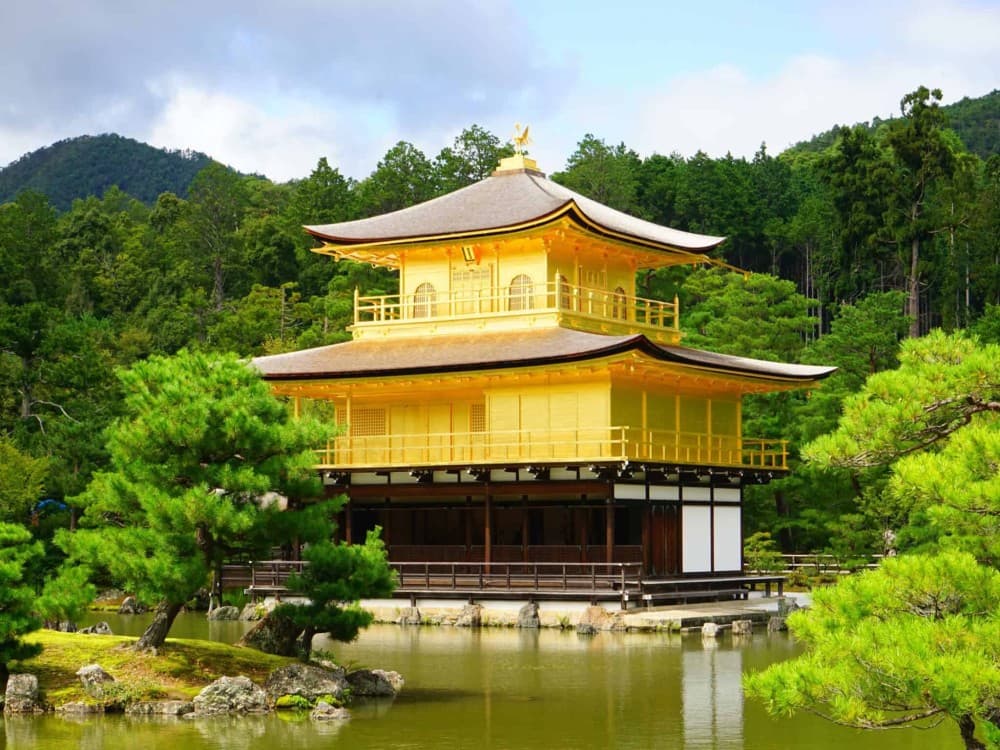
Kinkaku-ji Temple, also known as the Golden Pavilion, is one of Kyoto’s most iconic and photographed landmarks. The temple’s top two floors are covered in gold leaf, shimmering beautifully as they reflect over the calm Mirror Pond (Kyōko-chi). Originally built in the late 14th century as a retirement villa for a shogun, it later became a Zen Buddhist temple. Today, visitors enjoy a peaceful walking path through landscaped gardens designed to be viewed in harmony with the pavilion, offering a classic and unforgettable Kyoto experience.
Es gibt noch keine Touren in Kinkakuji Temple.
Kinkaku-ji is a UNESCO World Heritage Site and officially named Rokuon-ji. The visit follows a one-way walking route through the gardens, ending at a small teahouse and souvenir area. The interior of the Golden Pavilion is not open to the public, but the exterior views are the highlight. Entrance tickets are required and usually include a small paper talisman. The visit typically takes 30–45 minutes, making it easy to combine with other nearby attractions.
Kinkaku-ji can be very busy, especially during peak seasons such as cherry blossom spring and autumn foliage. There is no re-entry once you exit, and large bags or tripods are discouraged. Photography is allowed outdoors, but drones are strictly prohibited. Comfortable walking shoes are recommended, as the path includes gravel sections. Eating and drinking inside the grounds are not allowed except in designated areas near the exit.
There is no train station directly at Kinkaku-ji. From Kyoto Station, take a city bus (routes 101 or 205) to Kinkaku-ji-michi bus stop, then walk about 5 minutes. From central Kyoto, buses are the easiest option. Taxis are also convenient and affordable for short city trips. If using trains, take the Keifuku (Randen) Line to Kitano-Hakubaicho Station, then a short bus or taxi ride.
The best time to visit Kinkaku-ji is early in the morning, right after opening, to avoid crowds. Spring and autumn offer the most scenic views, while winter occasionally brings snow, creating a stunning contrast with the gold pavilion. Summer afternoons can be hot, so morning visits are recommended. The temple is open year-round, including public holidays, though hours may shorten in winter.