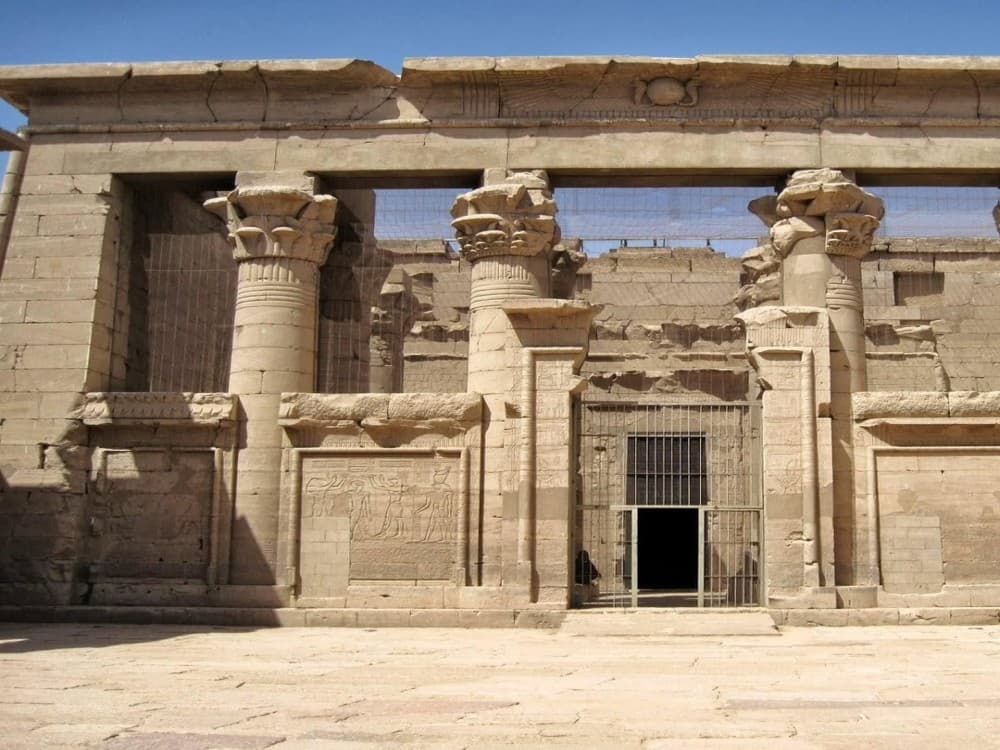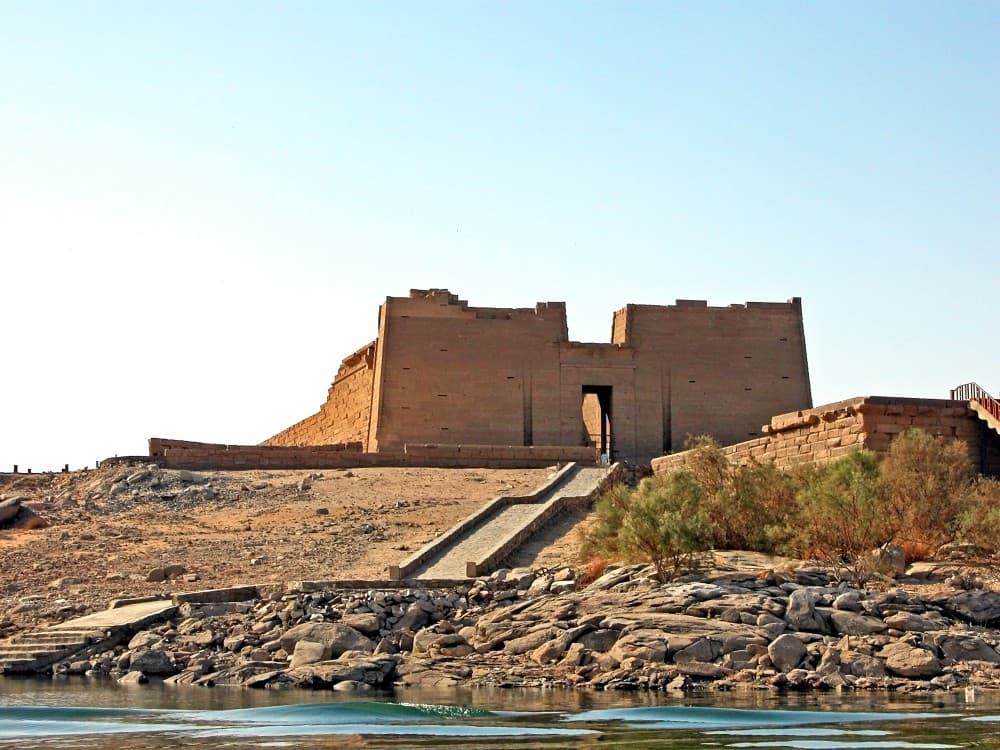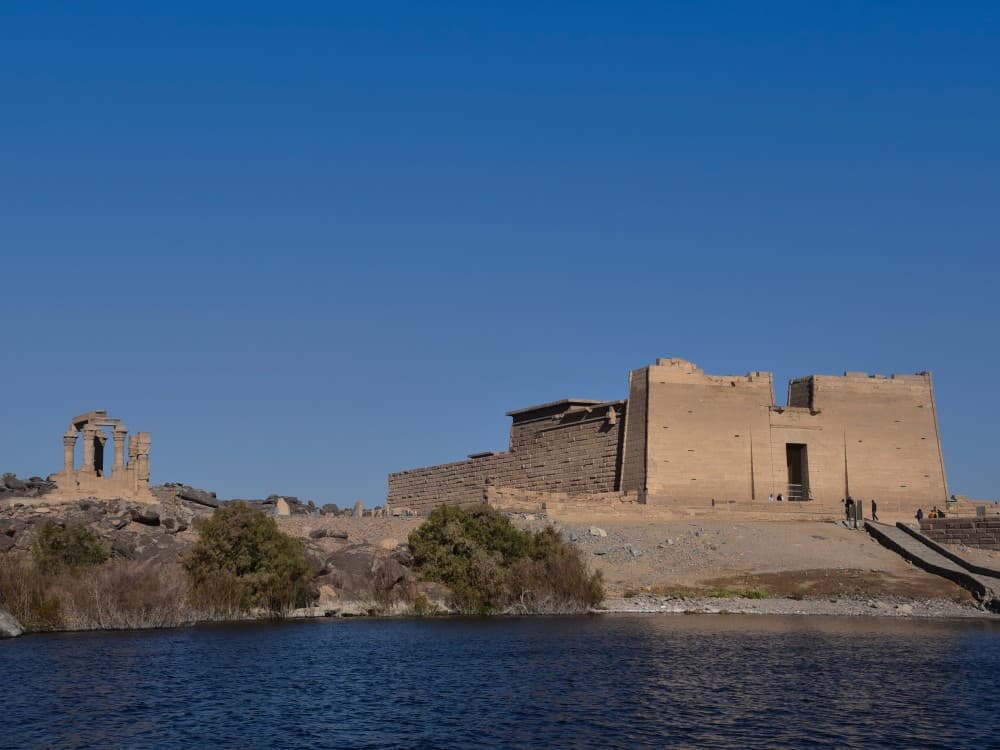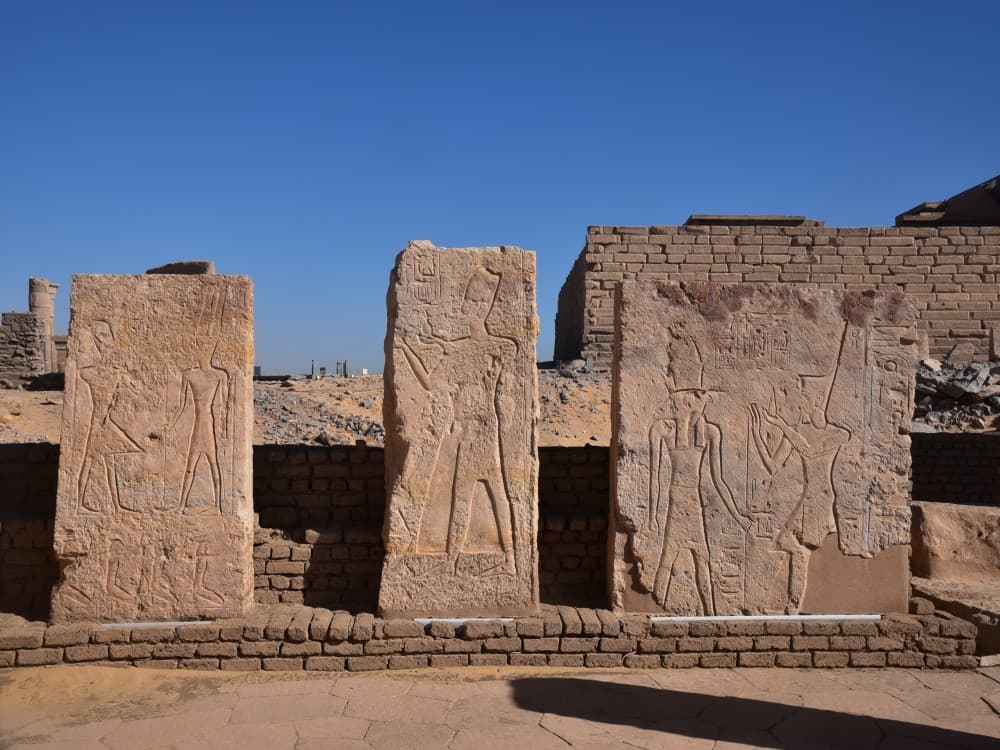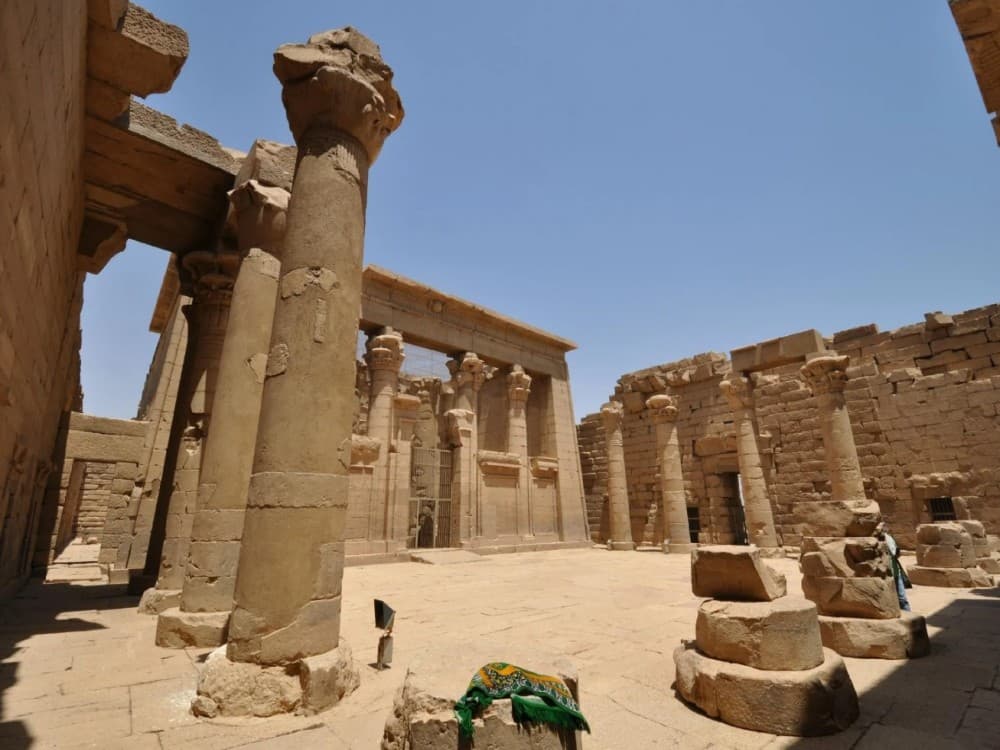
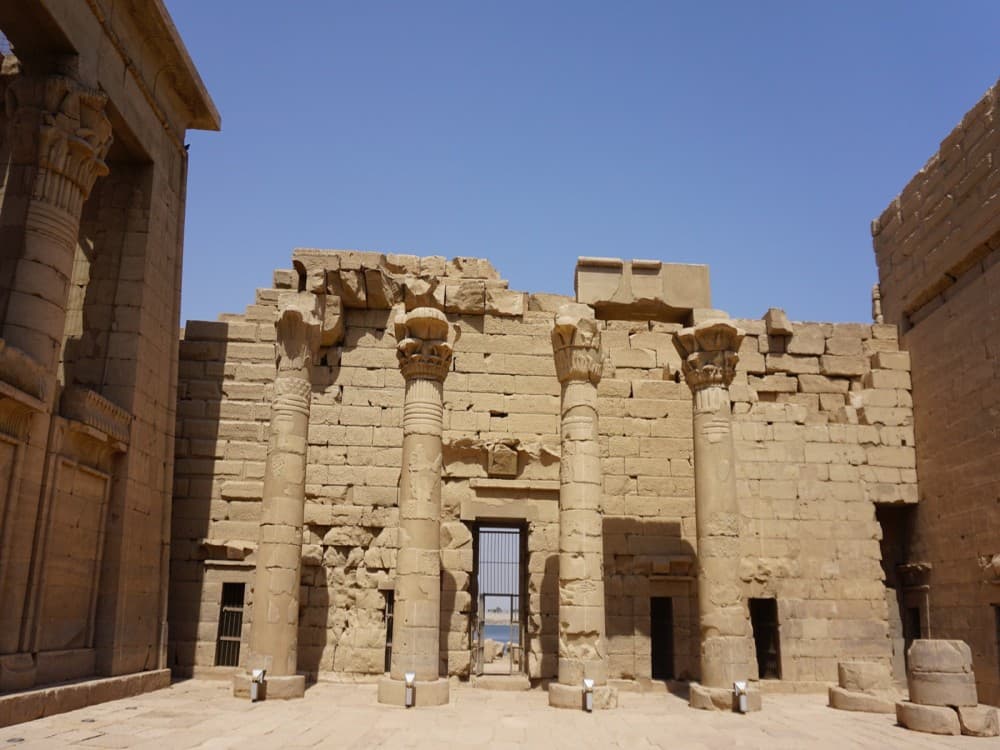
New Kalabsha is an impressive open-air archaeological site on the shores of Lake Nasser. It was created when several ancient Nubian temples were relocated from their original locations before the High Dam flooded the region. The highlight is the Temple of Kalabsha, dedicated to the Nubian god Mandulis. With its massive sandstone walls, carved reliefs, and peaceful lakeside setting, New Kalabsha offers one of Aswan’s most atmospheric and less crowded historical experiences.
Es gibt noch keine Touren in New Kalabsha.
The complex includes several relocated monuments: the Kalabsha Temple, the Temple of Beit el-Wali from the reign of Ramesses II, the Kiosk of Qertassi, and the Gerf Hussein remains. The area is quiet and spacious, allowing visitors to explore at their own pace. There is a small visitor entrance, shade areas, and paths connecting the temples. Entrance fees are moderate and typically include access to the entire site.
The site is open and exposed, so bring sun protection, water, and comfortable shoes. There are limited facilities on-site, so plan ahead. The terrain involves some walking on sand and stone paths. New Kalabsha is rarely crowded, making it perfect for travelers who enjoy peaceful ruins and photography. Information panels exist, but hiring a local guide adds valuable context about ancient Nubian culture.
New Kalabsha lies near the Aswan High Dam on the west bank of Lake Nasser. The most common way to reach it is by boat from the dock near the dam. Boat transfers are arranged by local operators or your hotel, and the ride takes about 10–15 minutes. Taxis can take you to the embarkation point with ease.
Morning visits are best to avoid strong heat and enjoy soft light across the temples. Late afternoon is also beautiful, with warm colors reflecting off the lake. The site is open daily year-round, but winter and early spring offer the most comfortable temperatures for exploring.