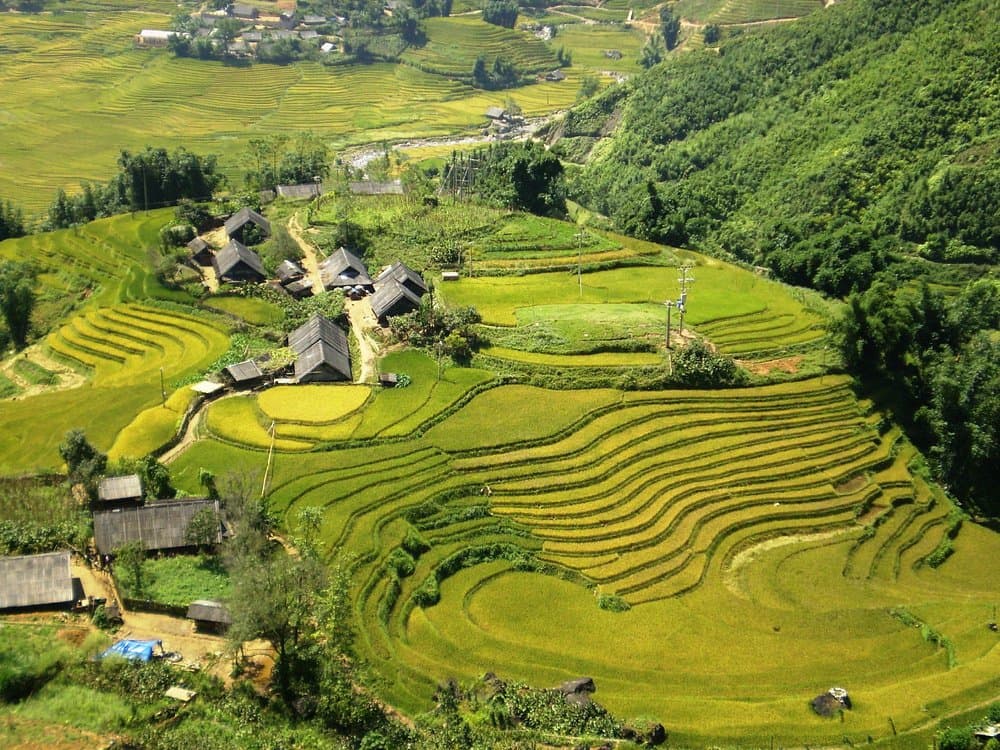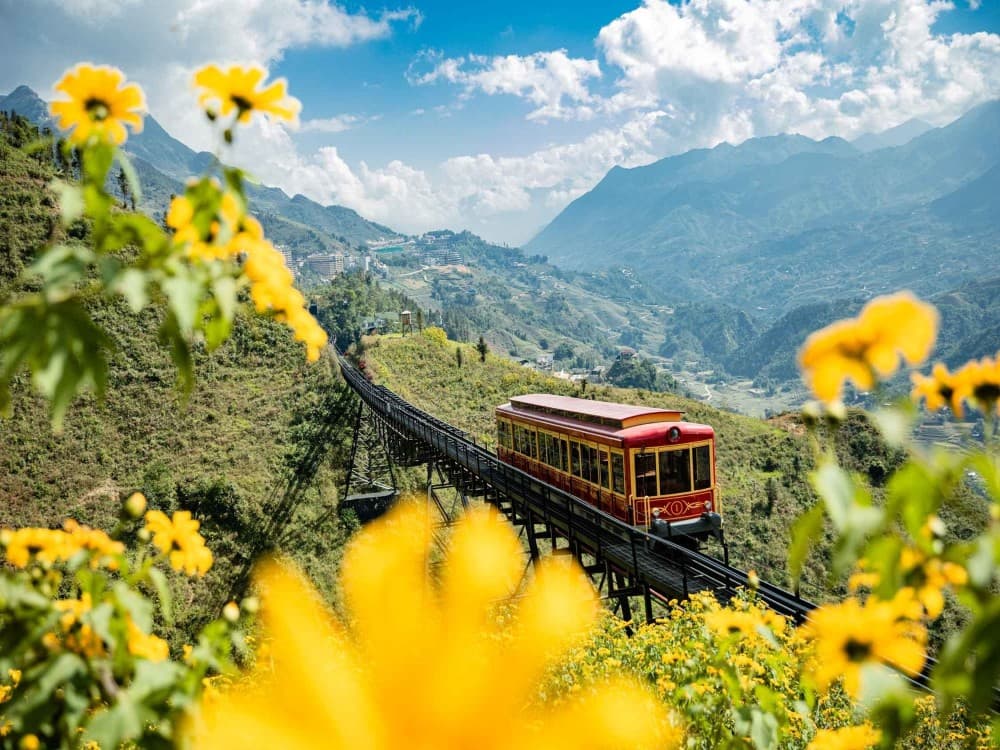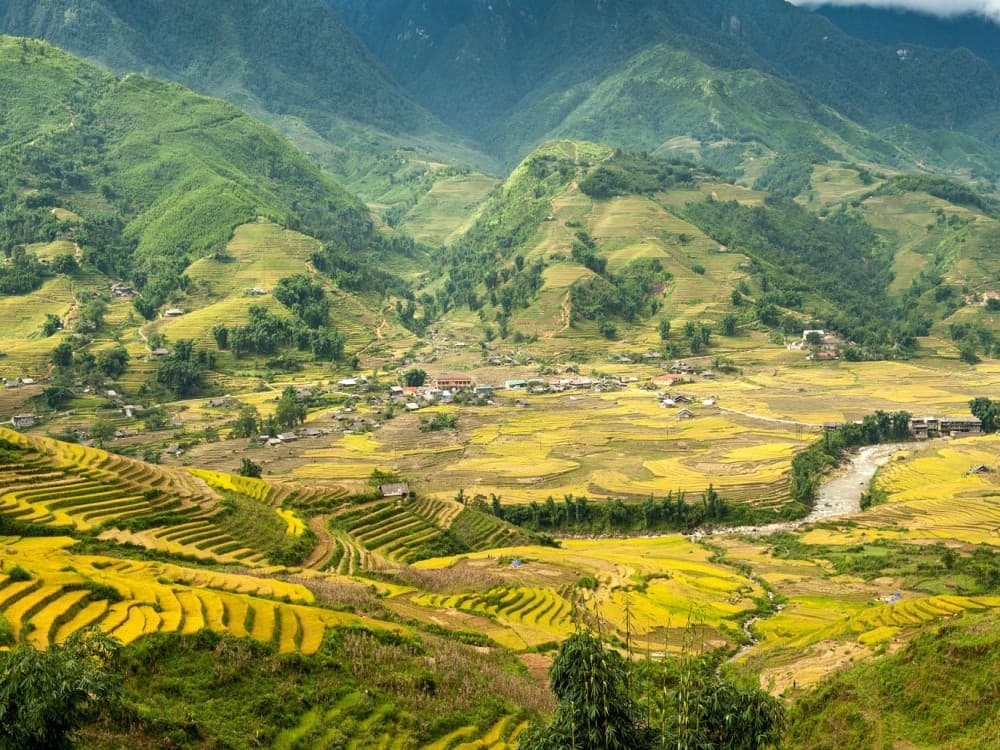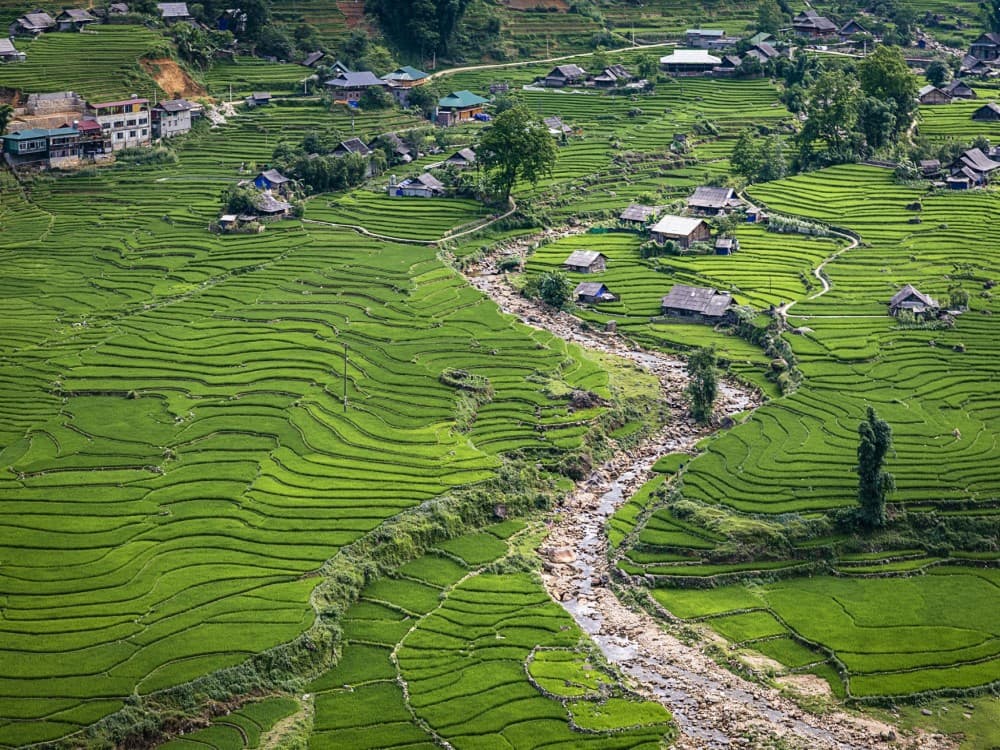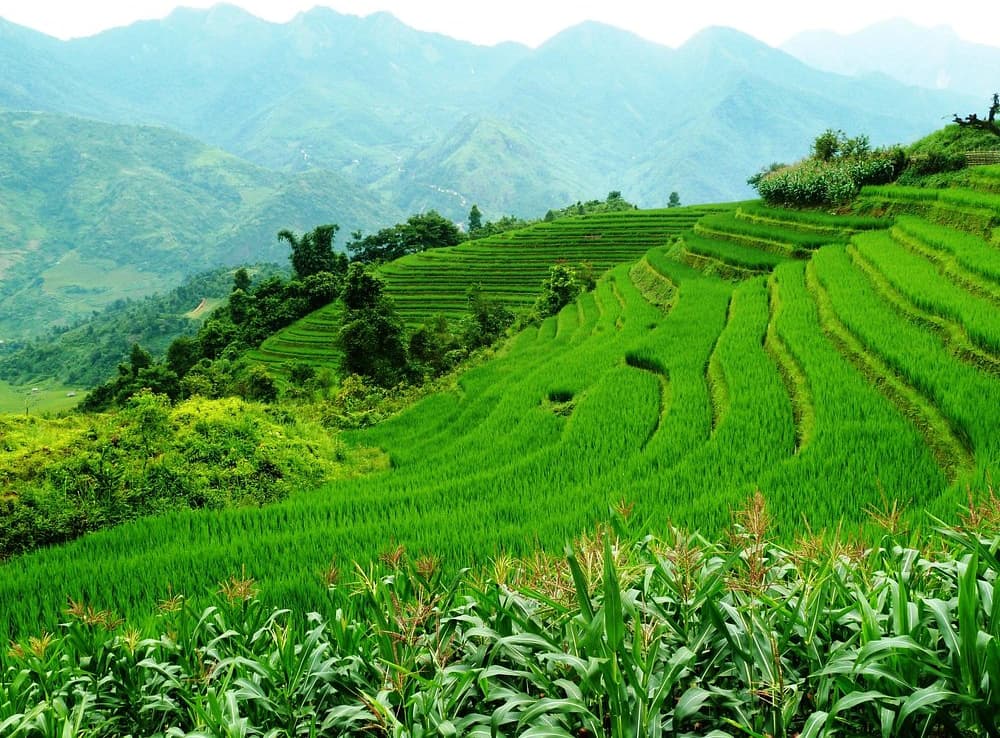
Just a short ride from Sapa town, Muong Hoa Valley is one of the most picturesque destinations in northern Vietnam. Surrounded by towering mountains, rice terraces, and scattered ethnic minority villages, the valley is a breathtaking blend of nature and culture. Visitors come to marvel at the lush landscapes, walk through local villages, and experience the authentic daily life of the Hmong, Dao, and Tay people. It’s a peaceful retreat from Sapa’s busier streets, and a perfect spot for hikers, photographers, or anyone wanting to explore Vietnam's rural beauty.
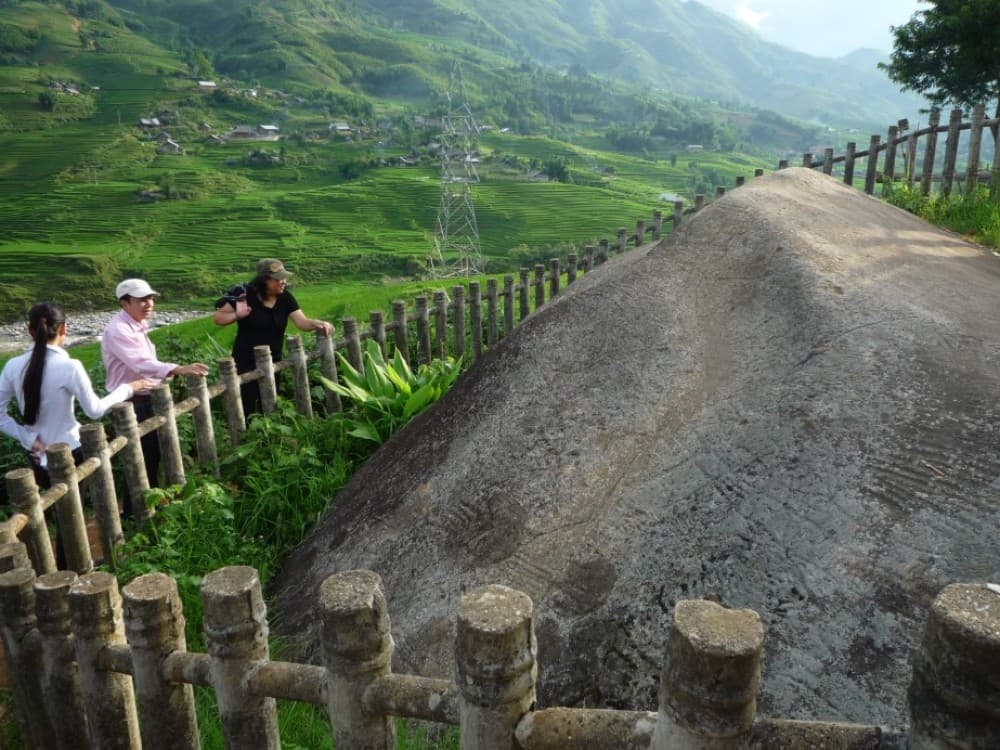
Muong Hoa Valley stretches across several communes, including Lao Chai, Ta Van, and Hau Thao, about 10 km southeast of Sapa town. The valley lies at the foot of the Hoang Lien Son mountain range and is known for its cascading rice terraces, scenic river, and ancient rock carvings that date back thousands of years. The area is home to several ethnic minority communities, who live in stilt houses and continue to farm the land traditionally. A small entrance fee (usually around 75,000 VND per person) is required to visit.
Bring comfortable walking shoes, as the valley’s terrain can be uneven and slippery, especially after rain. If you're trekking, consider hiring a local guide—many are local women from the villages and offer authentic insights. Prepare for limited phone signal and basic facilities in the villages. Some areas may charge small additional fees for village access. If visiting during rainy season (June–August), expect muddy trails and occasional landslides—plan accordingly.
Getting to Muong Hoa Valley from Sapa is simple. You can take a motorbike, taxi, or join a guided tour. It’s about a 20–30 minute drive from the town center, depending on your destination within the valley. For more freedom, rent a motorbike (from 100,000–150,000 VND per day), but ensure you’re comfortable with mountain roads. Alternatively, many guesthouses and hotels offer half-day or full-day treks with transportation included.
The best time to visit Muong Hoa Valley is from September to November and March to May. During these months, the weather is cool and dry, perfect for trekking and photography. Late September is especially beautiful, with golden rice fields ready for harvest. Winter months (December–February) can be foggy and cold, while the summer rainy season (June–August) may bring lush green views but also slippery trails and occasional flooding.