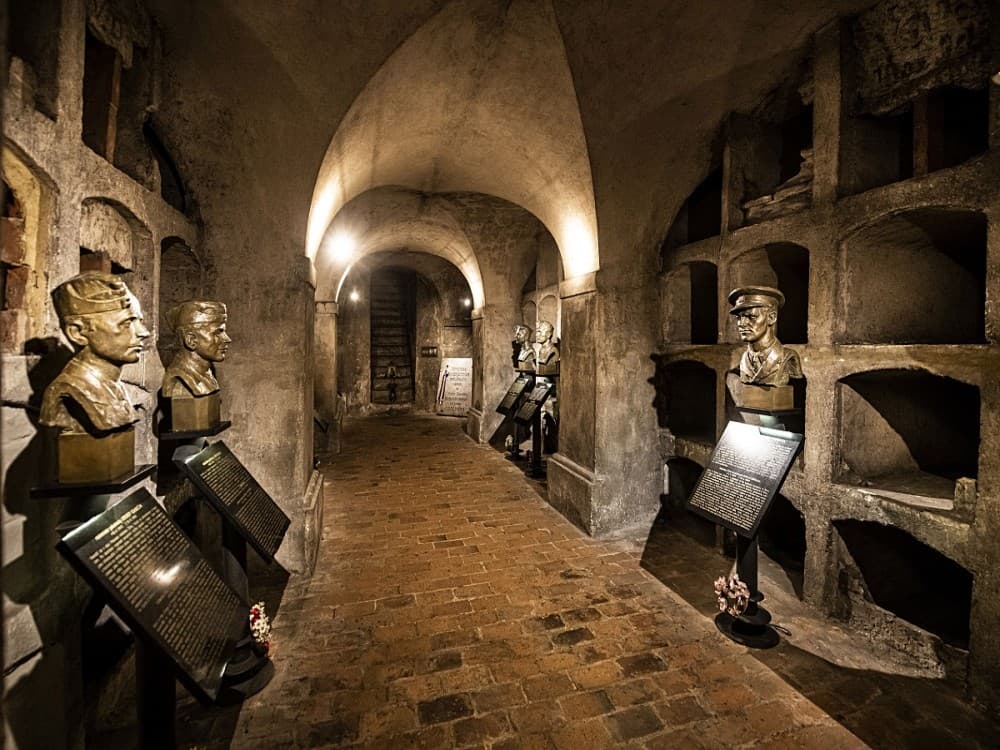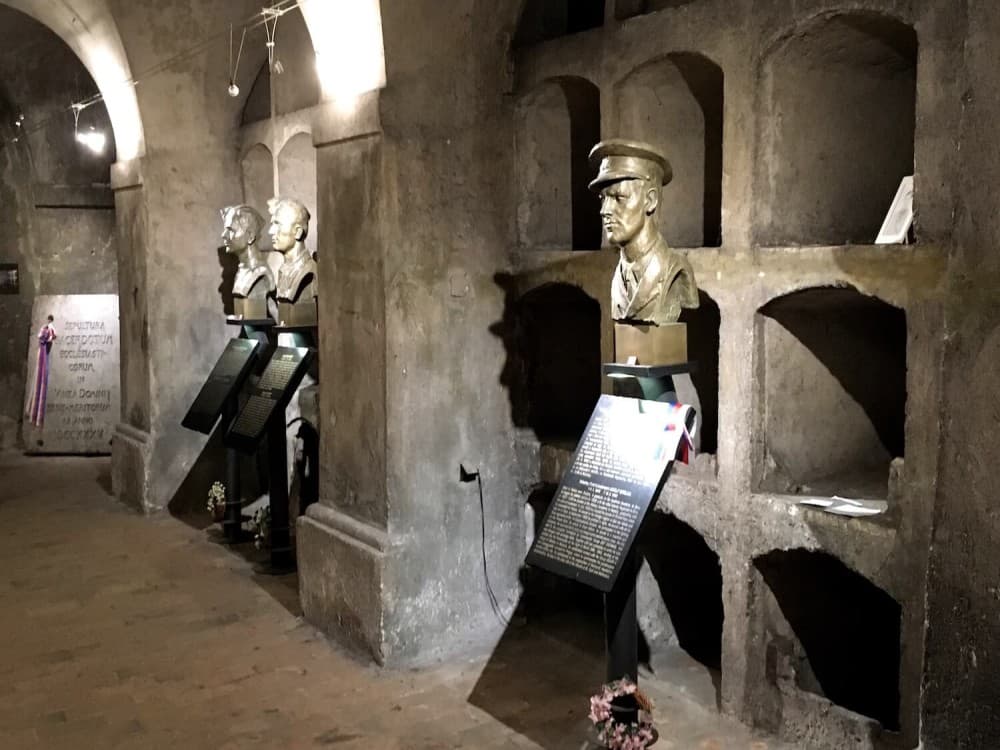
The National Memorial to the Heroes of the Heydrich Terror is one of Prague’s most moving and historically significant sites. Located beneath the Church of Saints Cyril and Methodius, it commemorates the Czech paratroopers who carried out the 1942 assassination of Reinhard Heydrich and later made their final stand in the church crypt. The museum tells the story of Operation Anthropoid through photographs, personal items, documents, and atmospheric displays. Visiting the crypt provides a powerful and emotional experience, offering insight into bravery, resistance, and the sacrifices made during World War II.
Es gibt noch keine Touren in National Memorial to the Heroes of the Heydrich Terror.
The memorial is housed in the church’s former crypt, now a museum dedicated to the seven resistance fighters who were surrounded and killed there in 1942. Exhibits are compact but detailed, explaining the events leading to the assassination, the Nazi reprisals, and the significance of the operation in Czech history. A typical visit takes around 30 to 60 minutes. The site is suitable for adults, students, and history enthusiasts looking to understand an important chapter of Prague’s wartime past.
The memorial is emotionally intense, with exhibits focusing on wartime violence, sacrifice, and repression. It may not be suitable for very young children. The crypt can feel confined, so visitors sensitive to tight spaces should be prepared. Photography is usually limited out of respect for the site. Reading the displays enhances the experience, as the museum is small but rich in historical detail.
The memorial is located in Prague’s New Town, not far from the river. It is easily reached on foot from central districts or via tram or metro, with stops a short walk away. Those staying farther out can use a taxi or ride-hailing service, which can drop visitors near the church entrance.
The memorial is typically open daily except for major holidays, with hours running from mid-morning to late afternoon. Morning visits are quieter, while afternoons may attract more visitors, especially during summer. Because the museum space is small, arriving earlier in the day provides a more reflective atmosphere.