Aswan: Famine Stela | ®ExcursionMania
Aswan

Famine Stela

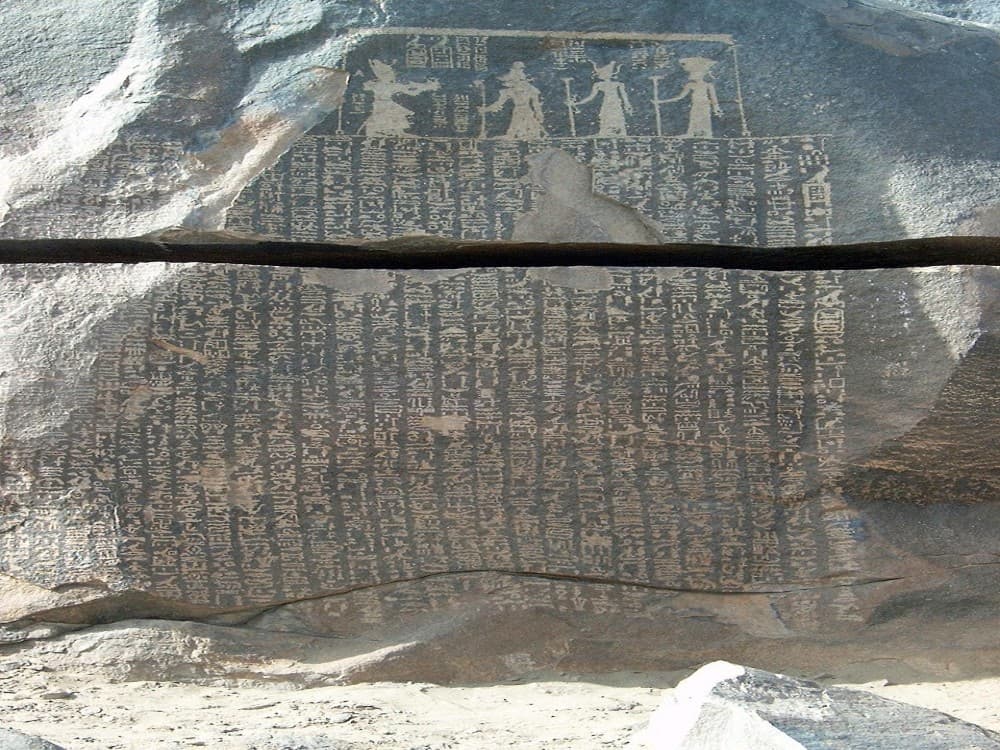
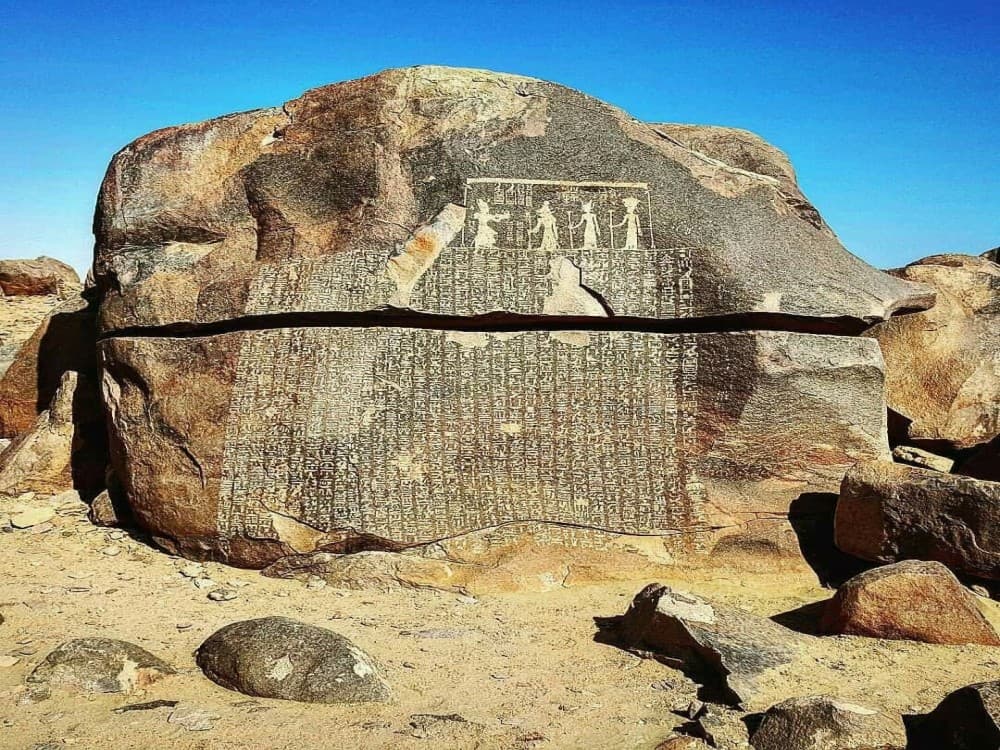
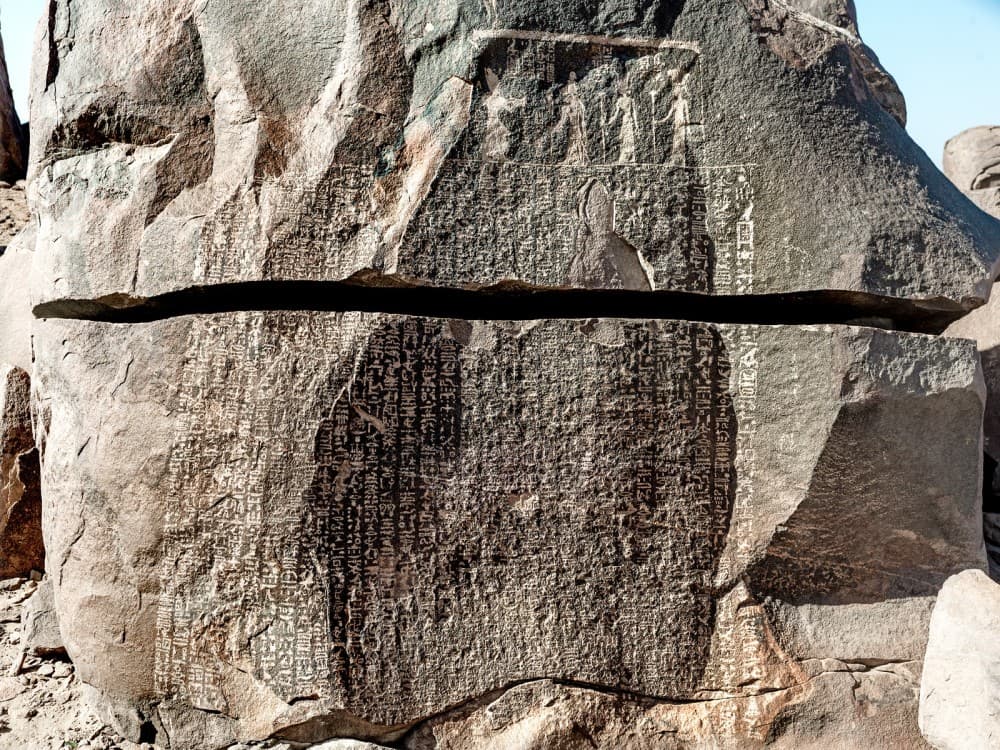
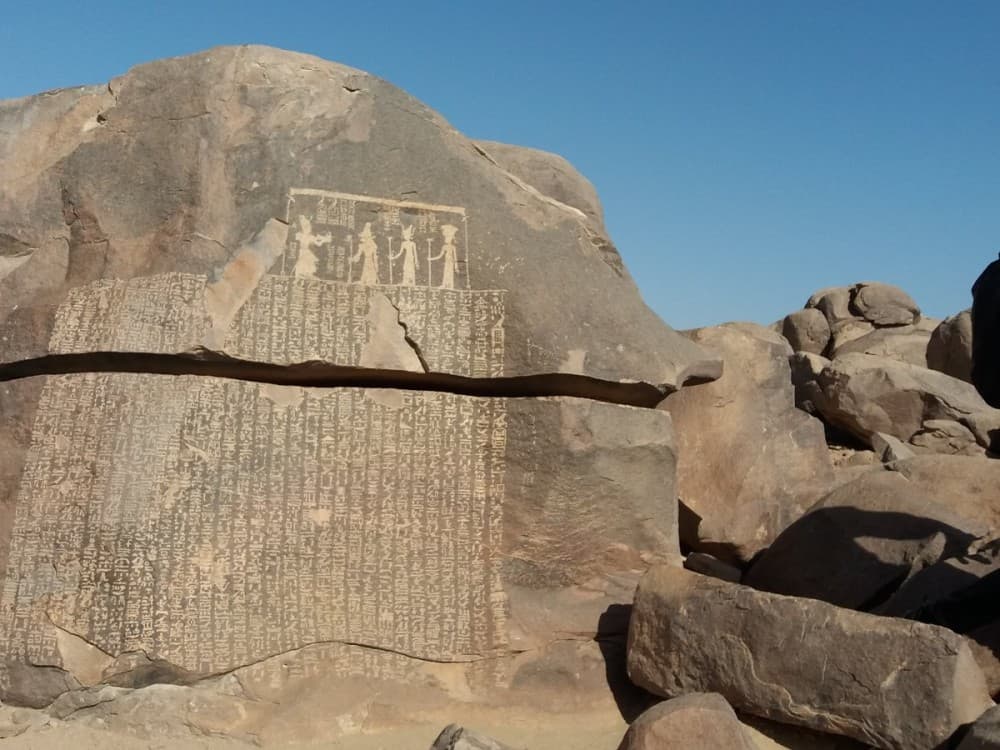
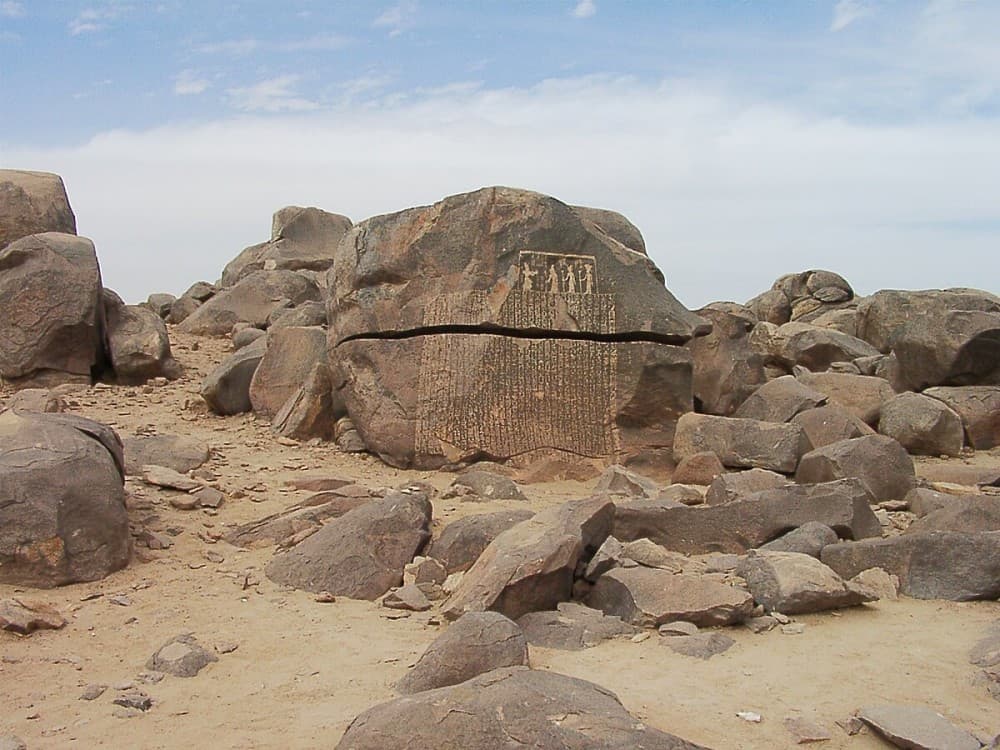
The Famine Stela is a large inscription carved into a granite outcrop on the northern end of Sehel Island, just south of Aswan. It tells a legendary story from the Old Kingdom, describing a seven-year famine during the reign of King Djoser. The text explains how the king sought guidance from the god Khnum, guardian of the Nile’s source. Filled with ancient hieroglyphs, the stela offers a vivid blend of myth, history, and religious devotion. It’s set in a quiet, rocky landscape that feels untouched, making it an evocative place to explore.
Famine Stela Touren und Tickets

Es gibt noch keine Touren in Famine Stela.

Alles über Famine Stela

Was Sie erwartet

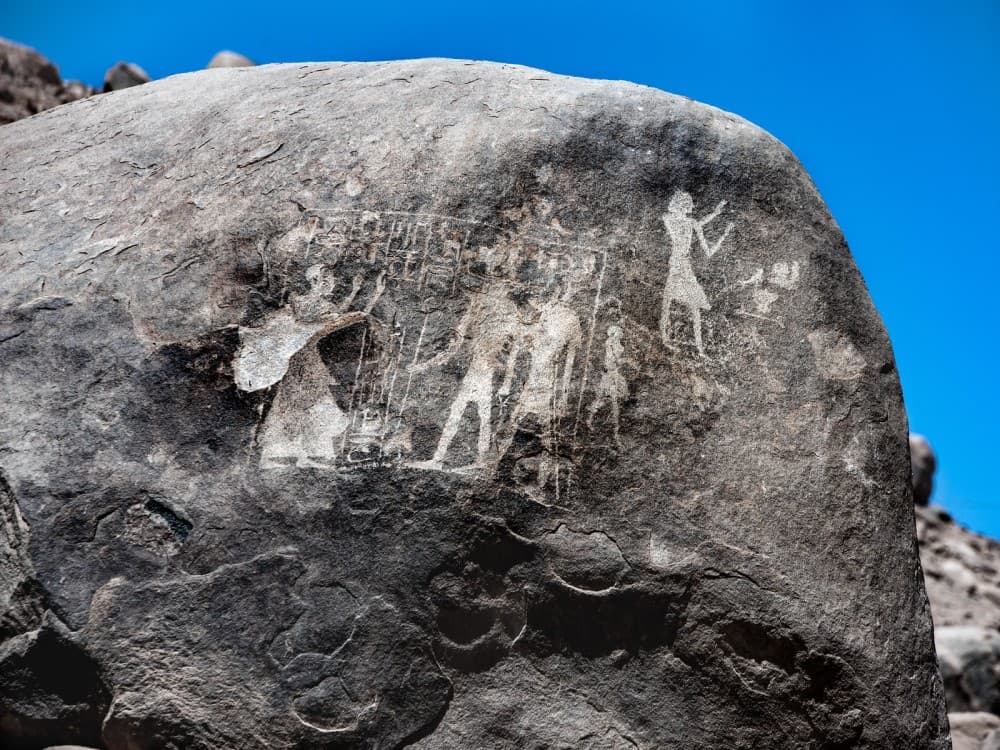
The Famine Stela dates back to the Ptolemaic period despite telling a much older story. It is carved directly into a cliff face on Sehel Island, known for its many ancient inscriptions left by travelers and officials over thousands of years. The site is open-air, and there is no formal visitor center, but it is monitored and accessible through small local boat operators. It’s a short and rewarding stop for travelers interested in lesser-known historical gems.

Warum diese Tour buchen

Wear sturdy shoes, as the area involves walking on uneven granite rocks. Sun protection is essential due to limited shade. Bring water, as facilities on the island are minimal. A local guide can help interpret the hieroglyphs and point out additional inscriptions across the site. The stela is outdoors, so photography is easy, but be mindful of climbing restrictions around the rocks. Expect a peaceful, uncrowded experience.

Die richtige Tour auswählen

From central Aswan, take a taxi or ride-share to the shoreline opposite Sehel Island. From there, hire a small motorboat or felucca operated by local boatmen. The ride is short and scenic, offering views of the Nile’s islands. Once on Sehel Island, your boatman will guide you to the footpath leading up to the stela. Many hotels and tour agencies in Aswan can arrange the short transfer and boat in advance if preferred.

Wissenswertes vor der Abreise

The best time to visit is between October and April, when temperatures are pleasant and outdoor walking is comfortable. Mornings and late afternoons offer the best light for reading the carvings and taking photos. Midday can be very hot, especially on bare rock surfaces. Since the site is rarely crowded, you can enjoy a calm visit almost any day of the week.