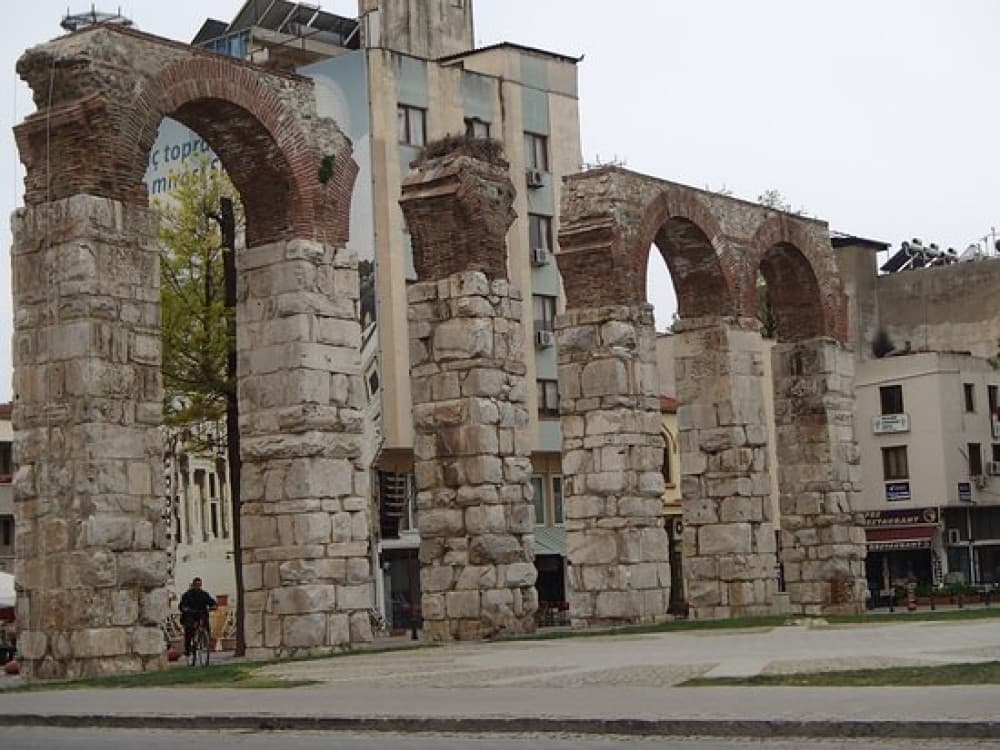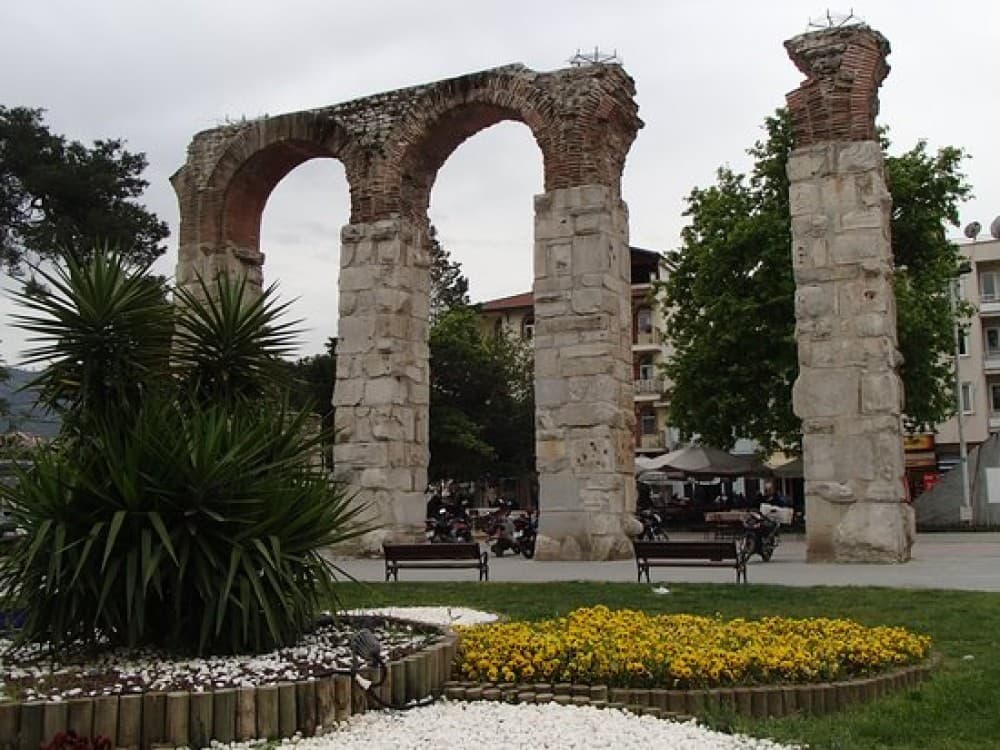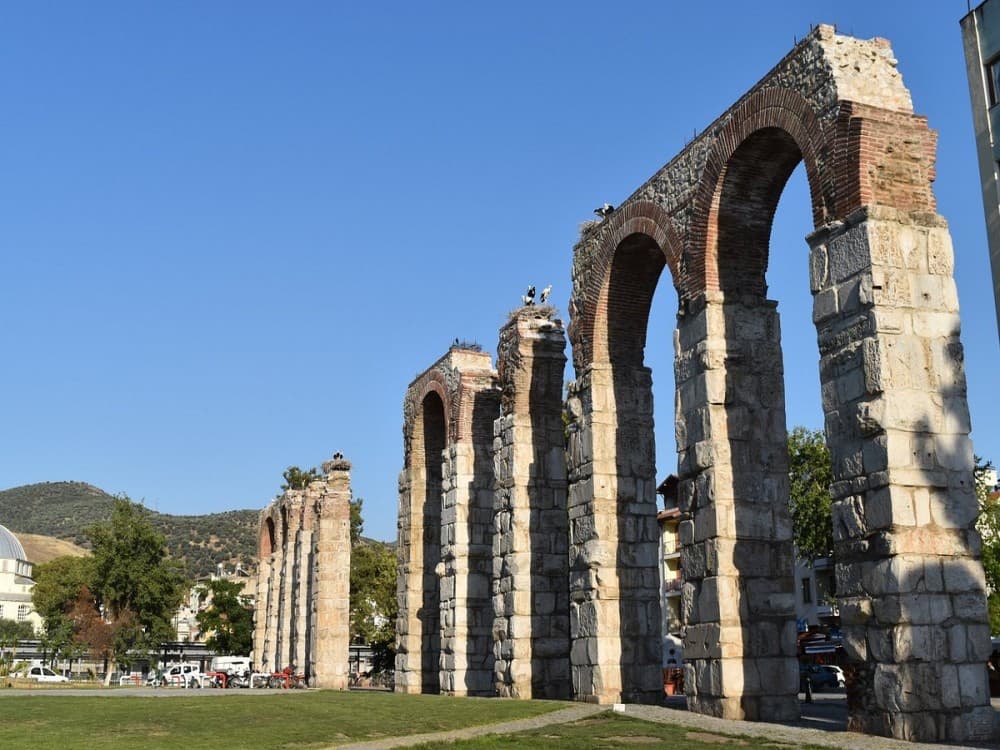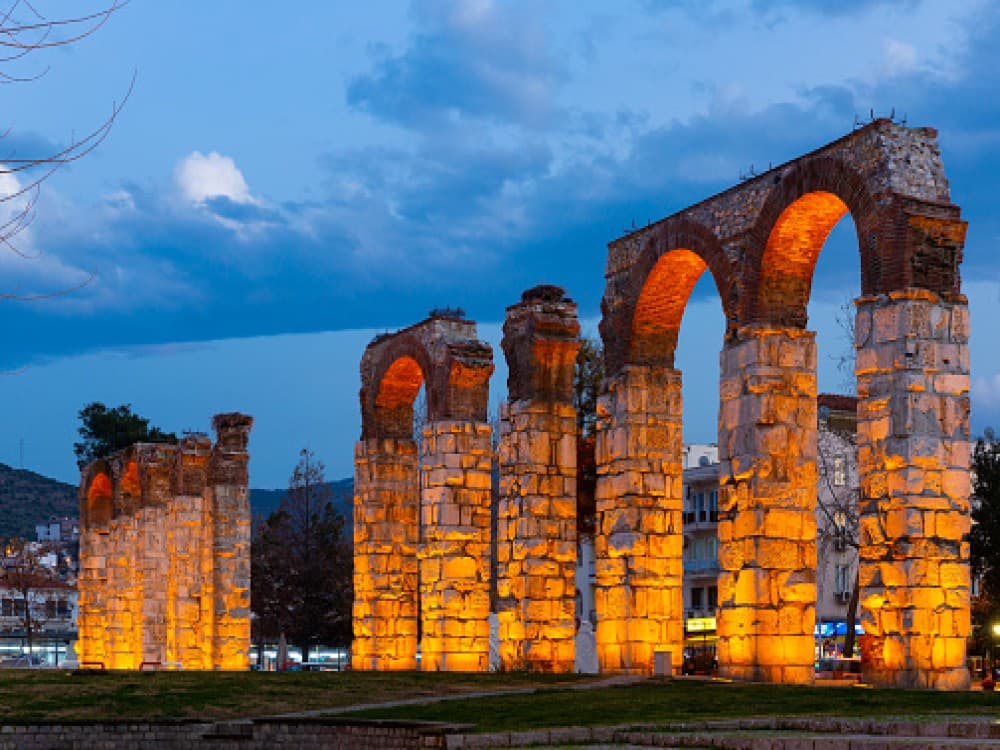
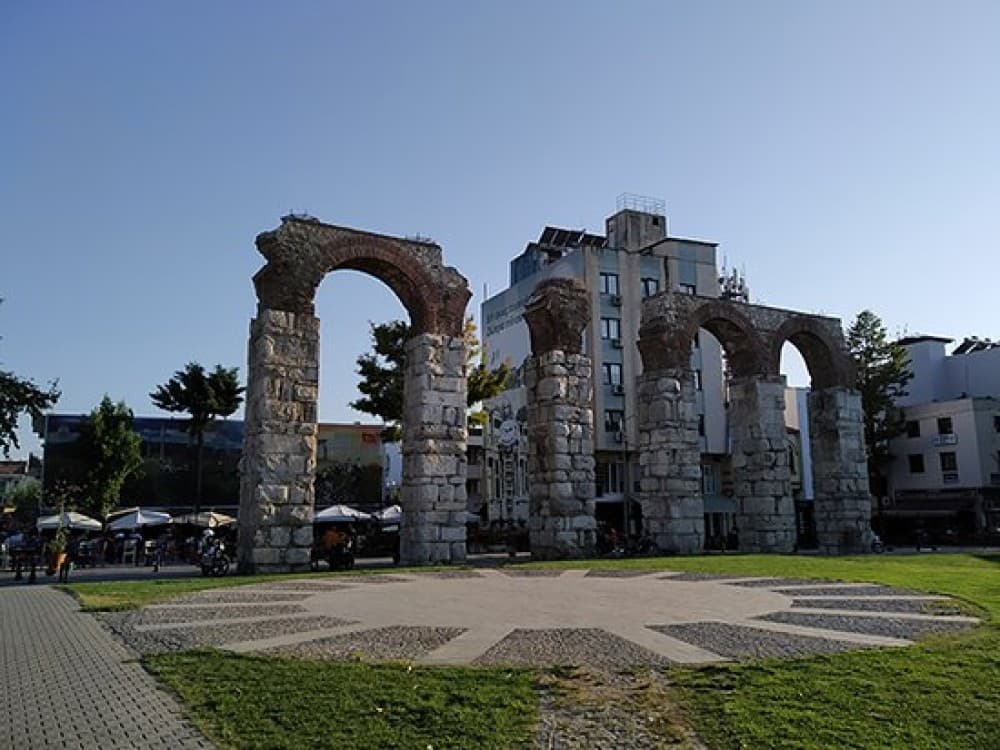
The Byzantine Aqueducts of Selçuk are one of the most striking surviving engineering marvels in the town. Their tall stone arches rise gracefully around Ayasuluk Hill, especially visible around the train station and along the road. These aqueducts once carried water from distant springs to supply the hilltop settlement and the Basilica of St. John. Today, they stand as echoes of ancient water-management skills — and now serve as nesting sites for graceful storks.
Es gibt noch keine Touren in Byzantine Acquaducts.
Built during the Byzantine era, these aqueducts stretch from eastern springs into Selçuk and climb toward Ayasuluk Hill. The strong masonry construction uses large cut stone blocks, and the upper arches combine brickwork with stone. Historic records and archaeological research show that water was carried through this system into a restored vaulted reservoir, or samıcı, whose ruins you can still visit.
Wear comfortable shoes parts of the route are uneven and unpaved. The area is partly shaded but can get hot in the summer, so bring water and sun protection. You’ll want a camera: the arches, stonework, and the storks nesting above make atmospheric photo opportunities. Be respectful of the structures and wildlife; many storks return here each year, making it both a historical and natural highlight.
From Selçuk’s town center, the aqueduct ruins are easy to reach on foot. Head toward Ayasuluk Hill and the train station area, where many of the aqueduct arches remain. The site is very walkable, and most of the impressive structures are alongside local roads or in areas with minimal traffic. It's an ideal stop on a walking tour that includes Selçuk Castle or the Basilica of St. John.
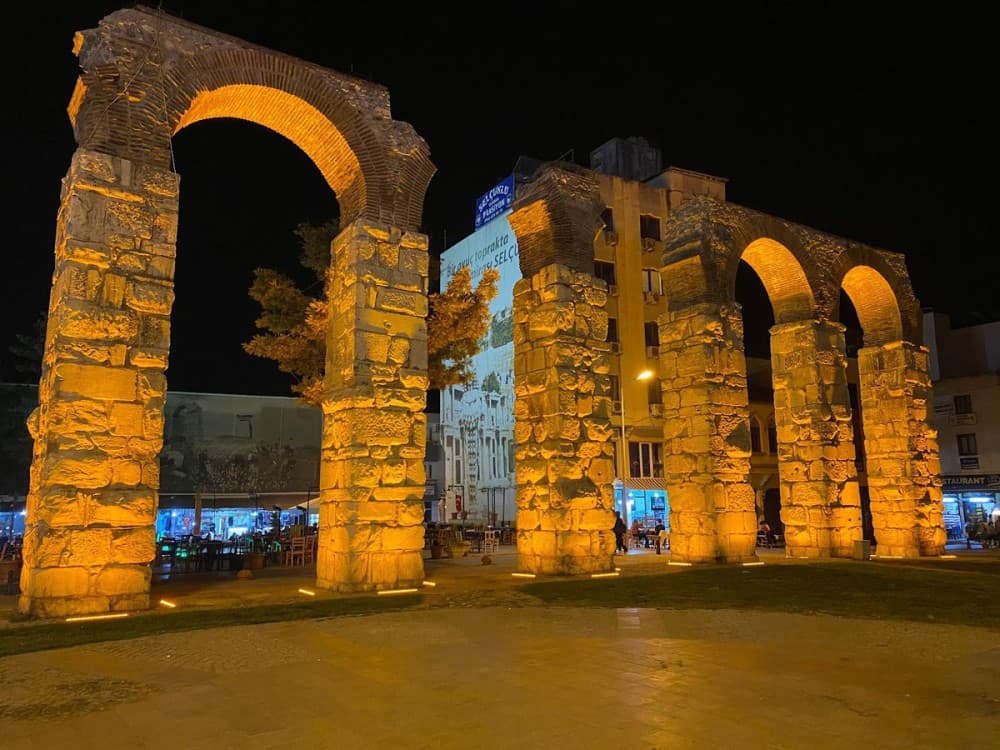
The best time to visit is in the morning or late afternoon, when the light highlights the texture of the stone arches and temperatures are cooler. Spring through early autumn brings migrating storks (March–September), which perch on the aqueduct a magical sight. Evenings are charming, especially when the neighborhood becomes quieter and the ancient ruins glow in soft light.