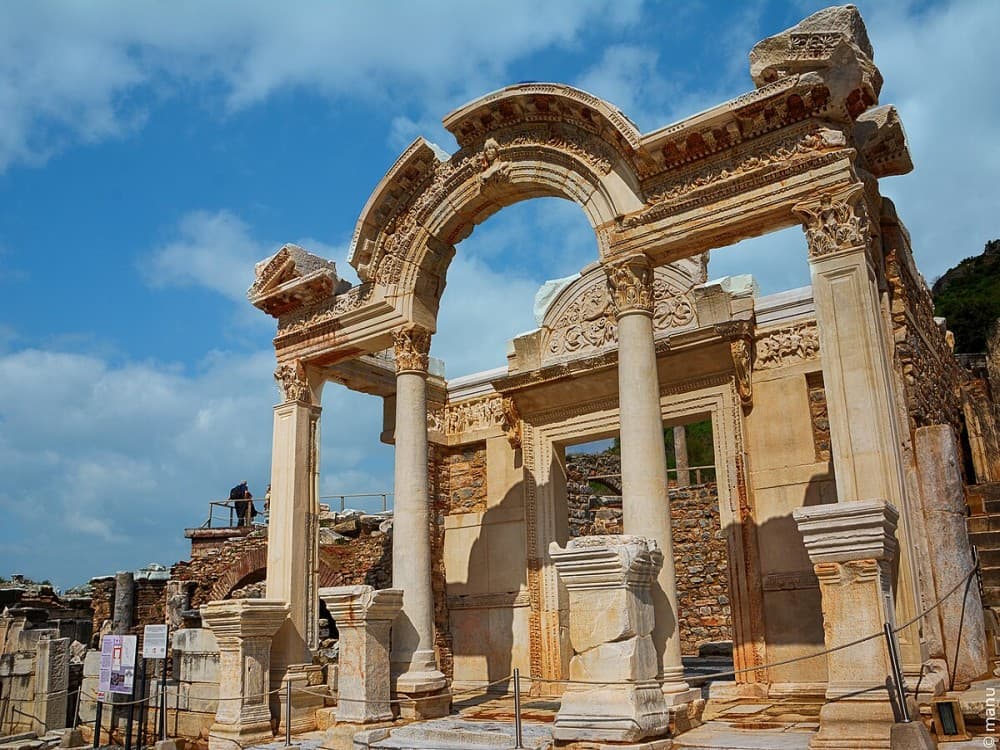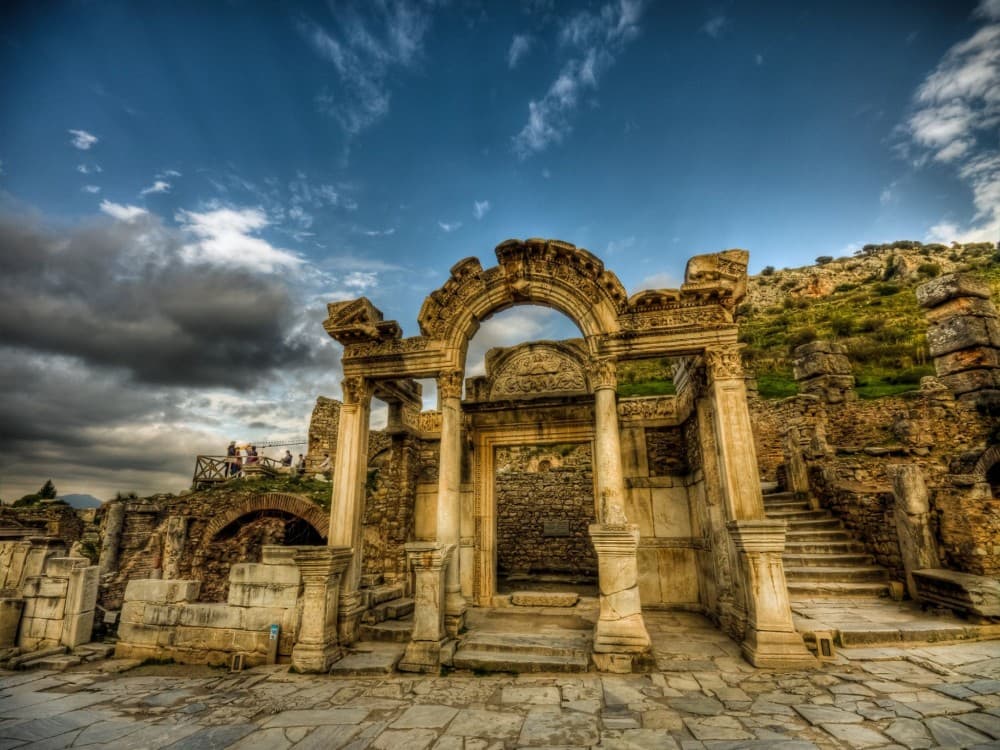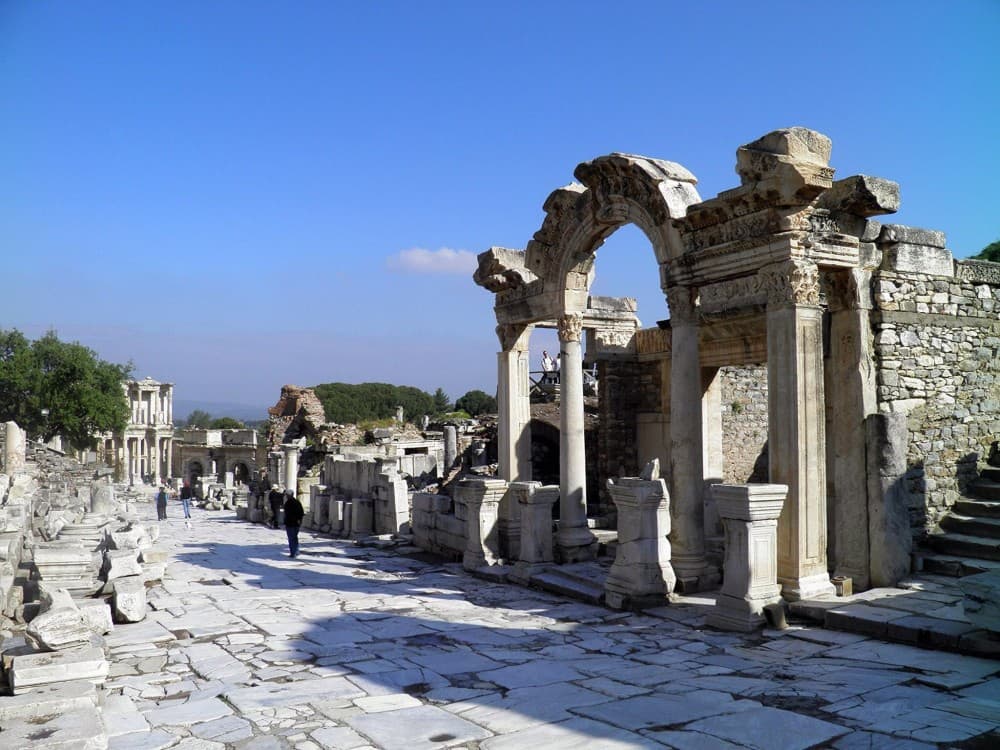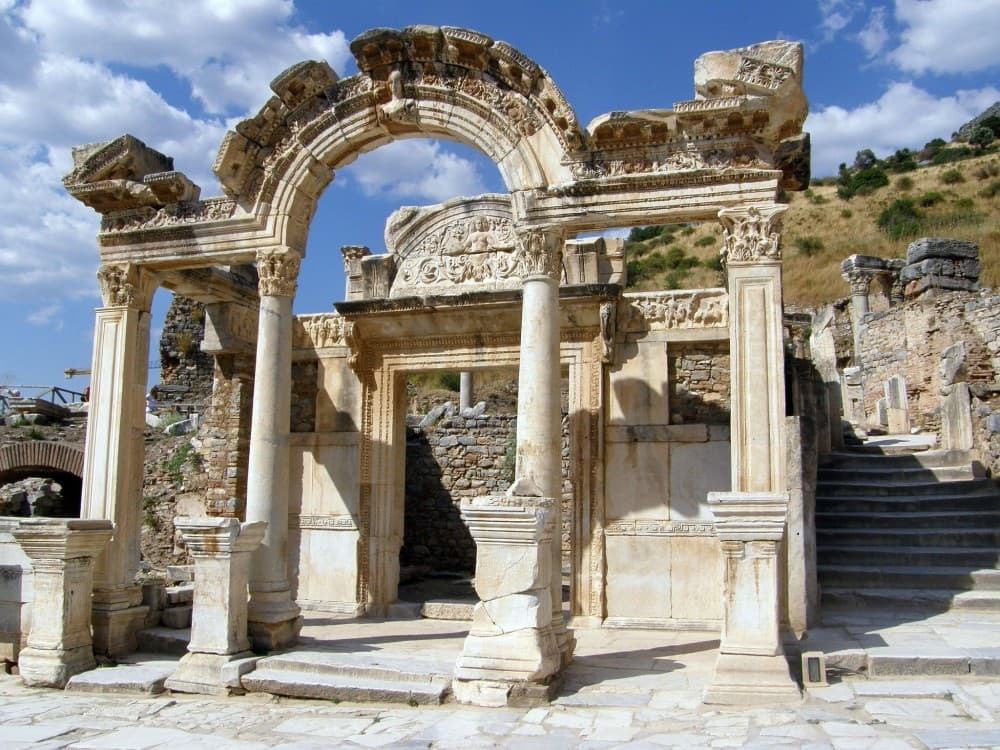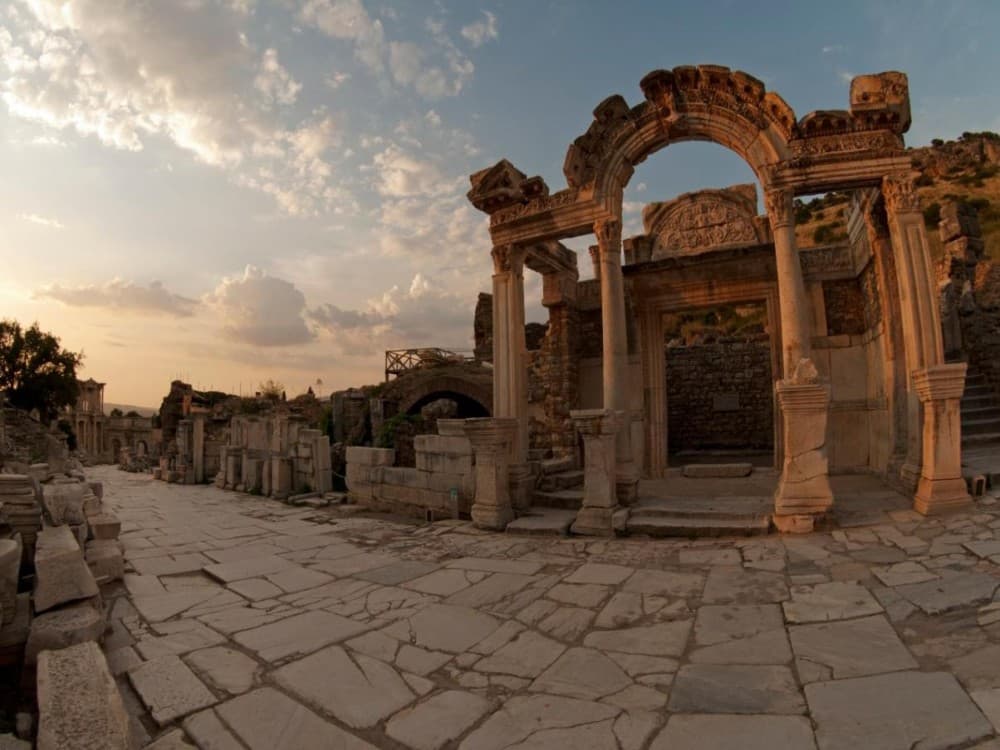
The Temple of Hadrian is a beautifully preserved small Roman shrine tucked along Curetes Street in the ancient city of Ephesus. Built in honor of Emperor Hadrian, it stands gracefully on a raised platform and is framed by four elegant Corinthian columns. Its decorative frieze features scenes of the founding myth of Ephesus, giving the temple a symbolic depth. The harmonious proportions and refined details of the remaining façade make it one of the most charming ruins in Ephesus.
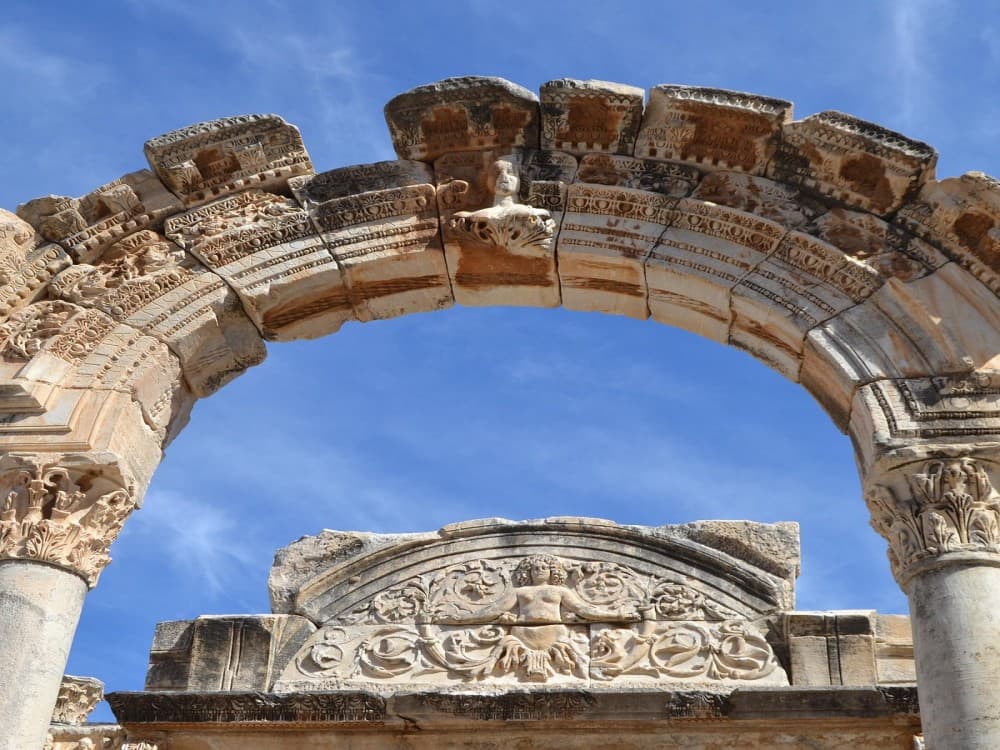
The temple was dedicated by P. Quintilius Varius in the early 2nd century AD, celebrating Emperor Hadrian and local traditions. It resembles a tetrastyle prostyle temple with a front portico and four prominent columns. The structure has been partially restored, including its roof and the back walls, thanks to archaeological efforts. In its day, its cella likely housed statues of deities or emperors, and inscriptions on the base commemorate various Roman emperors.
Wear comfortable walking shoes curetes Street is made of ancient marble and can be uneven. Bring water, sunscreen, and a hat, especially in summer, as shade is limited. Although compact, the temple’s intricate carvings reward close attention, so take time to walk around and observe details like the sculpted reliefs. Because it’s part of the Ephesus site, consider using an audio guide or a guidebook to understand its significance within the city’s broader history.
The Temple of Hadrian is located along the main route through the Ephesus archaeological park, on Curetes Street just a short walk from the Library of Celsus. From Selçuk, you can reach the Ephesus entrance by taxi or local minibus. Once inside the site, follow signs guiding you up the ancient marble road, and you’ll find the temple tucked into a raised embankment on the left side.
The Ephesus site is generally open daily, with longer hours in the summer and slightly shorter hours in winter, according to seasonal schedules from the archaeological authority. For the best light and fewer crowds, visit early in the morning or later in the afternoon. At these times, the temple’s façade is beautifully lit, and the surrounding marble road is cooler to walk on.