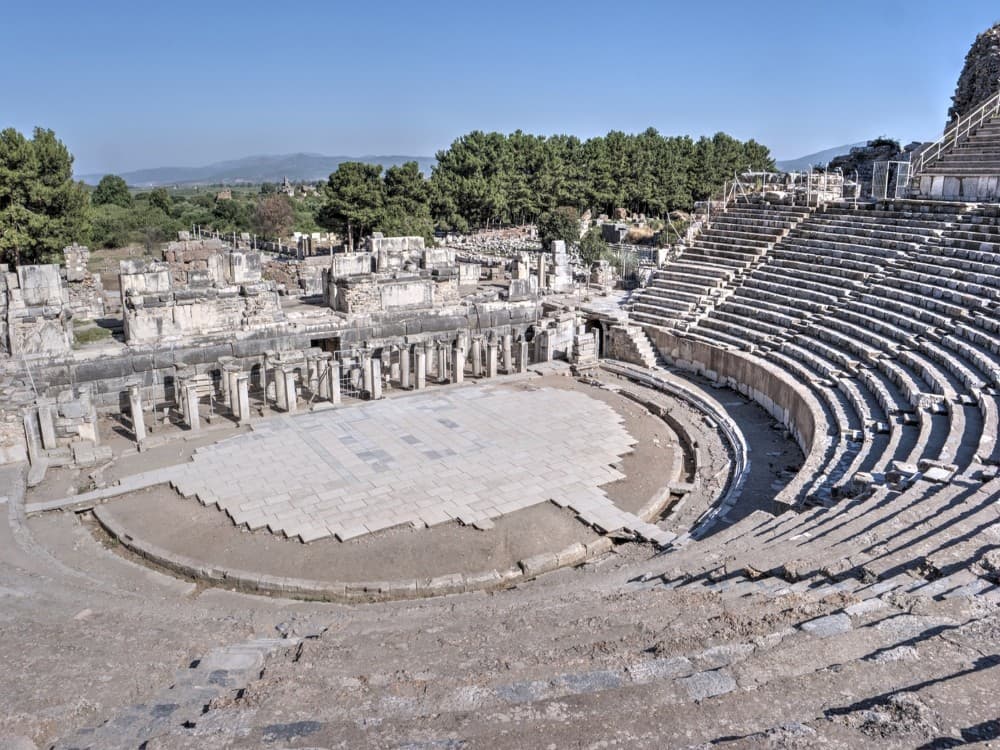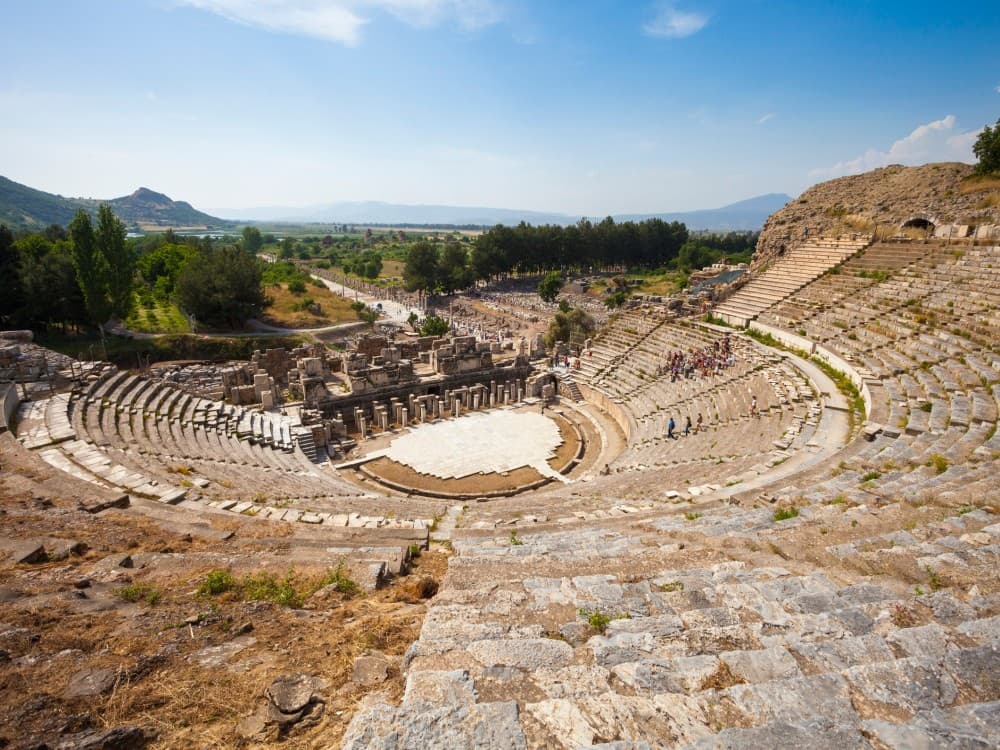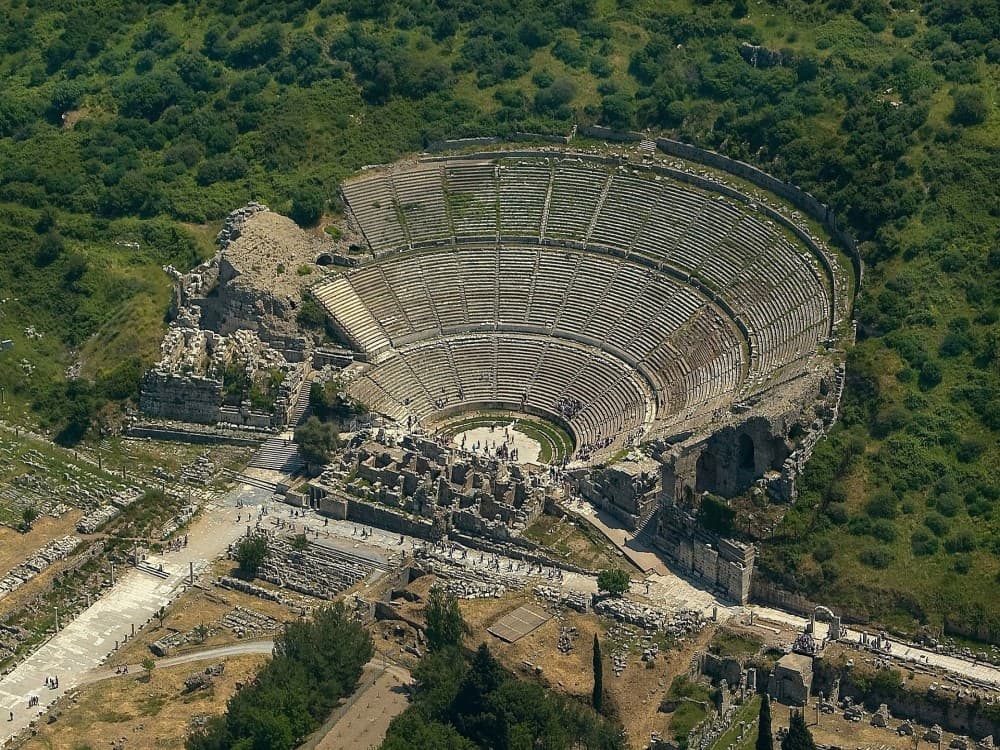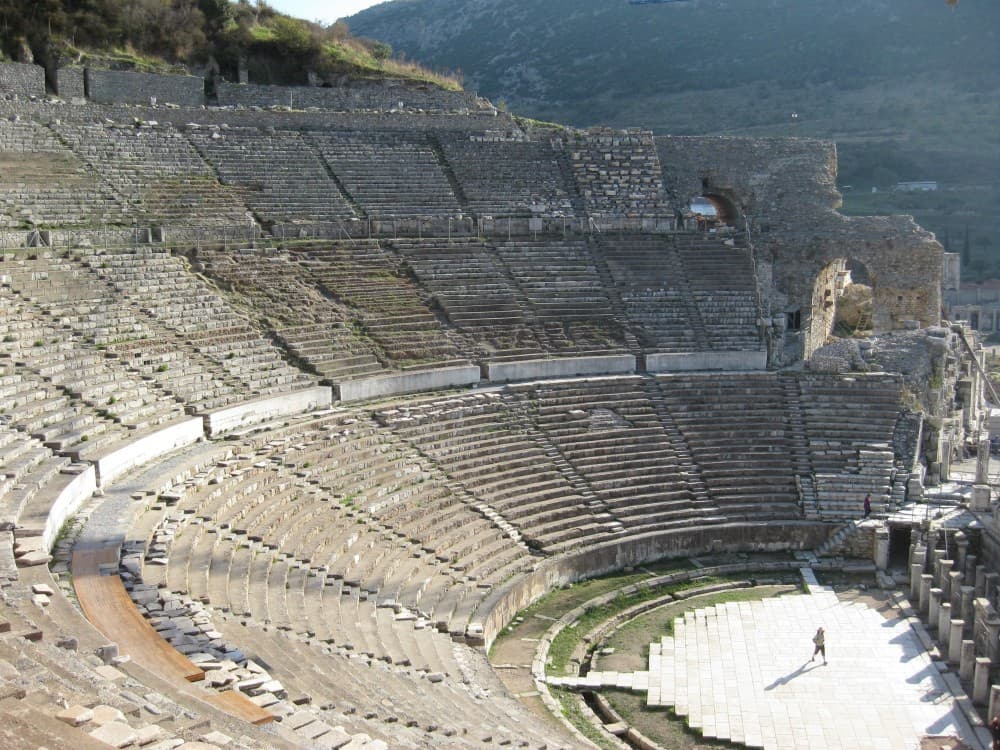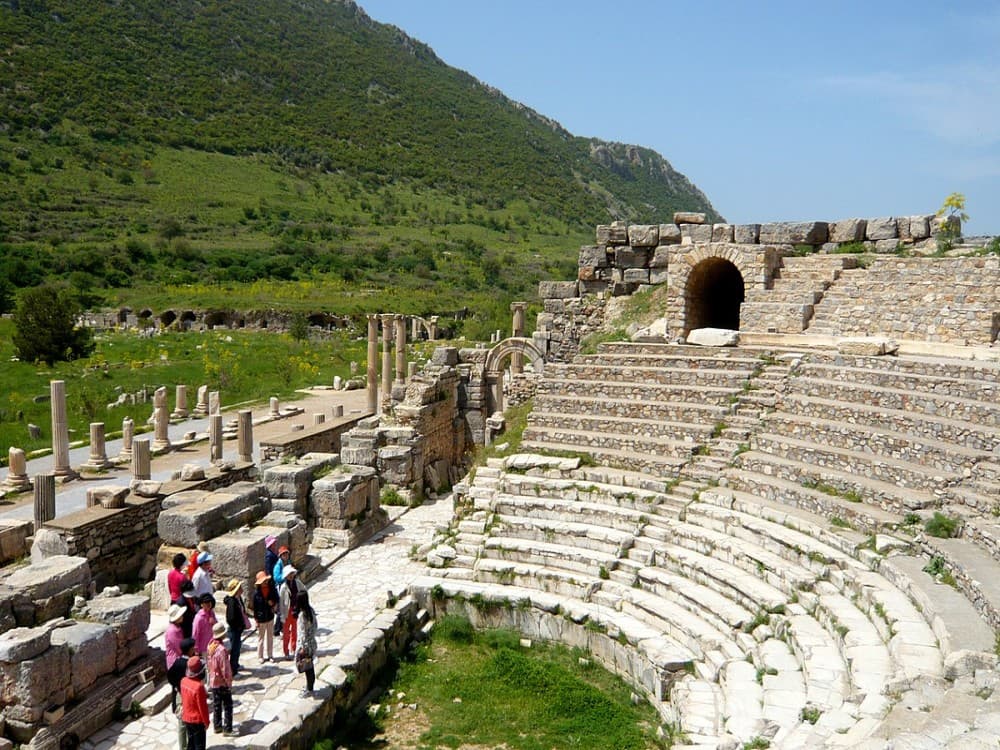
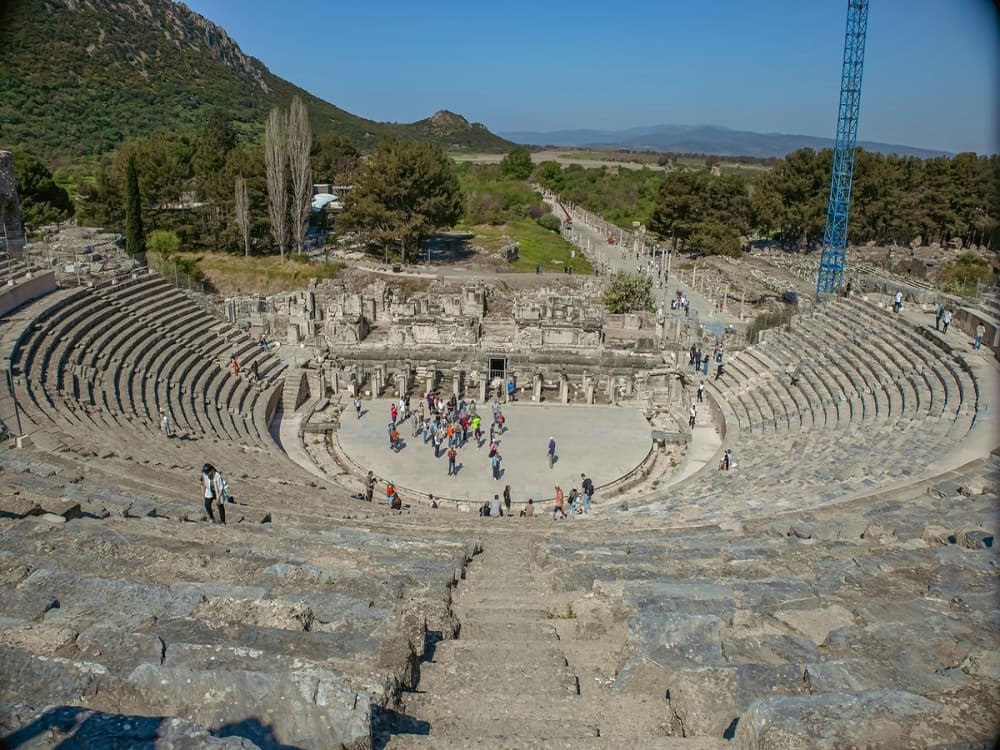
The Ephesus Ancient City Theatre, often called the Great Theatre, is one of the most awe-inspiring landmarks of Ephesus. Carved into a hillside, it seats around 25,000 spectators and offers spectacular views over the ruins and valley. In antiquity, this theatre hosted dramatic performances, political gatherings, and even gladiator combats. Standing in its soaring tiers, you can almost imagine the roar of ancient crowds and the drama of bygone performances.
Es gibt noch keine Touren in Ephesus Ancient City Theatre.
Originally built in the Hellenistic period and expanded by Romans, the theatre features tiered stone seating, a broad stage, and an elaborate backdrop of columns. The upper terrace was added later to offer more capacity and better sightlines. Today, it is part of the official Ephesus archaeological site and is one of the most photographed spots. While you wander the stone seats, you feel connected to the cultural life of one of antiquity’s greatest cities.
Wear sturdy footwear: the steps and seating areas are made of ancient stone and can be steep and uneven. The theatre is exposed to the sun, so bring sun protection and water. Guided tours or audio guides are highly recommended to appreciate the theatre’s history, architecture, and use through the ages. The view from the top offers excellent photo opportunities, but be prepared for a short climb to reach the highest tiers.
The theatre is located within the Ephesus Archaeological Park, just off the main visitor route through Ephesus. From Selçuk, you can reach it by taxi or local minibus, which will take you to the Ephesus entrance. Once inside the archaeological area, follow the paths toward the upper ruins; the theatre is one of the most prominent structures and clearly signposted. It sits above Curetes Street, making it a natural stop on your walking tour.
Visiting in the morning or late afternoon offers the best light and more comfortable temperatures. Early hours allow for fewer crowds and better photo conditions, while late afternoon brings golden hues to the stone seats. During the summer, midday can be very hot, so avoid this if possible. Spring and autumn visitors benefit from mild weather, making climbing and exploring easier and more enjoyable.