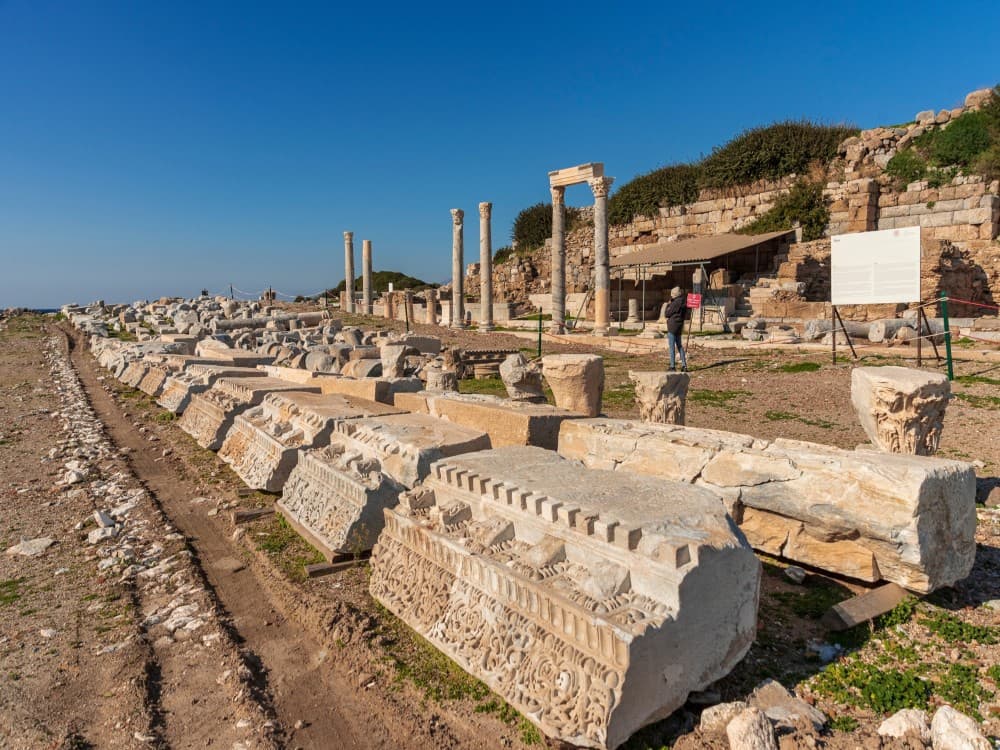
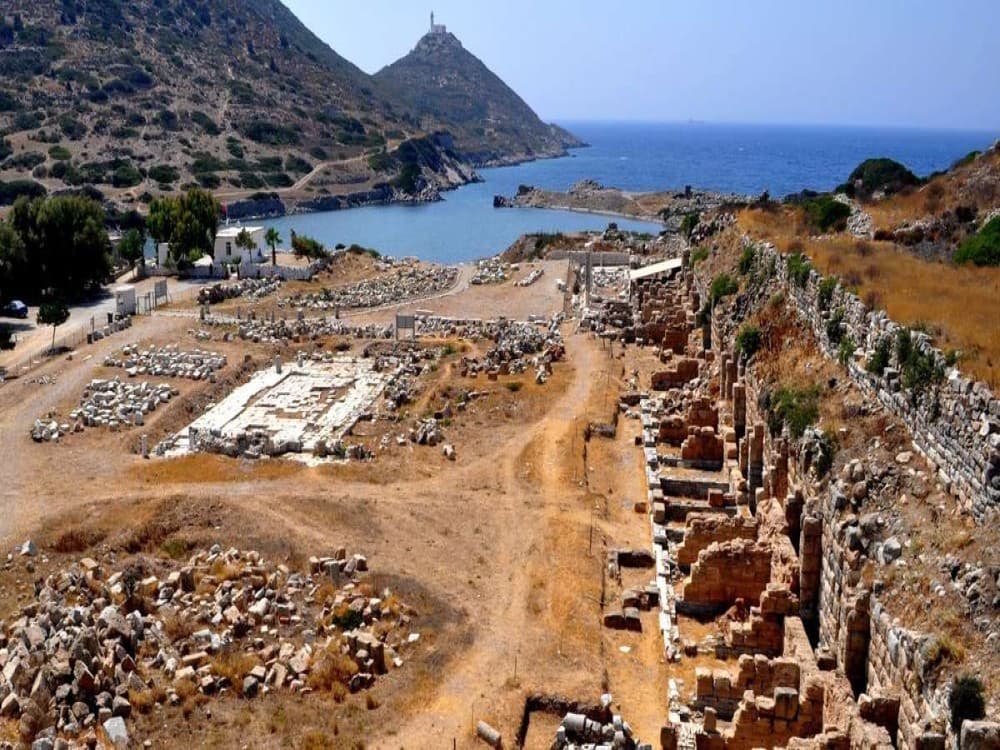
Knidos Ancient City is perched at the very tip of the Datça Peninsula, where the Aegean and Mediterranean Seas meet. This ancient city was a thriving center of culture, trade, and science, famous for its temple of Aphrodite and early astronomical and medical knowledge. Visitors can explore ruins of city walls, a large theatre, temples, agoras, and twin harbours. The city is built on terraces rising from the coast, giving spectacular panoramic views. Walking through Knidos today, you feel the mix of history and nature — pine and olive trees shade some paths, while cliffs and the sparkling sea frame the landscape.
Es gibt noch keine Touren in Knidos Ancient City.
Knidos is located in the Datça district of Muğla Province and is considered an important archaeological and natural site. The ancient city was once a major hub in the Carian region, with a notable medical school and trading port. The site has open-air ruins including temples, a theatre, a necropolis, and city walls. Facilities are basic: there is a small café and toilets near the harbours, but most of the site is natural and uneven. Entry requires a ticket, and visitors should plan for walking and exploring under the sun.
The terrain at Knidos is uneven, with stone paths, slopes, and some steep areas, so comfortable walking shoes are essential. Shade is limited, so sunscreen, a hat, and water are highly recommended. The site can get busy in summer, and on-site services are minimal. Bring snacks if you want a longer visit. Admission is modest, and visitors with museum cards may benefit from reduced rates. Swimming near the harbours is possible, but be careful on rocky paths when entering the water.
From Marmaris, Knidos can be reached by car or organized tour. Driving takes you through scenic coastal roads to Datça, then along smaller roads to the tip of the peninsula. The final stretch involves winding roads, so take your time. Some tour operators include Knidos as part of a day trip from Marmaris, often combining it with stops for swimming or visiting other historical sites. For a unique approach, some tours arrive by boat, giving visitors a view of the city from the sea.
The best months to visit Knidos are spring (April–June) and autumn (September–November), when the weather is mild and comfortable for walking. Summer is hot, but the coastal breeze helps, and long daylight hours allow full exploration. Visiting early in the morning is ideal to avoid crowds and enjoy cooler temperatures while walking through the ruins and exploring the terraces and temples.