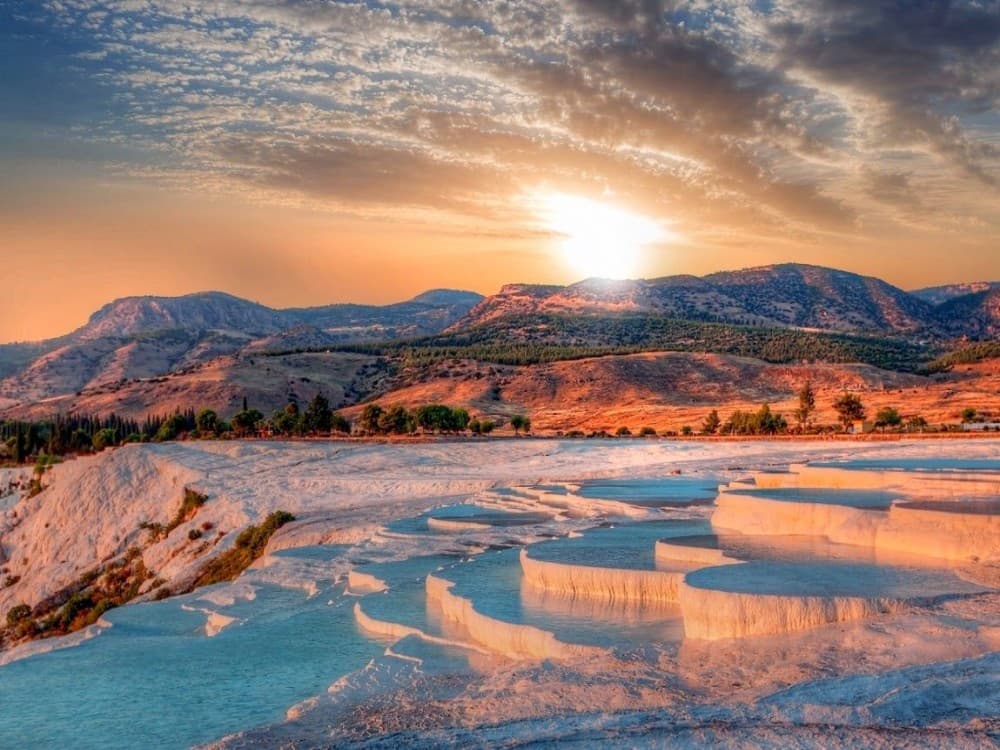
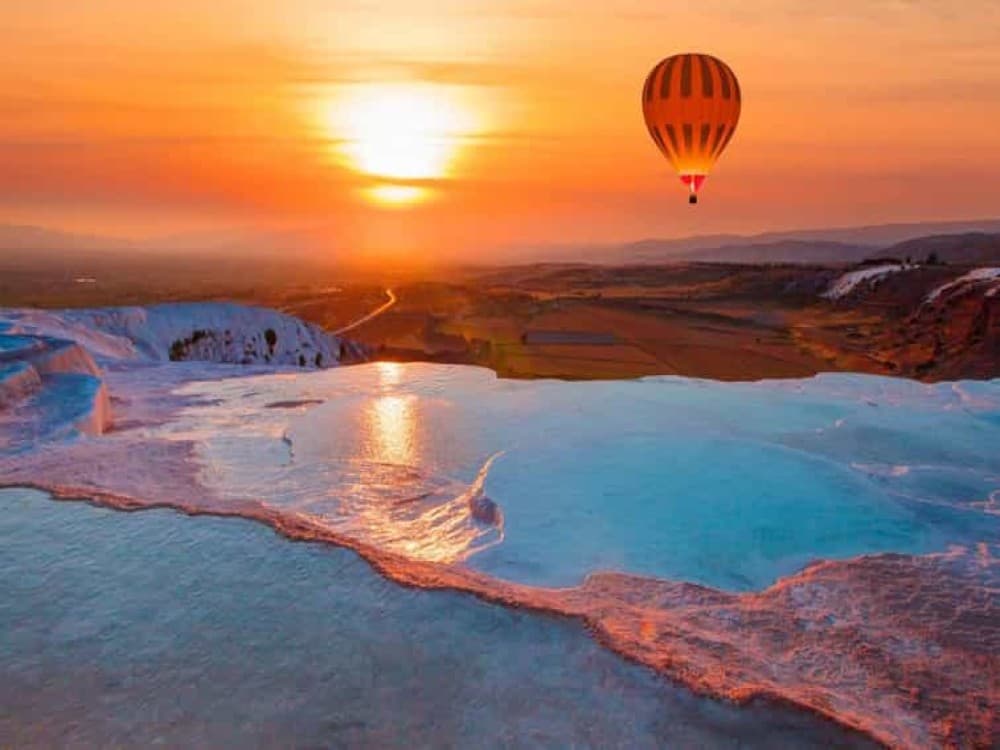
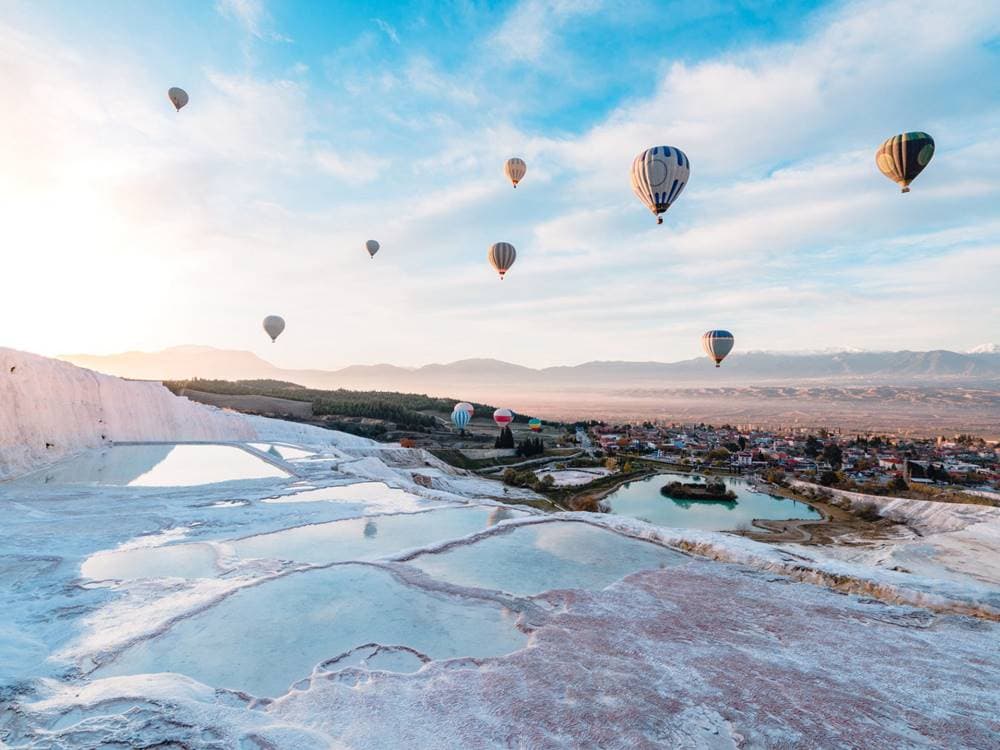
Pamukkale is famous for its bright white landscape that looks almost like snow or frozen waterfalls. Many visitors are surprised when they first see it and naturally ask what the white substance actually is. Despite its appearance, it is not snow, salt, or limestone carved by hand. The white formations in Pamukkale are completely natural and are the result of a long geological process involving thermal water and minerals. Understanding what creates this white surface helps visitors appreciate why Pamukkale is so unique and carefully protected.
The White Formations Are Travertine
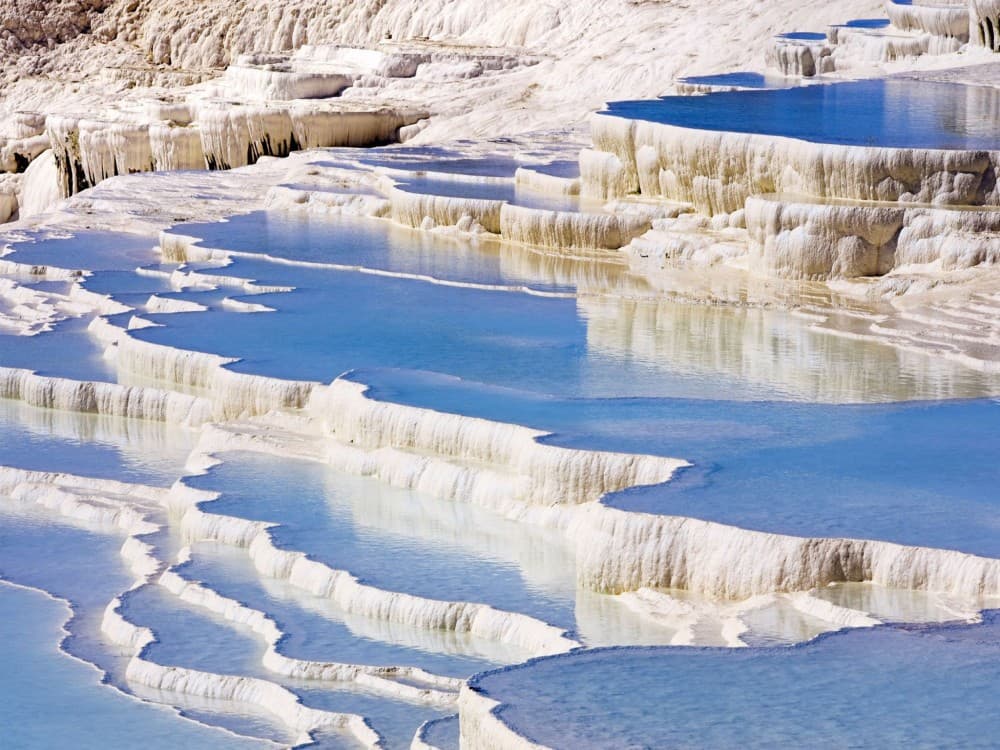
The white stuff in Pamukkale is called travertine. Travertine is a type of natural rock formed from calcium carbonate. It develops when mineral-rich thermal water flows to the surface and cools, leaving behind solid deposits over time.
In Pamukkale, hot springs emerge from underground carrying dissolved calcium. As this water flows down the hillside and comes into contact with air, the calcium hardens and slowly builds up into the white terraces and pools seen today.
How the Travertines Form Over Time
The formation of Pamukkale’s travertines is a slow process that takes thousands of years. Underground thermal water is heated by geological activity and absorbs calcium carbonate as it travels through rock layers. When the water reaches the surface, it begins to cool and release carbon dioxide.
This chemical change causes the calcium carbonate to solidify. Layer by layer, the mineral builds up and creates the smooth white terraces and shallow pools. Over long periods, this process shapes the dramatic landscape that makes Pamukkale famous.
Why the Color Is So White
The intense white color of Pamukkale comes from the purity of the calcium deposits. When freshly formed, travertine is bright white and reflects sunlight strongly. This gives Pamukkale its glowing appearance, especially under clear skies.
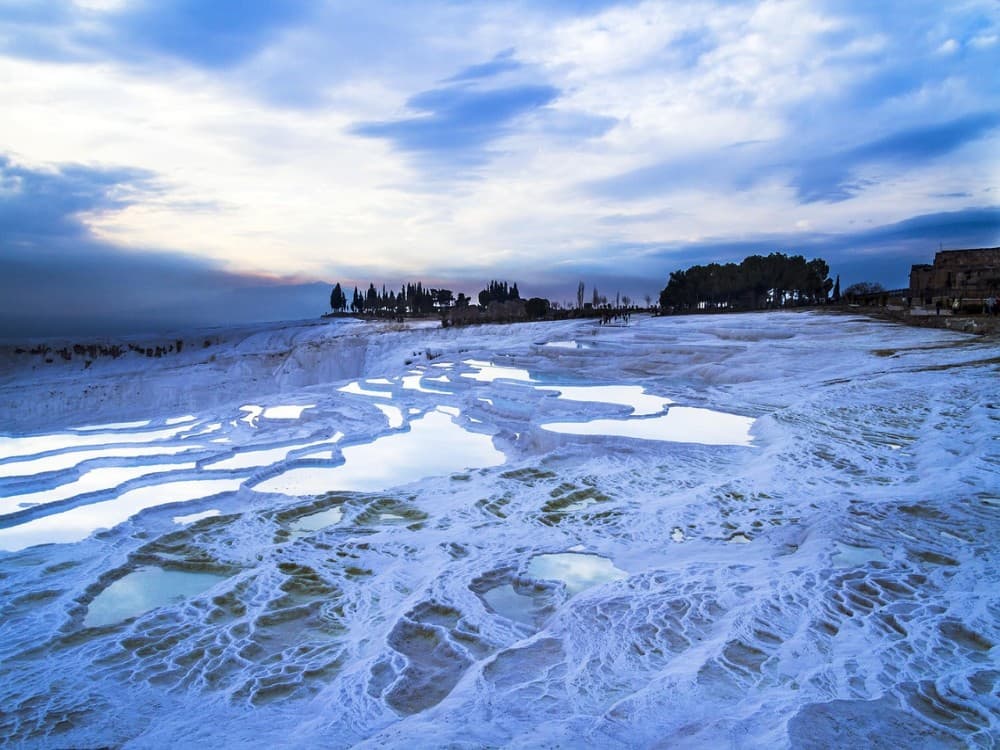
When water stops flowing over certain areas, the surface can turn slightly gray or yellow over time due to exposure to air, dust, and algae. This is why active water flow is important for maintaining the bright white color.
Is the White Stuff Soft or Hard?
Although the surface of Pamukkale looks smooth and sometimes soft, travertine is actually a solid rock. In areas where water is still flowing, the surface can feel slightly slippery or textured. In dry areas, it is hard and fragile.
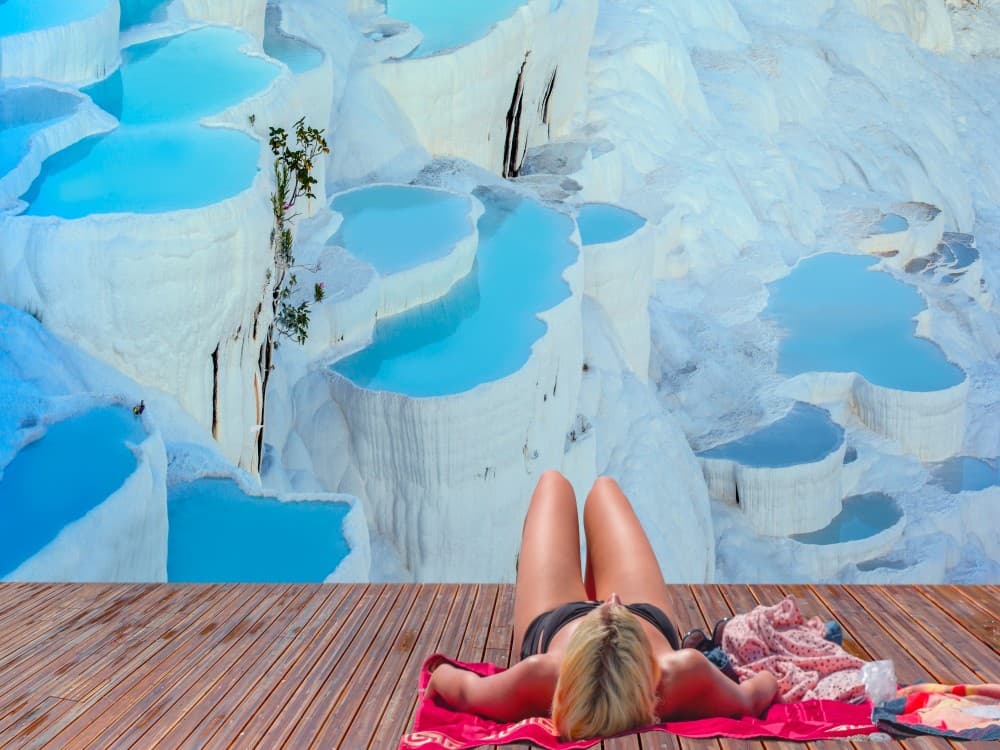
Because travertine can be damaged easily by pressure, oils, and shoes, visitors are required to walk barefoot in designated areas. This rule helps protect the surface from erosion and discoloration.
Is It Safe to Touch and Walk On?
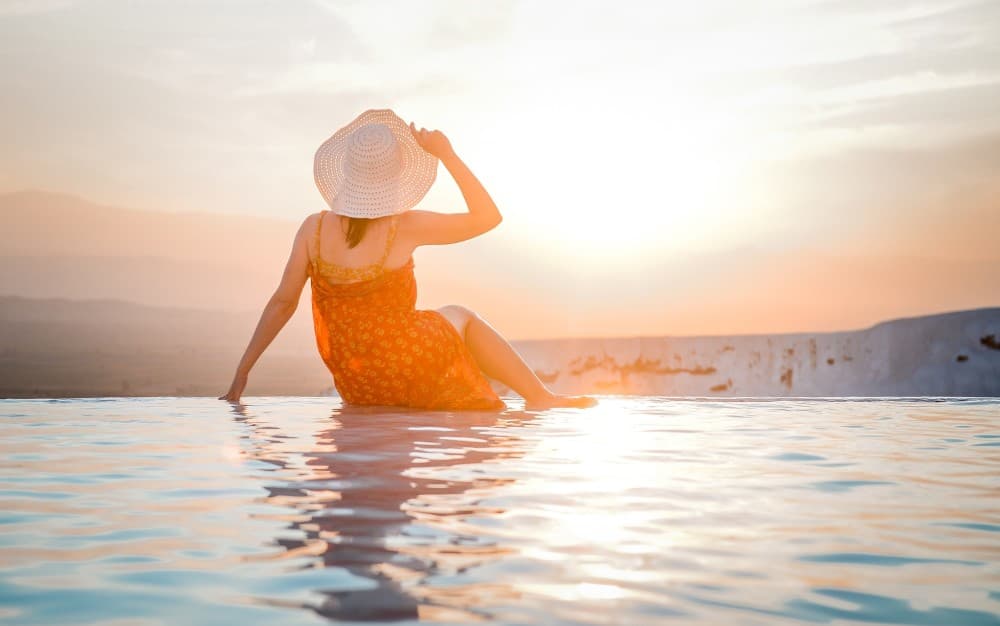
Yes, the travertine itself is safe to touch and walk on in permitted areas. The water flowing over the terraces is warm and rich in minerals but not harmful. Walking barefoot is part of the experience and helps preserve the site.
However, climbing on dry or restricted areas is not allowed. These rules exist to prevent damage to the formations and to keep the terraces looking natural for future visitors.
Why Some Pools Have Water and Others Do Not
Many visitors notice that not all terraces are filled with water. This is intentional and part of conservation efforts. In the past, uncontrolled water flow caused damage and discoloration to the travertines.
Today, water is carefully managed and redirected to different sections at different times. This allows the terraces to recover and maintain their white appearance. Even if some pools are dry, the site remains active and alive.
The Difference Between Pamukkale and Other White Landscapes
Pamukkale is often compared to other white natural sites around the world, but its formation process is unique. Unlike salt flats or chalk cliffs, Pamukkale’s terraces are created by thermal water and mineral deposits rather than evaporation or erosion alone.
This makes Pamukkale not only visually striking but also geologically important. It is a rare example of a living landscape that continues to change slowly over time.
Why the White Formations Are Protected
The travertines of Pamukkale are extremely fragile. Even small changes in water flow or human activity can affect their appearance. For this reason, Pamukkale is strictly protected, and visitor access is controlled.
These protections ensure that the white terraces remain intact and continue forming naturally. Without conservation efforts, the bright white surfaces could darken or erode permanently.
Conclusion: What Is the White Stuff in Pamukkale?
The white stuff in Pamukkale is travertine, a natural rock formed by calcium-rich thermal water over thousands of years. Its bright white color comes from pure mineral deposits that harden as the water cools and flows across the hillside.
Far from being artificial or decorative, the white terraces are a living geological process that continues today. Understanding what they are and how they form makes a visit to Pamukkale even more meaningful, highlighting why this remarkable place is considered one of Turkey’s most important natural wonders.