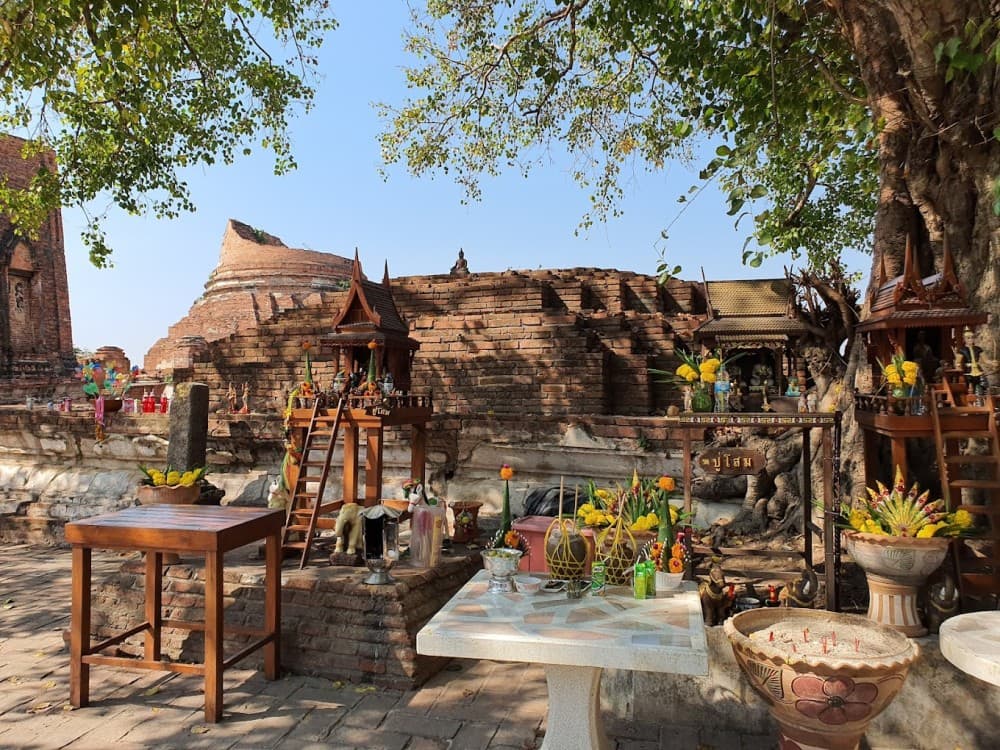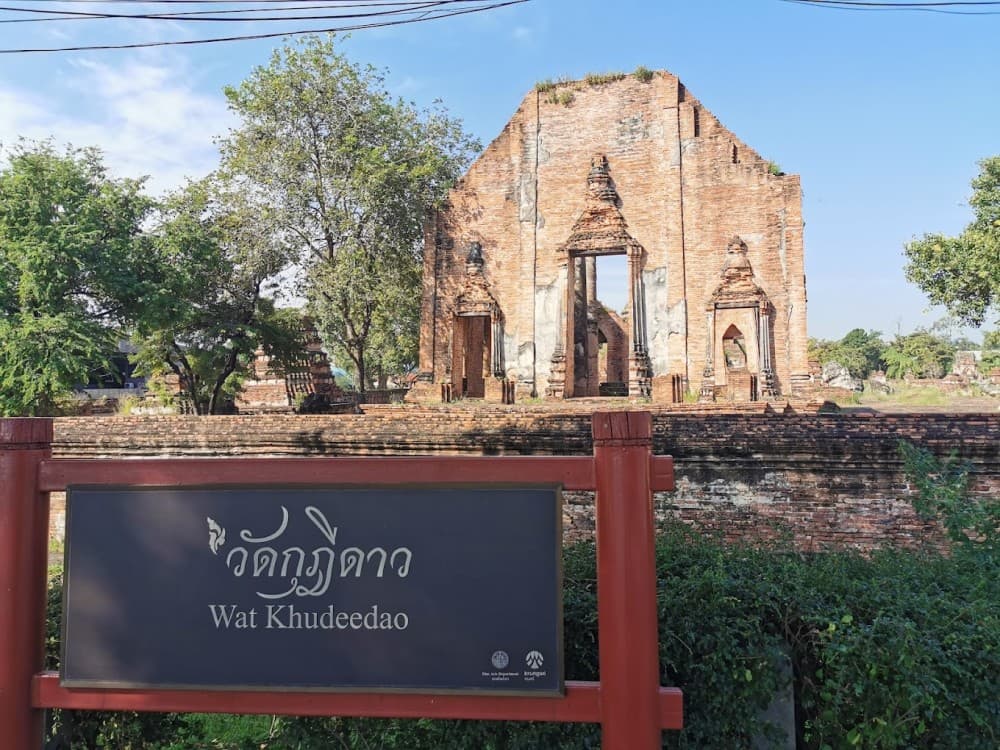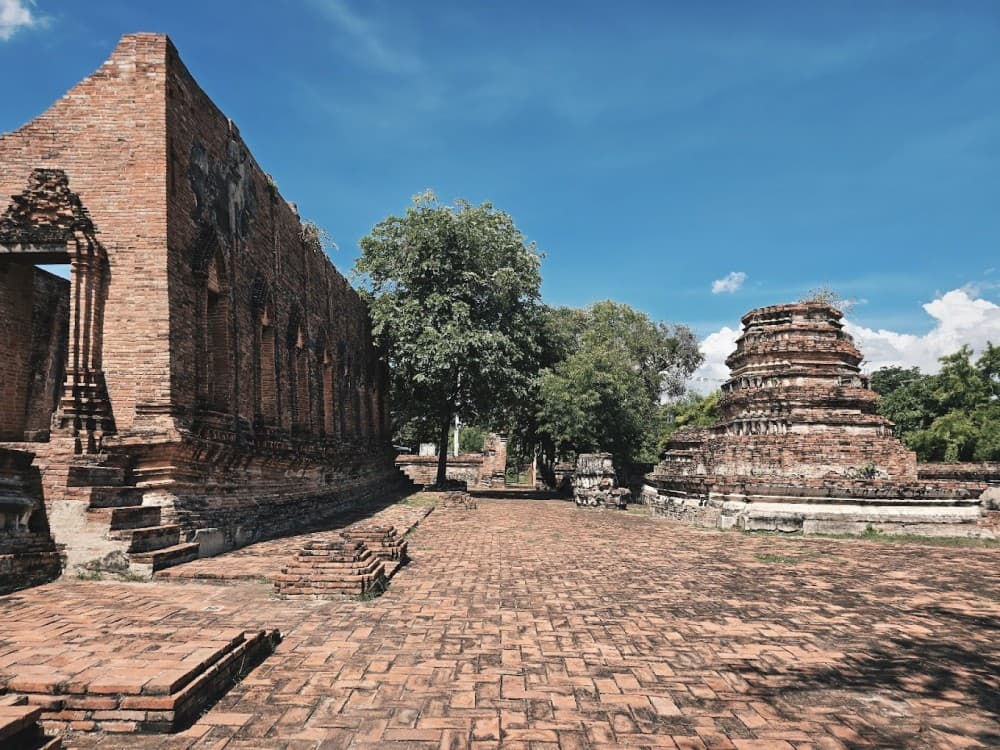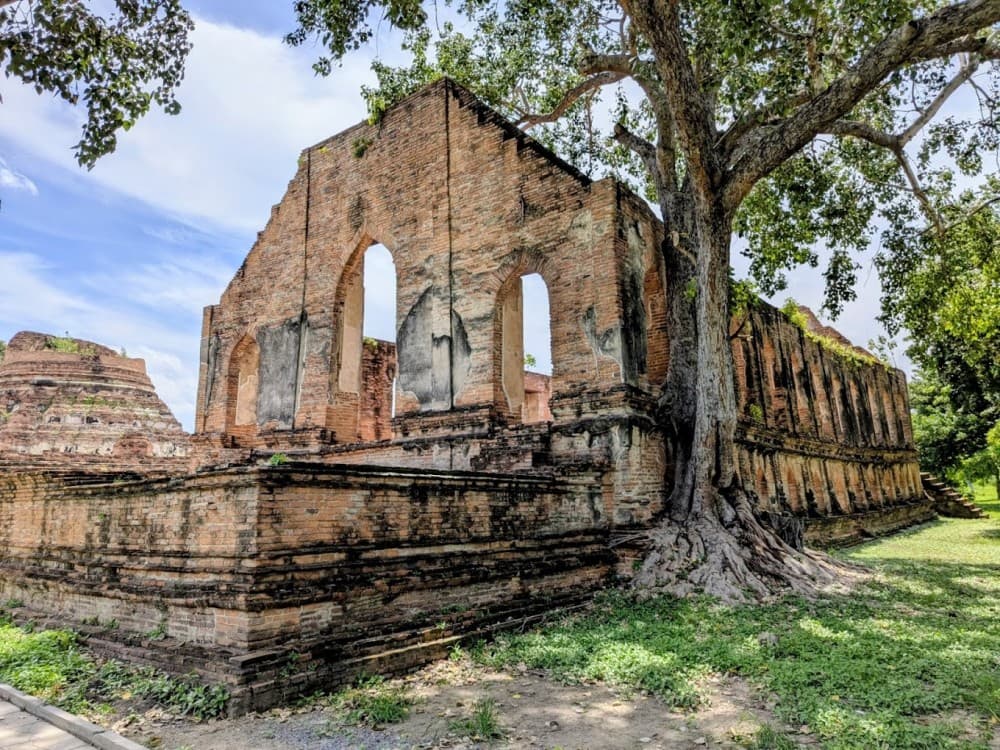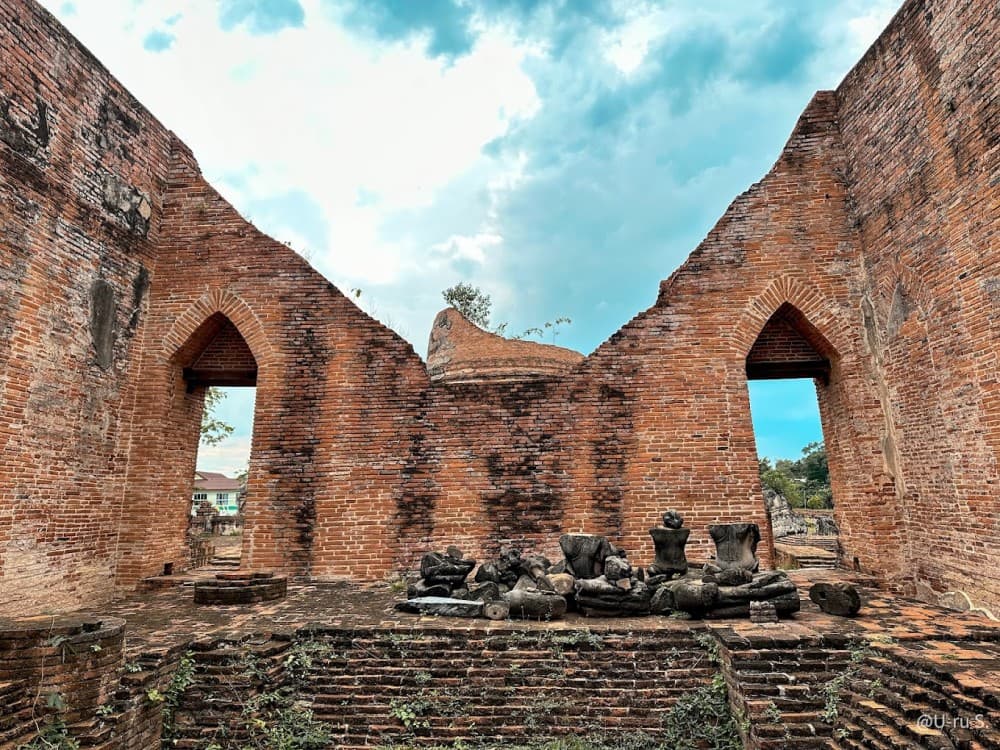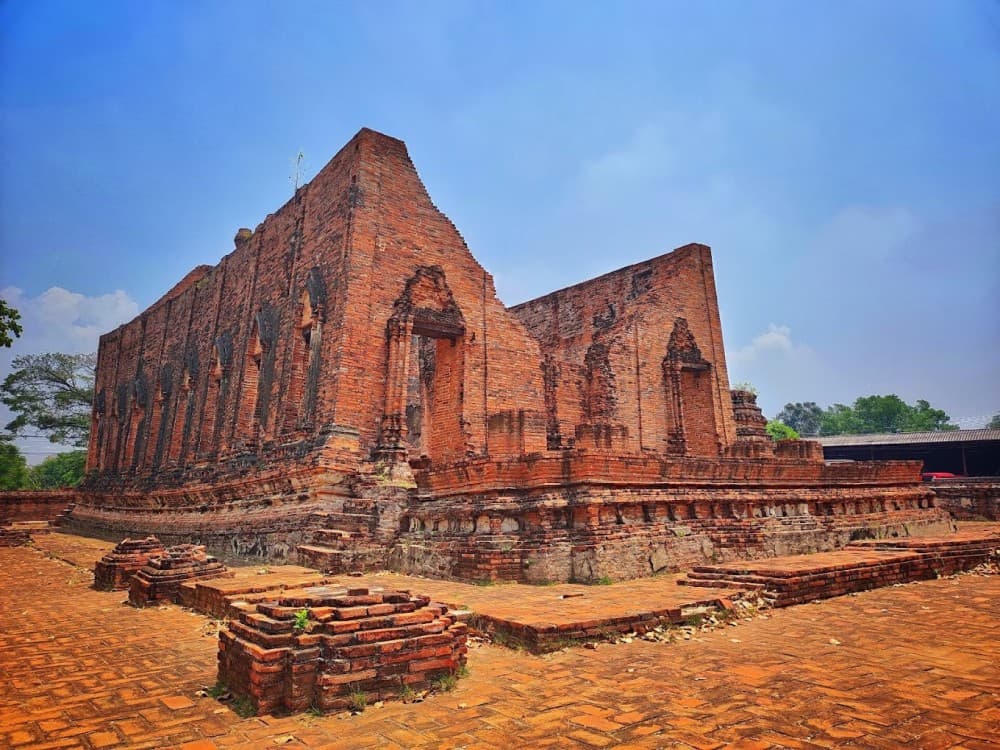
Wat Kudi Dao, the "Monastery of the Star Dormitory," is a magnificent testament to the Late Ayutthaya period's architectural brilliance. This sprawling ruin, though weathered by centuries, retains a powerful sense of grandeur that many of the more famous central temples have lost. It is most famous for its row of towering, roofless brick columns that once supported a massive assembly hall. The site feels like a hidden world, where red brick walls and arched windows stand in dignified silence among swaying trees. Unlike the more manicured historical zones, Wat Kudi Dao offers a raw, authentic look at ancient Siam. It is a place where you can truly feel the weight of history, standing in the very spot where future kings once oversaw the restoration of this sacred royal monastery.
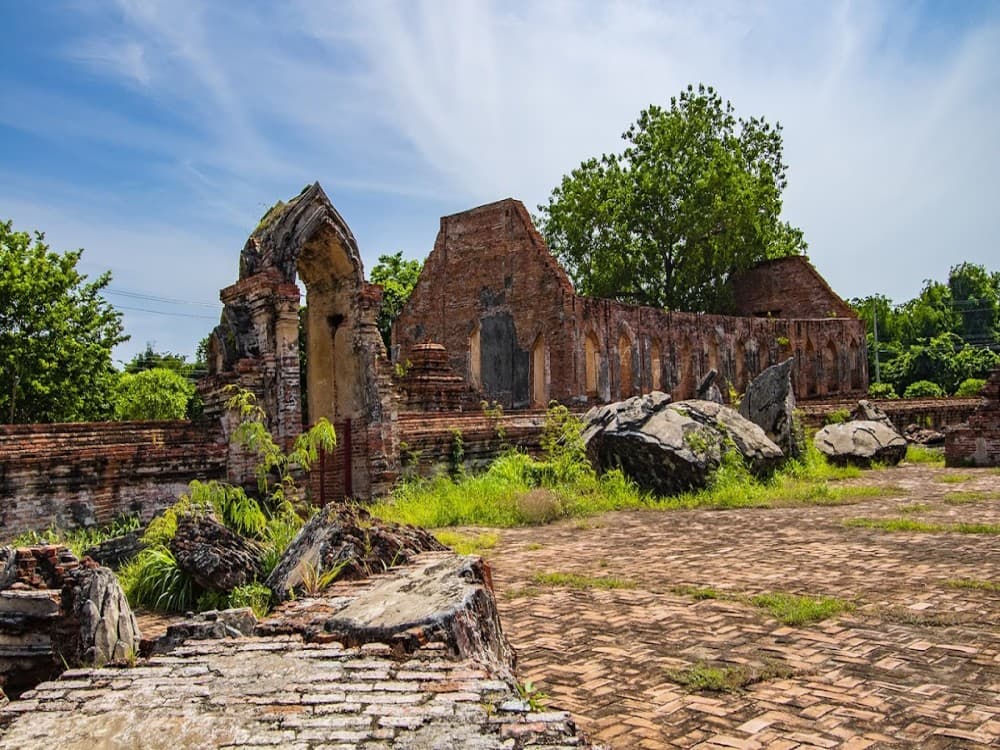
The temple is located east of the city island, near the Ayothaya Floating Market. As of 2026, the site is generally open daily from 08:00 to 17:00. One of the greatest appeals for holidaymakers is that the temple often has no entrance fee, though some sections may occasionally request a small donation of around 50 to 80 Baht for ongoing preservation. The complex is extensive, featuring a large bell-shaped chedi, a primary ordination hall, and a rare two-story royal pavilion known as Tumnuak Kummalaen. This pavilion is unique because it served as a residence for the crown prince during the temple's renovation. Most visitors spend about an hour exploring the ruins, which are remarkably well-preserved, allowing you to easily visualize the former scale and beauty of the monastery.
Wat Kudi Dao is significantly quieter than the central ruins, making it a dream for photographers and those seeking peace. However, because it is less visited, there are fewer facilities on-site; ensure you bring your own water and sun protection as the open courtyards offer little shade. Respectful attire is still expected, so please keep your shoulders and knees covered while walking through the sacred grounds. The terrain can be quite uneven with loose bricks and grass, so sturdy footwear is highly recommended. You may also encounter local merchants near the entrance selling snacks or cold drinks. Be mindful of the resident dogs that lounge in the shade; they are generally used to people but appreciate being left alone as you navigate the historic colonnades and the massive collapsed sections of the main chedi.
Reaching the temple from the center of Ayutthaya is straightforward. If you have rented a bicycle or motorbike, head east across the Pridi-Thamrong Bridge and follow the road past the railway station. From the station, it is a quick five-minute ride. Look for the signs near the major roundabout of Chedi Wat Sam Pluem; you will take a turn heading toward the floating market. For a more direct and cooler trip, hire a local three-wheeled tuk-tuk for about 100 Baht. The temple is situated just off the main road, and there is usually ample parking right in front of the ruins. Its location outside the main island makes it a perfect stop for those exploring the eastern heritage cluster, providing a scenic transition from the bustling city center to the quieter rural outskirts.
The best time to visit Wat Kudi Dao is in the early morning at 08:00 or in the late afternoon after 16:00. During these times, the sunlight filters through the standing columns at a low angle, creating dramatic shadows that are perfect for photography. The late afternoon is especially magical, as the red bricks of the ruins take on a deep, warm glow. Visiting during these off-peak hours also helps you avoid the midday tropical heat, which can be intense in the open areas of the complex. Weekdays are particularly tranquil, often giving you the entire site to yourself. If you visit on a weekend, you might see a few more local visitors, but it never feels crowded, maintaining its reputation as one of the most peaceful and reflective spots in all of Ayutthaya.