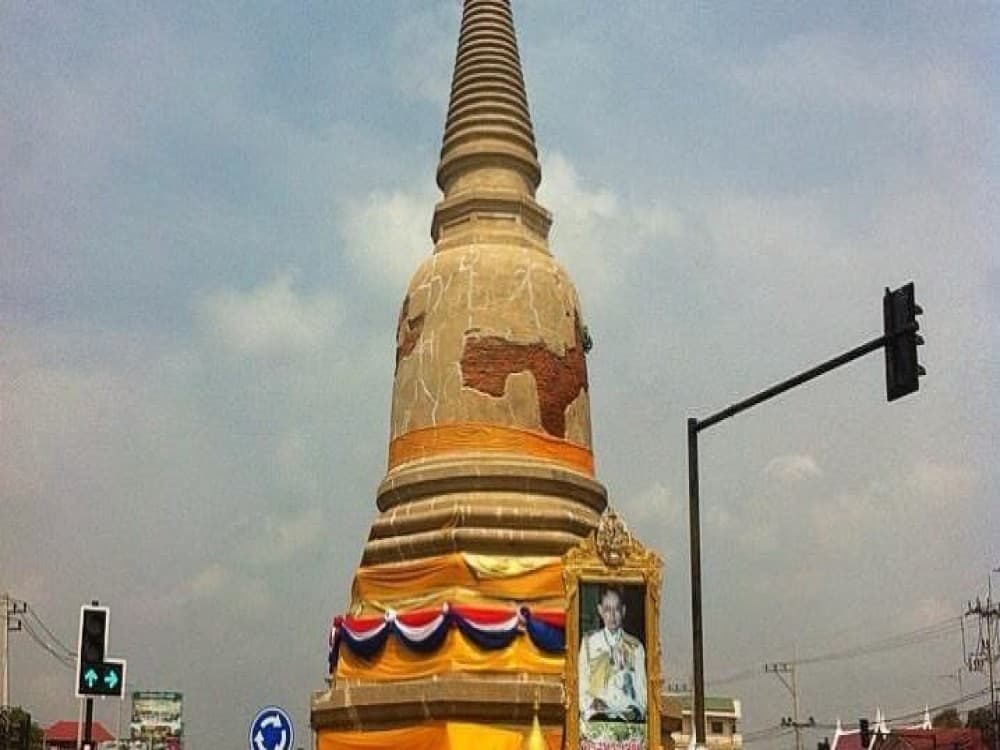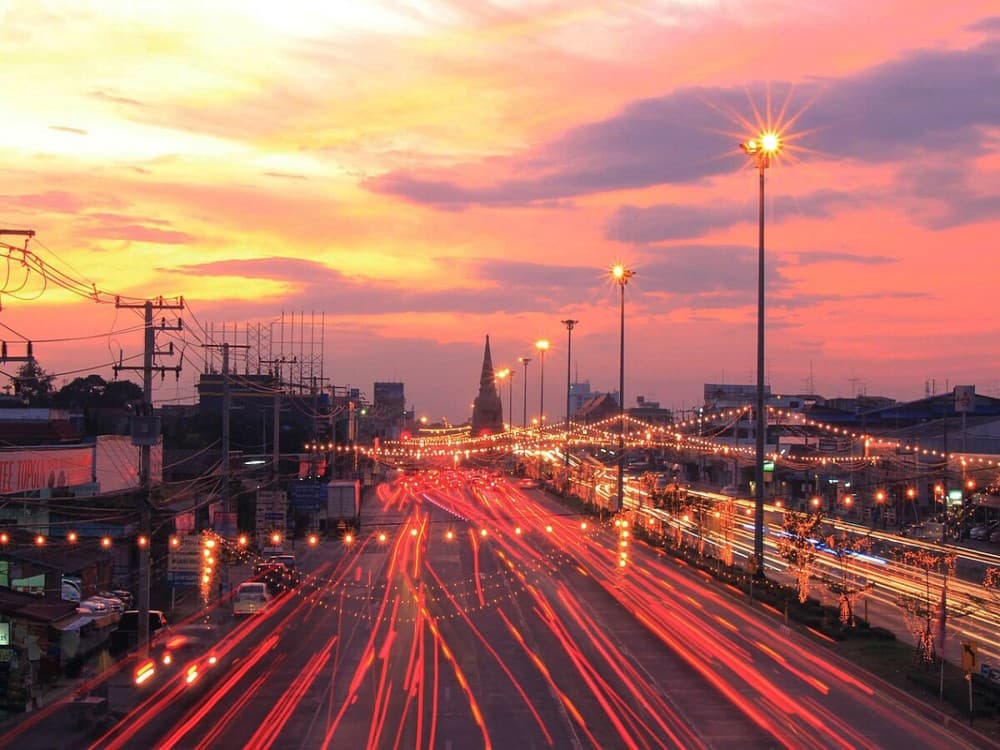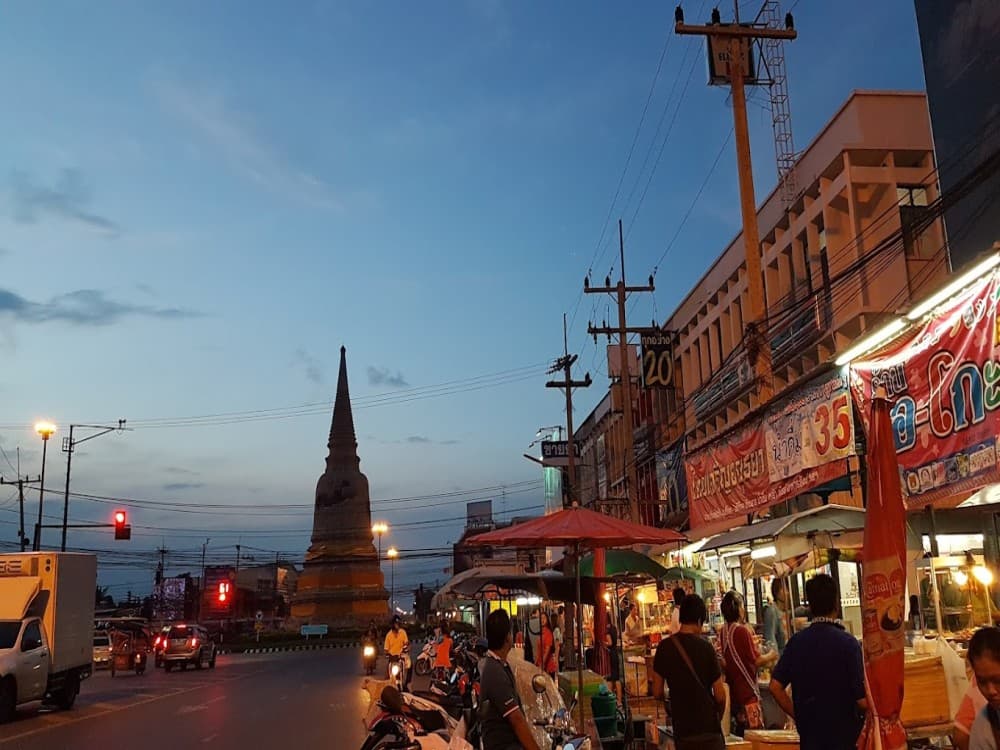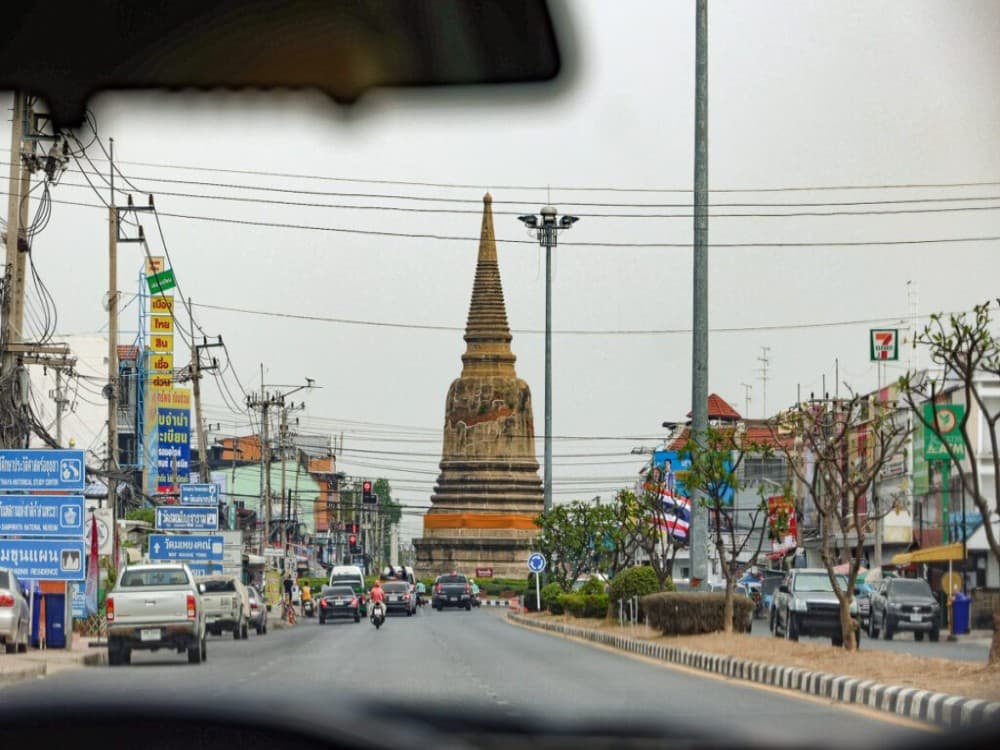
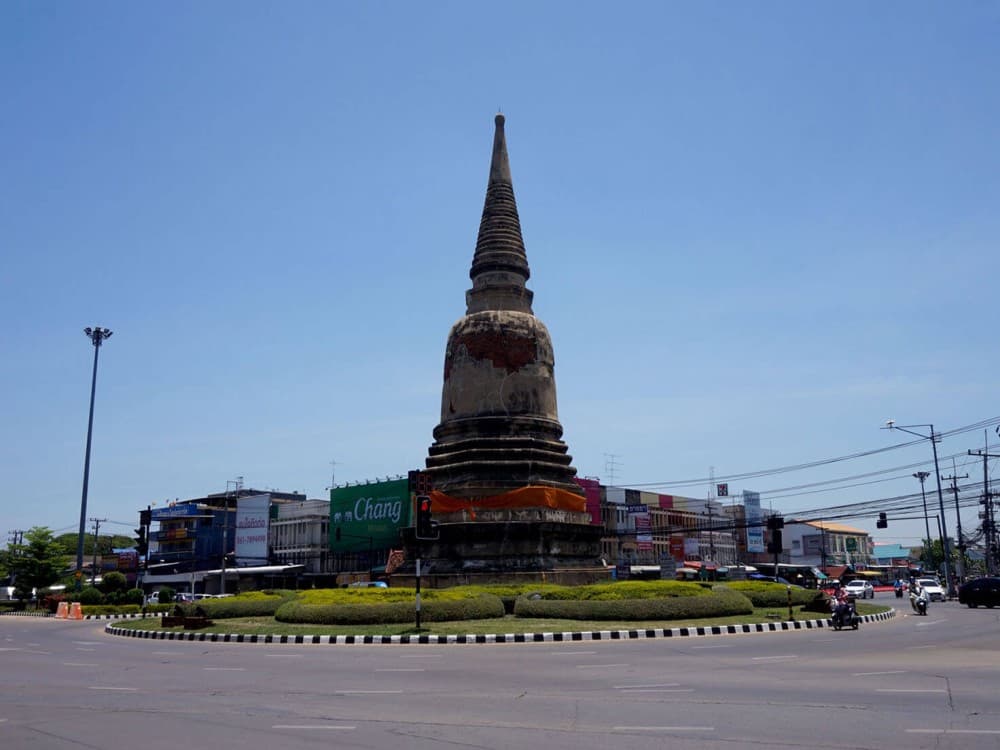
Chedi Wat Sam Pluem is one of the most iconic and unusual landmarks in Ayutthaya, famously known as the Gangster Chedi. This massive, bell-shaped brick pagoda stands defiantly in the center of a busy roundabout on Rojana Road, the main gateway into the old city. While the rest of its original monastery was cleared decades ago to make way for urban development, the chedi remained because locals and engineers alike feared that demolishing such a sacred structure would bring terrible misfortune. Today, it serves as a symbolic sentinel that welcomes every traveler arriving from the mainland. Draped in shimmering saffron cloth and surrounded by swirling traffic, it offers a striking visual bridge between the ancient spiritual world and the bustling energy of modern Thailand.
Es gibt noch keine Touren in Chedi Wat Sam Pluem.
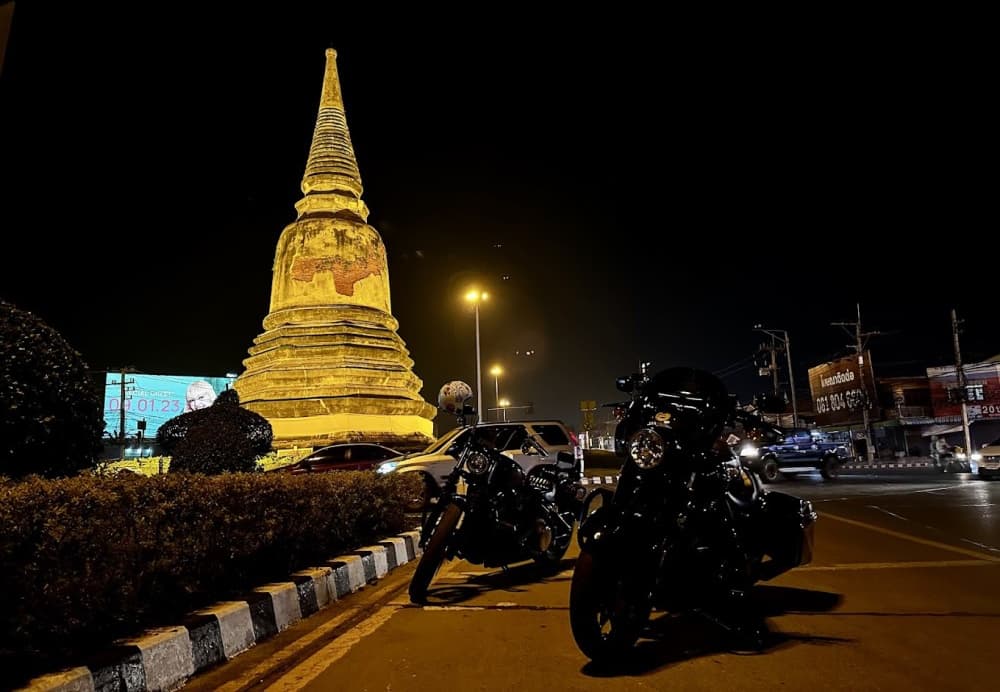
Because the chedi is located in the middle of a public roundabout, it is accessible twenty-four hours a day and does not require an entrance fee. It is a strictly outdoor monument, and there are no temple buildings or museum galleries to enter. Most visitors appreciate its grandeur as they drive past, but there is a small raised area at the base where you can briefly stop to take photographs. As of 2026, the structure remains beautifully preserved and is frequently lit up at night with golden floodlights, making it a prominent local meeting point. While it is not a traditional temple visit where you spend hours exploring, it is a crucial piece of Ayutthaya’s identity and serves as the perfect introductory photo opportunity for your holiday.
The most important thing to remember is that Chedi Wat Sam Pluem is located in a high-traffic intersection. If you decide to get out of your vehicle for a photo, be extremely cautious of the cars, buses, and motorbikes circling the roundabout. There are no formal pedestrian crossings leading directly to the monument, so it is often safer to photograph it from the sidewalk or from the window of your transport. Despite its location in the road, the chedi is still a sacred site; you will often see locals slowing down to press their hands together in a respectful wai as they drive past. If you choose to approach the base, modest dress is still recommended as a sign of respect, though the rules are naturally less formal than they would be inside a gated monastery.
Since you are staying in Ayutthaya, you will almost certainly pass this landmark multiple times. It is located on Rojana Road, about one kilometer east of the Pridi-Thamrong Bridge that connects the city island to the mainland. If you are coming from the train station, it is a very short five-minute tuk-tuk ride or a brisk fifteen-minute walk east. For those who have rented a bicycle or motorbike, it is impossible to miss as you head toward the major temples like Wat Yai Chai Mongkhon. Most local tuk-tuk drivers will include a loop around the "Gangster Chedi" as part of your city tour if you ask. It acts as the central hub connecting the railway station, the floating market, and the historical park.
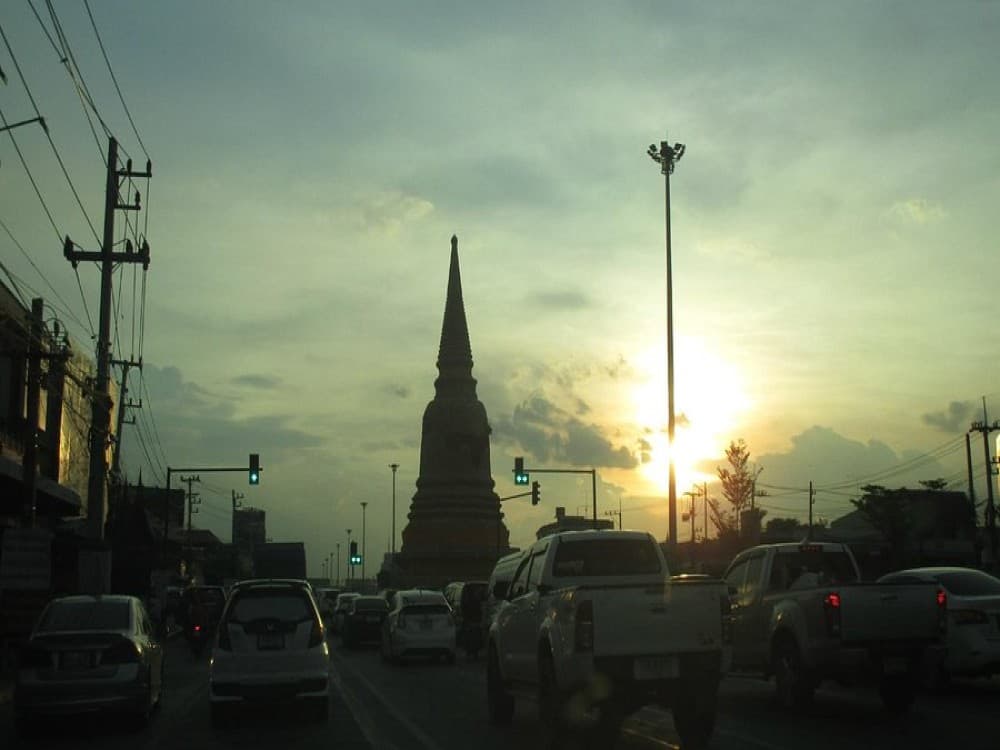
To capture the best photographs without the stress of peak-hour traffic, aim to visit in the early morning around 07:00 or 08:00. The light at this hour is soft and highlights the weathered texture of the red bricks. Alternatively, the blue hour just after sunset is spectacular, as the saffron cloth glows brightly under the artificial floodlights against the darkening sky. Avoid the mid-afternoon rush between 16:30 and 18:00, when the roundabout becomes very congested with locals finishing work and school. If you visit during a major Buddhist festival like Loy Krathong, the chedi is often decorated even more elaborately, and you might see small ceremonies taking place at its base, adding a deeper cultural layer to your visit.