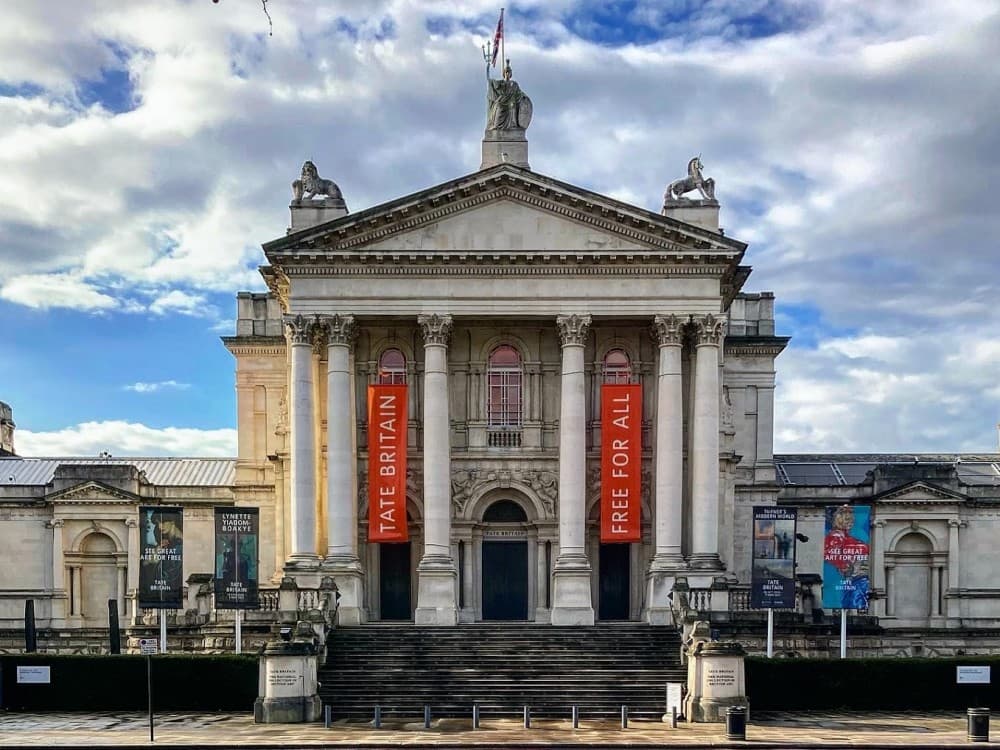
Tate Britain is the historic heart of the Tate network, showcasing the national collection of British art from 1500 to the present day. Located in a grand neoclassical building on the Millbank riverfront, it offers a quieter and more traditional atmosphere compared to its modern sibling on the South Bank. Visitors can take a chronological walk through the history of British creativity, viewing masterpieces by icons like Gainsborough, Hogarth, and Francis Bacon. The museum is perhaps most famous for the Clore Gallery, which houses the world’s largest collection of works by J.M.W. Turner. In 2026, the gallery continues to celebrate the 250th anniversary of Turner and Constable with major rival exhibitions, making it an unmissable destination for anyone interested in the soul of British landscape and portraiture.
Es gibt noch keine Touren in Tate Britain.
Tate Britain is located on Millbank and is open daily from 10.00am to 6.00pm, with the last entry at 5.30pm. Admission to the permanent collection is free for all visitors, though you are encouraged to book a timed arrival slot online to ensure entry during busy periods. Special exhibitions, such as the 2026 Hurvin Anderson or James McNeill Whistler retrospectives, require a paid ticket which typically costs between 15 and 25 pounds. Facilities include the Djanogly Cafe for casual refreshments and the elegant Rex Whistler Restaurant, known for its historic mural and seasonal British menu. The museum is fully accessible, featuring ramp access at the Manton Entrance on Atterbury Street and lifts to all gallery levels.
If you are a fan of J.M.W. Turner, allow at least an hour specifically for the Clore Gallery, as the sheer volume of his sketches and oil paintings is overwhelming. For those aged 16 to 25, joining the free Tate Collective scheme allows you to purchase tickets for major exhibitions for just 5 pounds. The museum provides free Wi-Fi and a cloakroom for small items, but large suitcases and heavy backpacks are not permitted in the galleries and cannot be stored on-site. Photography is allowed in the permanent collection for personal use, provided you do not use a flash or tripod. Be sure to check the daily schedule for free 45-minute guided tours, which offer expert insights into specific themes of British history and art movements.
The most convenient way to reach Tate Britain is by using the London Underground; Pimlico station on the Victoria Line is just a ten-minute walk away. For a more iconic arrival, the Uber Boat by Thames Clippers stops at Millbank Pier, located directly outside the museum, connecting you easily to Embankment or Westminster. Several bus routes serve the area, including the 88, which runs from Oxford Circus and stops right at the museum gates. If you are already visiting the Houses of Parliament or Westminster Abbey, Tate Britain is a very pleasant fifteen-minute walk south along the Thames Path. For those using Santander Cycles, there is a large docking station located on Atterbury Street, just behind the museum.
To enjoy the galleries at their most peaceful, aim to arrive on a weekday morning right at 10.00am. The museum is generally much less crowded than Tate Modern or the British Museum, but it can still get busy on weekend afternoons. Sunday mornings are particularly tranquil, offering a serene environment to appreciate the massive sculptures in the Duveen Galleries. In 2026, keep an eye out for select Late at Tate Britain events, where the gallery stays open until 10.00pm for special performances and workshops. If you want to avoid school groups, visiting after 2.30pm on a Tuesday or Wednesday is ideal. The natural light in the galleries is best during the midday hours, especially for viewing the vibrant colors in the Victorian and Pre-Raphaelite rooms.