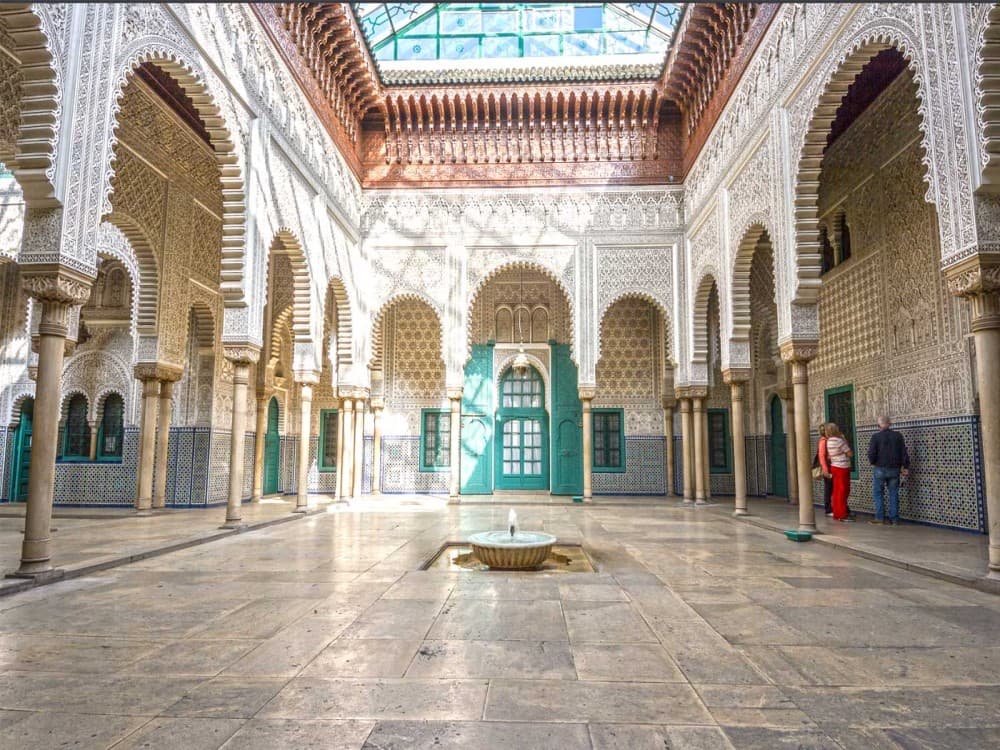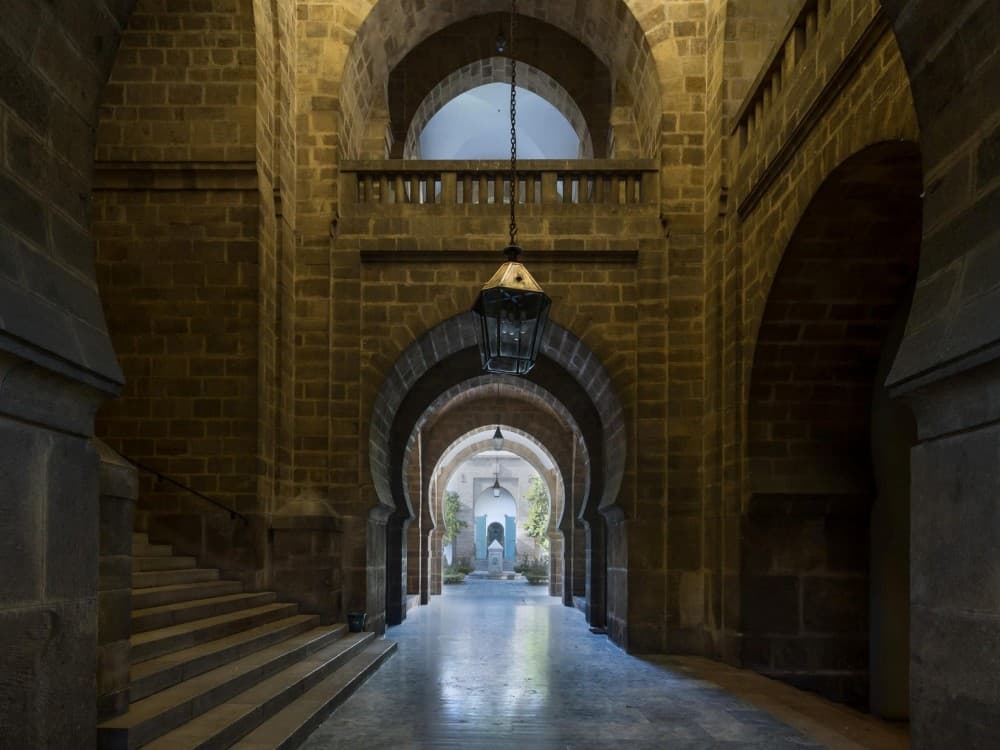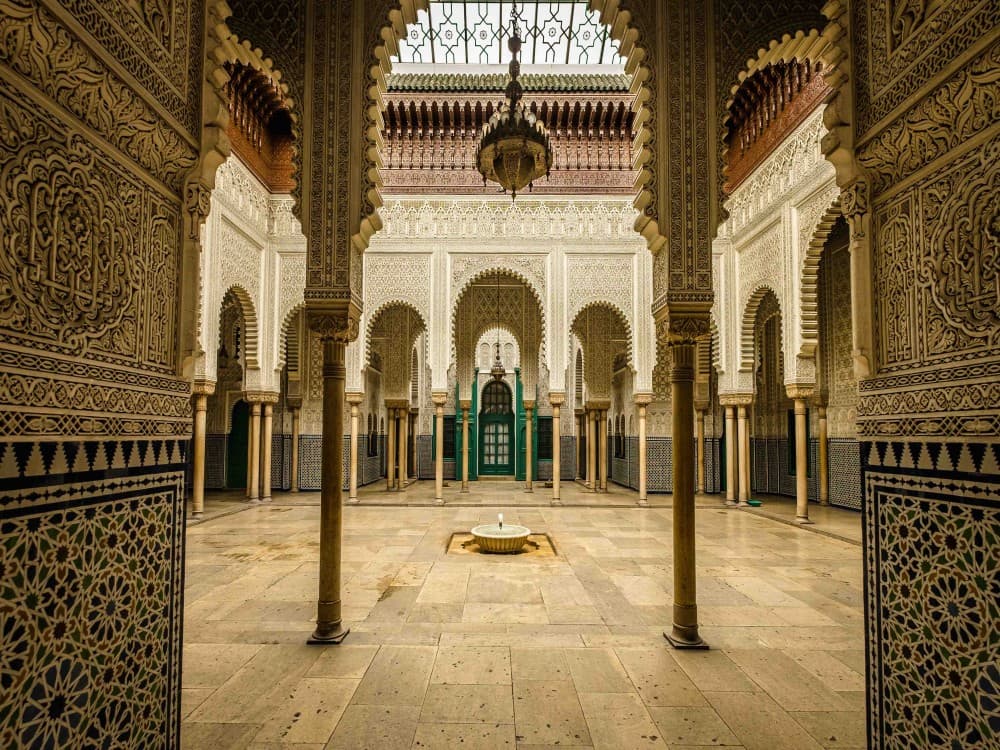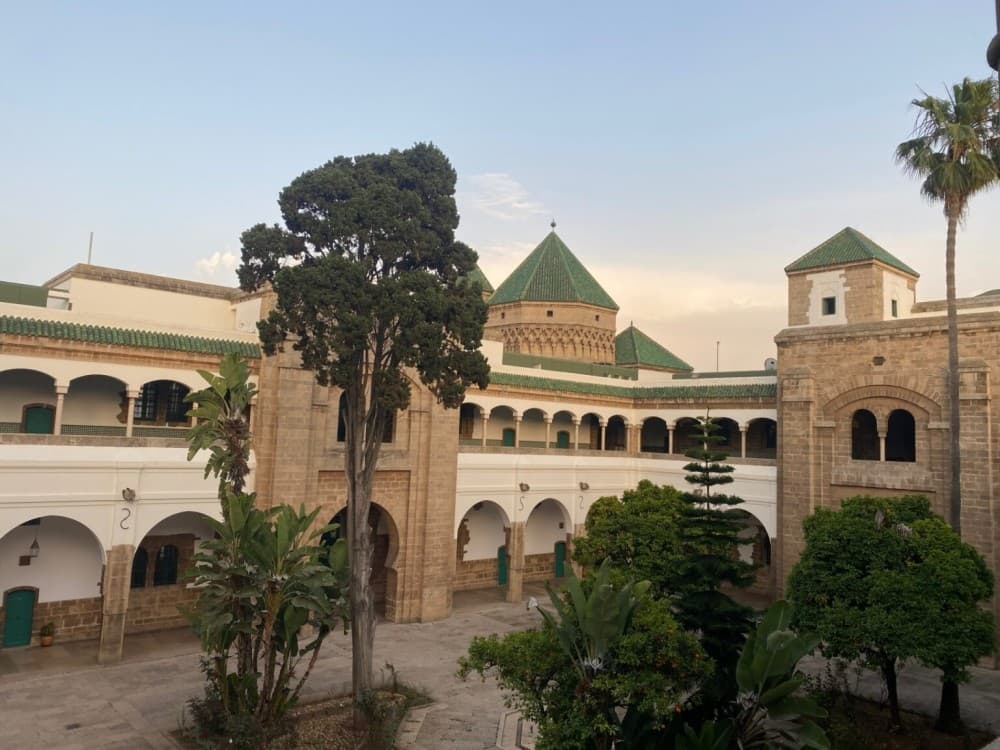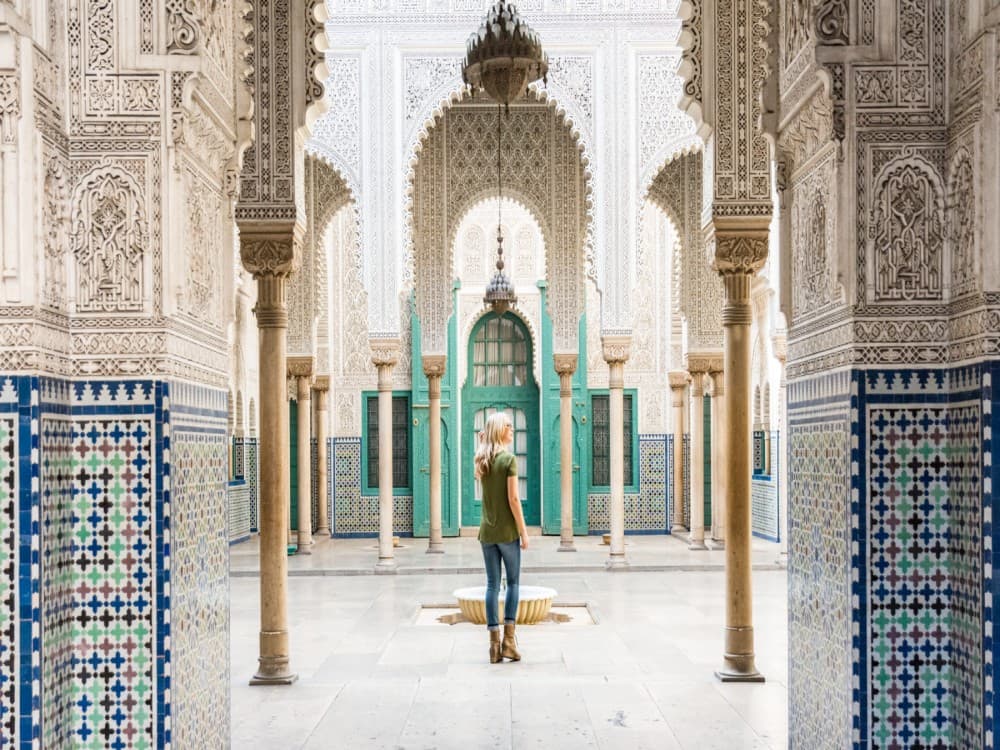
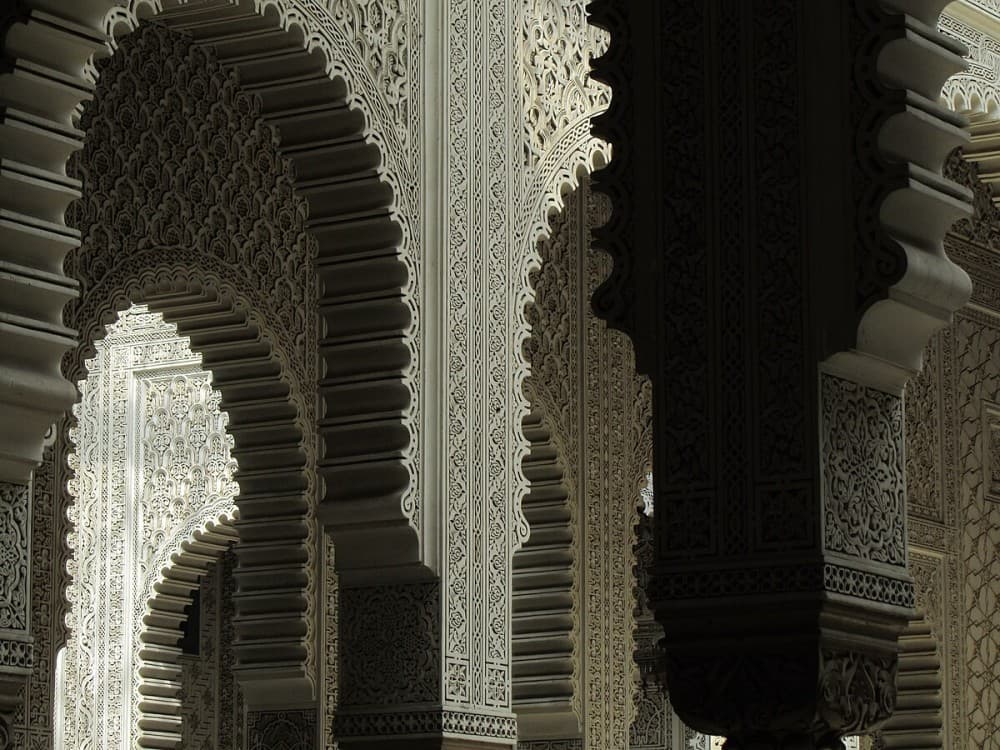
The Mahkama of Pacha is one of Casablanca’s most captivating architectural gems. Built in the mid-20th century, this ornate building blends Hispano-Moorish and Moroccan craftsmanship, with carved cedar wood ceilings, intricate zellige tilework, stucco details and graceful horseshoe arches that delight visitors. Originally a courthouse and residence for the city’s Pasha (governor), today it stands as a stunning example of historical design and Moroccan artistry in the heart of the Habous Quarter.
Es gibt noch keine Touren in Mahkama of Pacha.
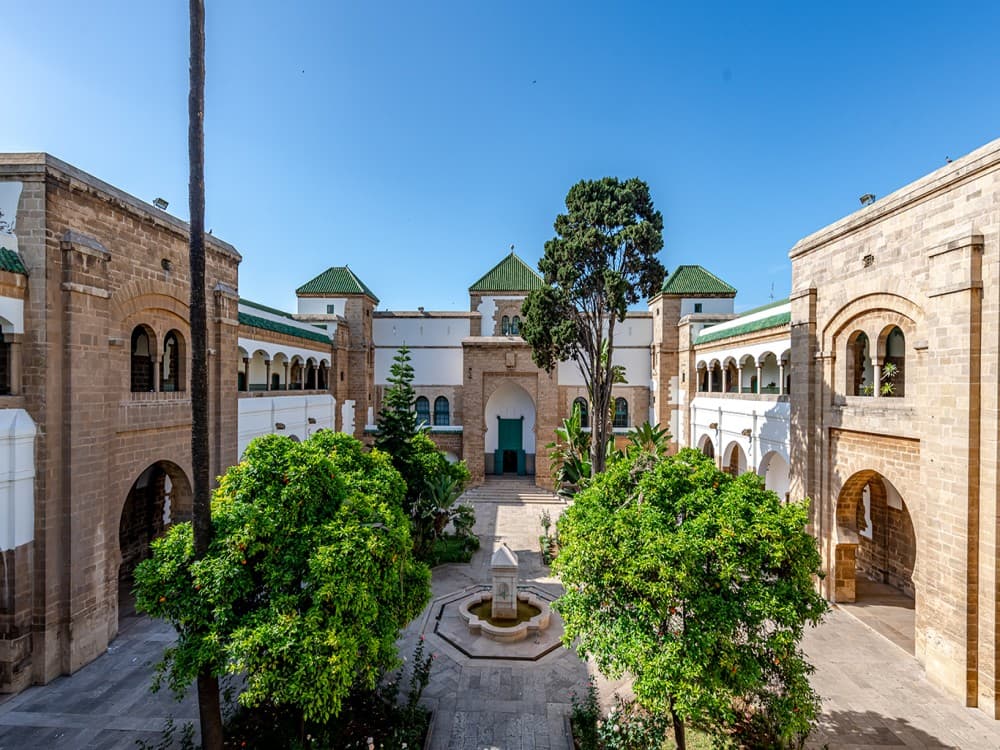
Mahkama du Pacha (sometimes called Mahkamat al-Pasha) was completed in the early 1950s and once served multiple roles: courthouse, governor’s residence, reception hall and administrative centre. The complex features more than sixty richly decorated rooms, a beautiful central courtyard and peaceful patios that feel reminiscent of a traditional riad. The exterior is photogenic even if interior access is restricted. It’s a highlight for architecture and history lovers exploring Casablanca.
Because Mahkama du Pacha still functions as a government building, independent interior visits are often limited or restricted—many visitors view it only from outside. If you hope to go inside, try joining a guided tour or check locally whether visitor access is available during your stay. Photography outside is excellent, especially for architectural shots. This site pairs well with a walk around the historic Habous neighbourhood, known for its markets and traditional shops.
Mahkama of Pacha is in the Habous Quarter near the Royal Palace area. From central Casablanca, a Petit Taxi is the quickest option—just tell the driver “Habous Mahkama du Pacha.” You can also take the tram (Line T2) and walk a few minutes from the nearest stops. Walking from nearby attractions like the Habous souk or Royal Palace is pleasant, offering local scenes and markets along the way.
Weekday mornings and early afternoons are usually best for visiting, as administrative activity is calmer and the light is ideal for photos. The Mahkama may be less accessible on weekends and holidays, so check opening conditions before visiting. Spring and autumn offer comfortable walking weather, while summer afternoons can be hot—morning visits make for a more enjoyable experience.