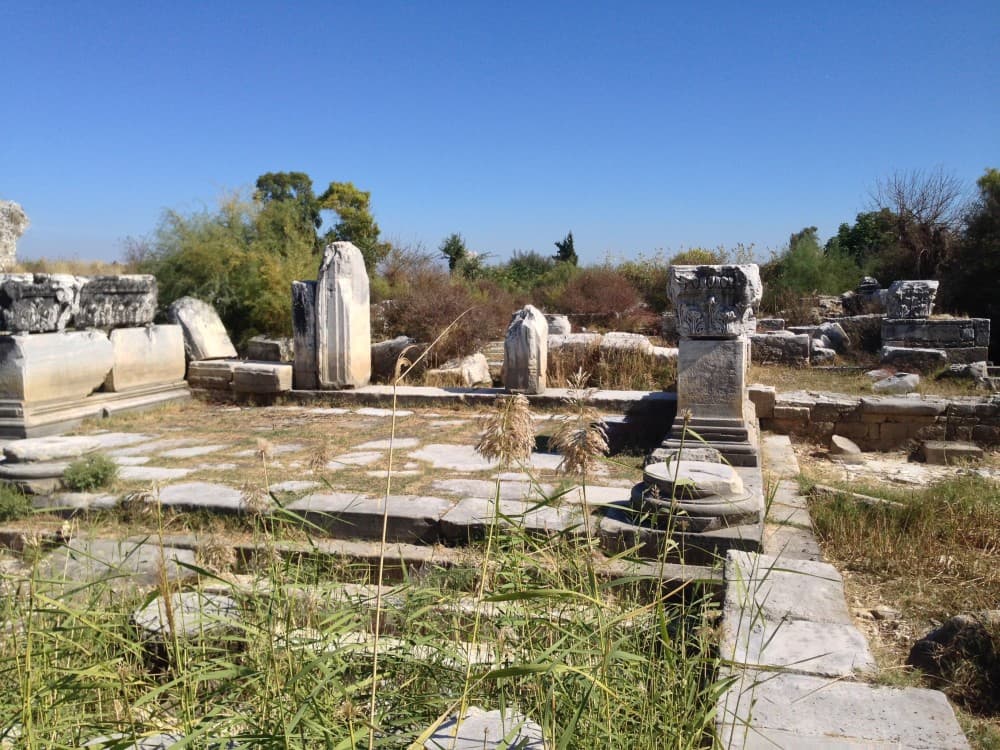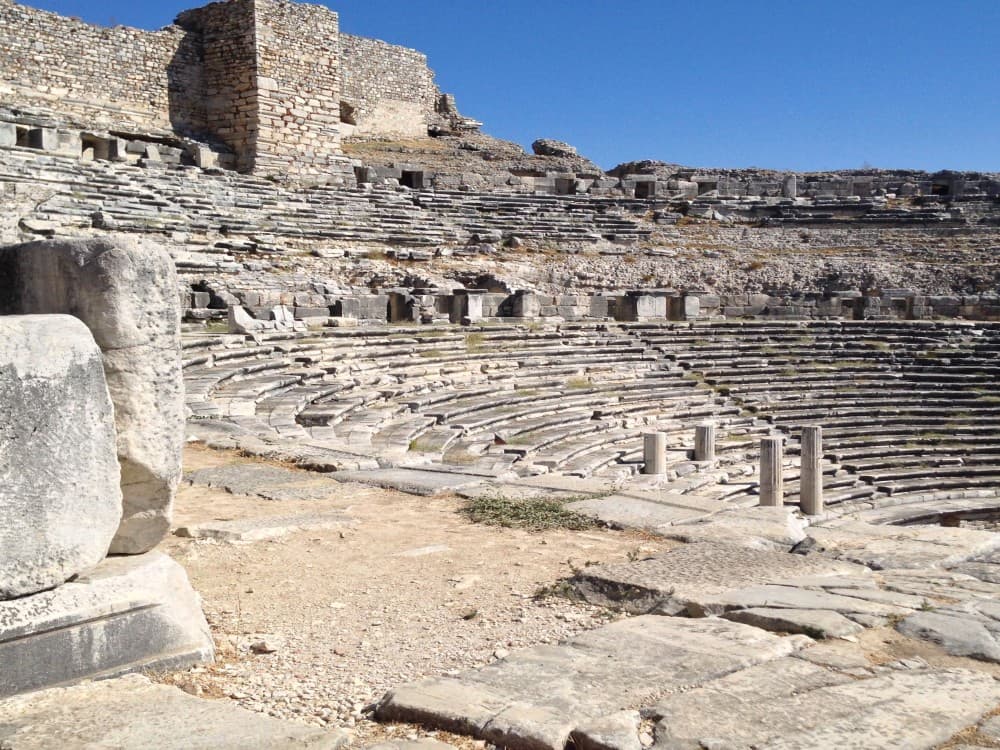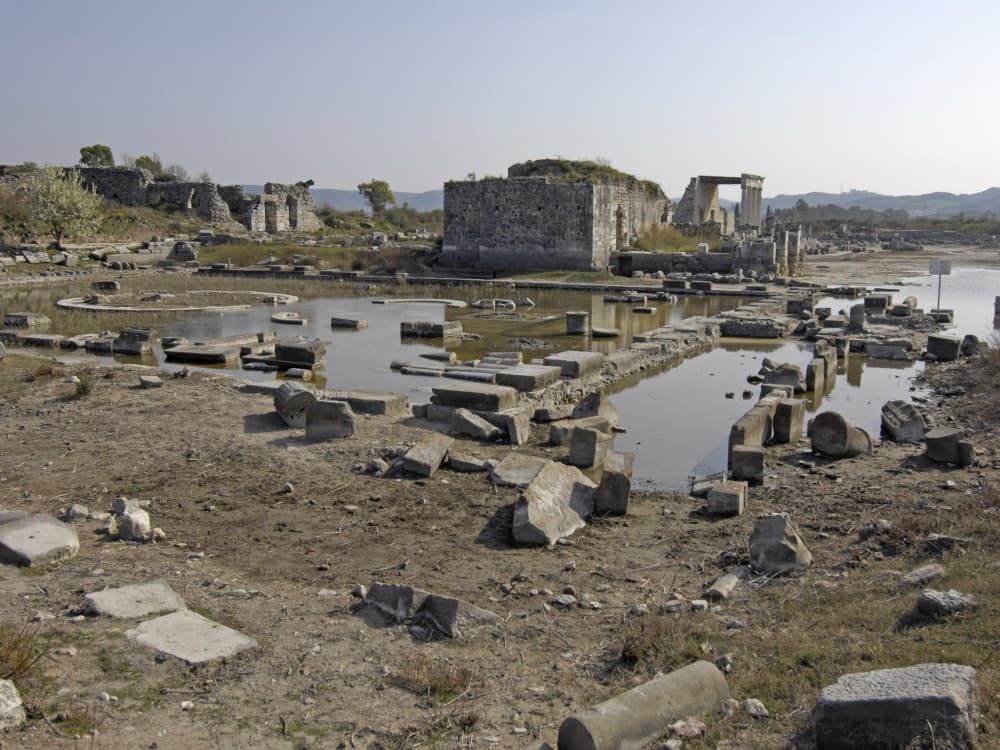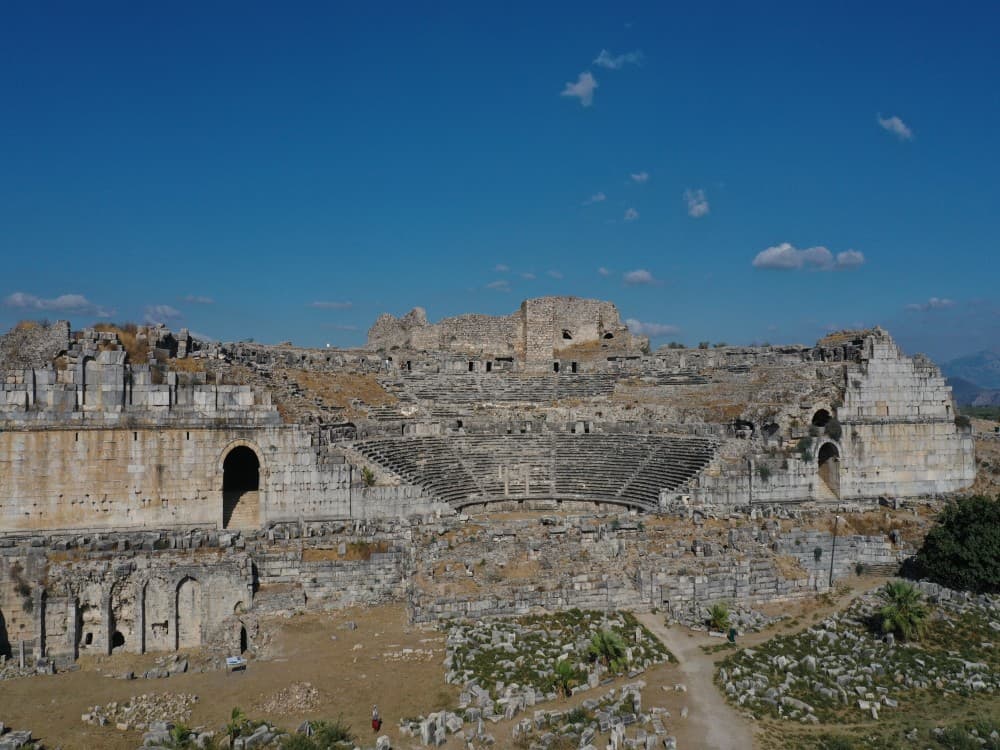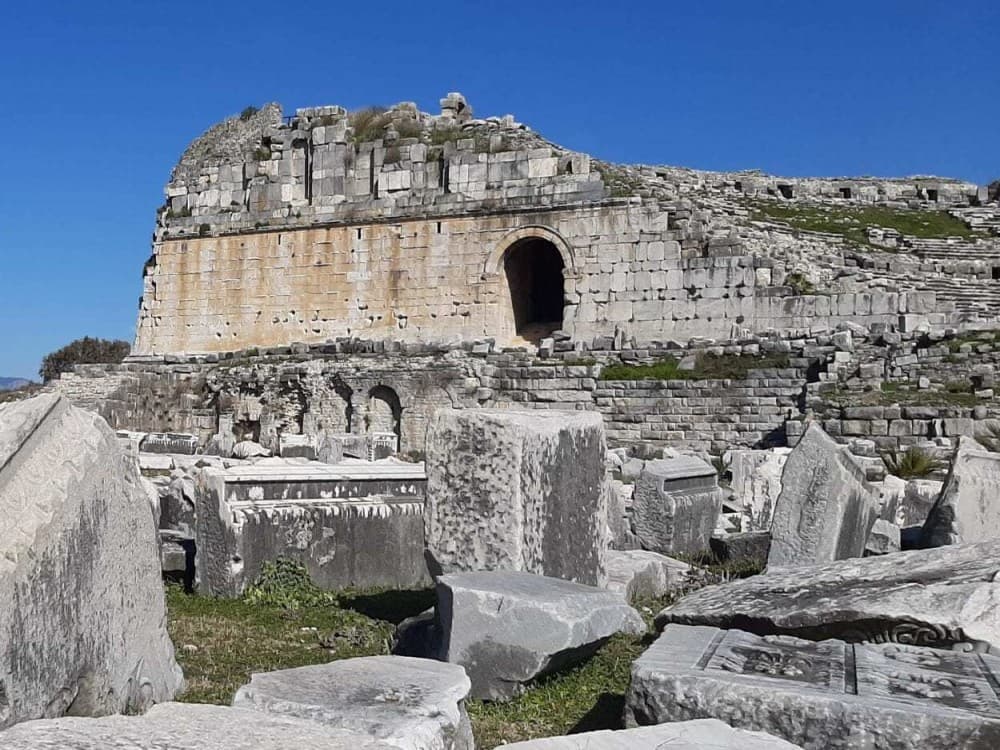
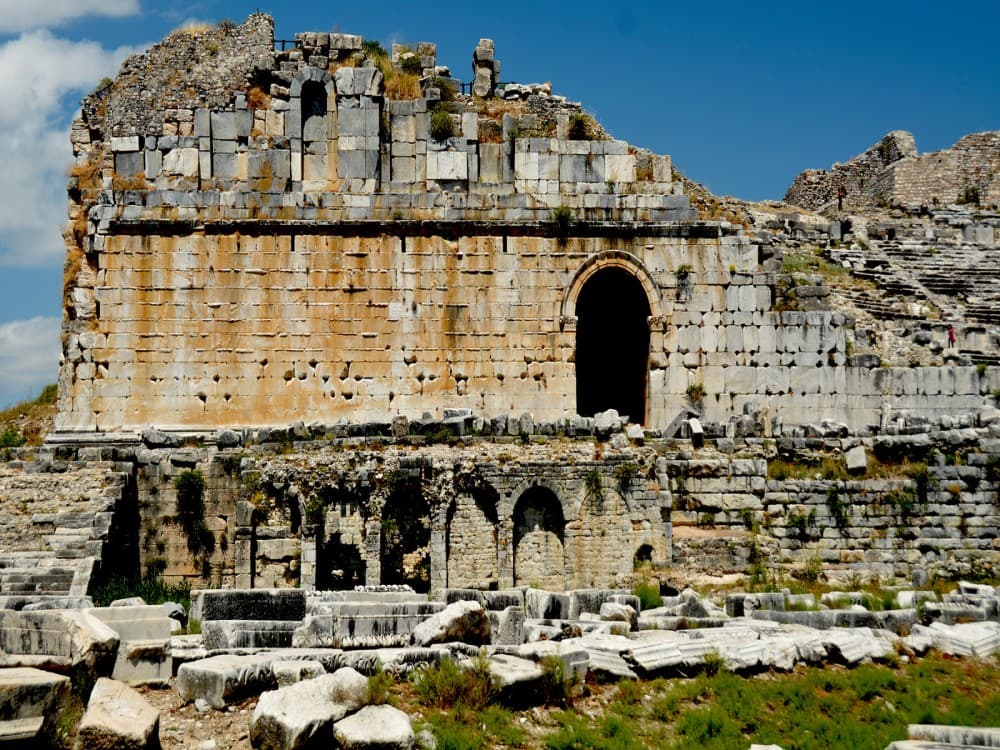
Miletus was once one of the grandest cities of the ancient Ionian world, and today its archaeological site offers a dramatic, evocative landscape. As you walk among its ruins, you’ll pass through the remains of the vast theatre, the agora, city walls, and even a partially restored harbor area now silted in by river sediments. The layout is spacious, and the setting on gently rolling terrain gives visitors the sense of a powerful and cultured city that played a key role in philosophy, trade, and urban planning.
Es gibt noch keine Touren in Ancient City of Miletus.
Founded in the Bronze Age, Miletus grew in prominence under Greek, Persian, and Roman rule. Its most striking features include a sprawling theatre capable of holding thousands, a grid-style agora, and extensive defensive walls. The city was redesigned according to a rational urban plan by Hippodamos, the ancient town planner. Nearby, the Miletus Museum (in Balat) displays artifacts from the site, including statues, inscriptions, and everyday items making it ideal to combine the museum trip with your visit.
The site is large, and exploring every corner involves quite a bit of walking over rough terrain, so wear sturdy shoes. Bring plenty of water, sunscreen, and a hat, particularly in summer when shade is limited. The ruins are peaceful but exposed, so early morning or late afternoon visits are recommended for comfort and photography. For a richer experience, consider joining a guided tour or using a guidebook to learn the stories behind the theatre, the agora, and the city’s defensive structures.
From Altınkum, Miletus is easily accessible by car or taxi, and the drive takes around 15–20 minutes depending on traffic. The most straightforward route runs through Didim and then on rural roads toward the village of Balat, where the ancient city lies. If you prefer public transport, local minibuses (dolmuş) may drop you near Balat; from there, a short walk brings you to the archaeological park entrance.
The best time to visit Miletus is in the morning or late afternoon, when the light is softer and the heat less intense. Spring and autumn offer the most pleasant temperatures, while summer can be very hot at midday. Visiting early ensures you beat the strongest sun and enjoy the quietest atmosphere. The archaeological site generally opens in the early morning and closes by late afternoon, so plan your trip to fit within its daily schedule.