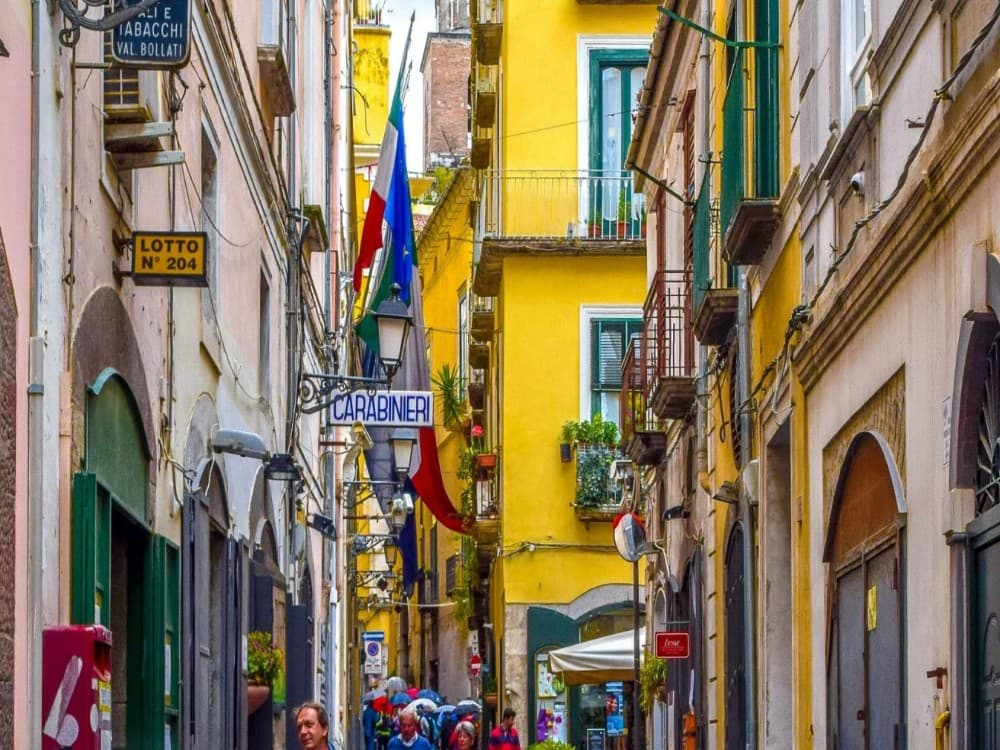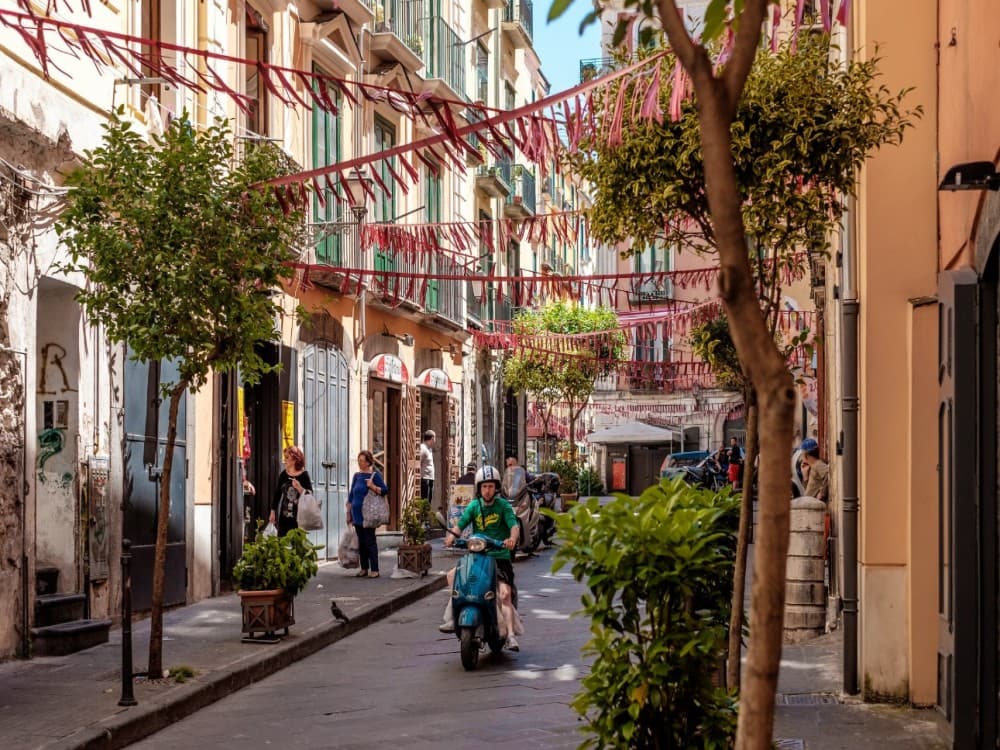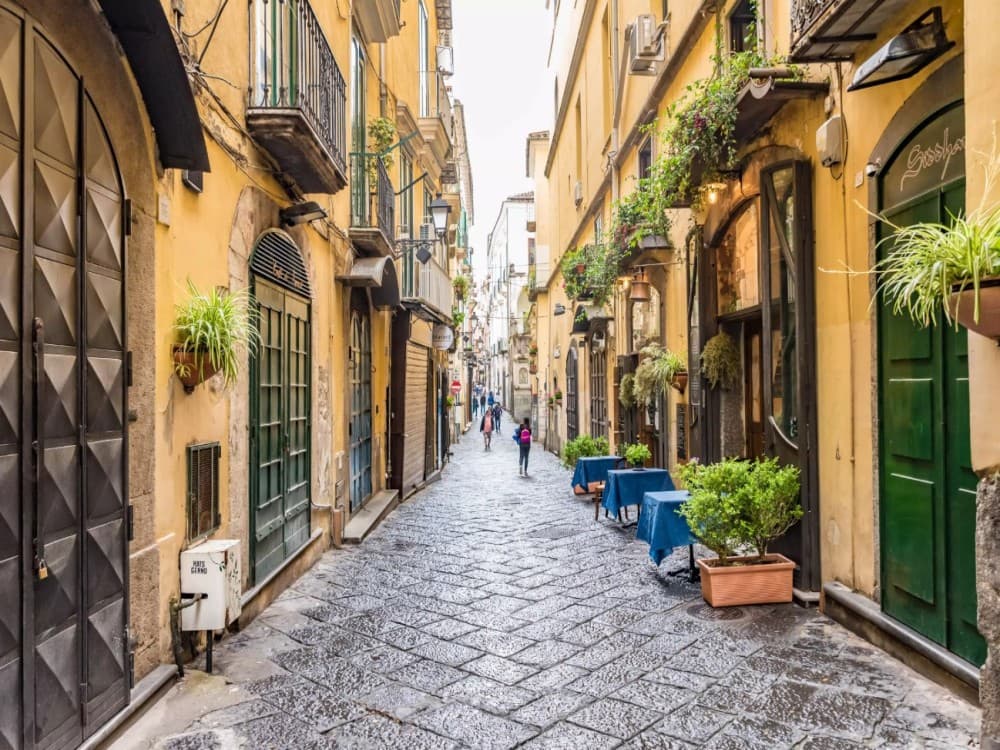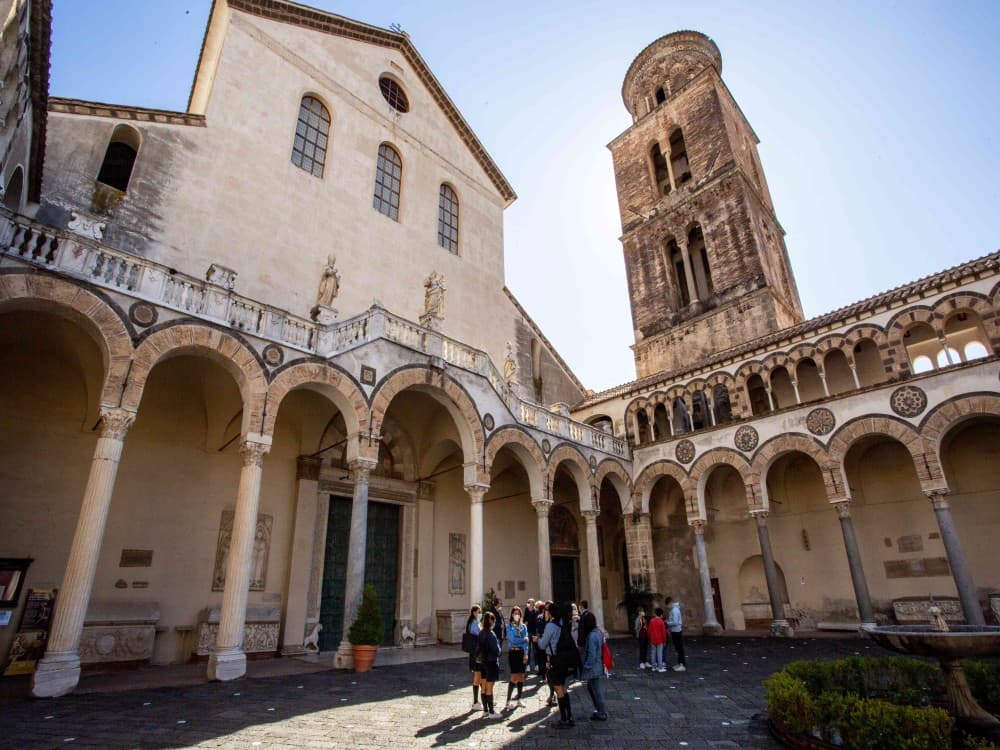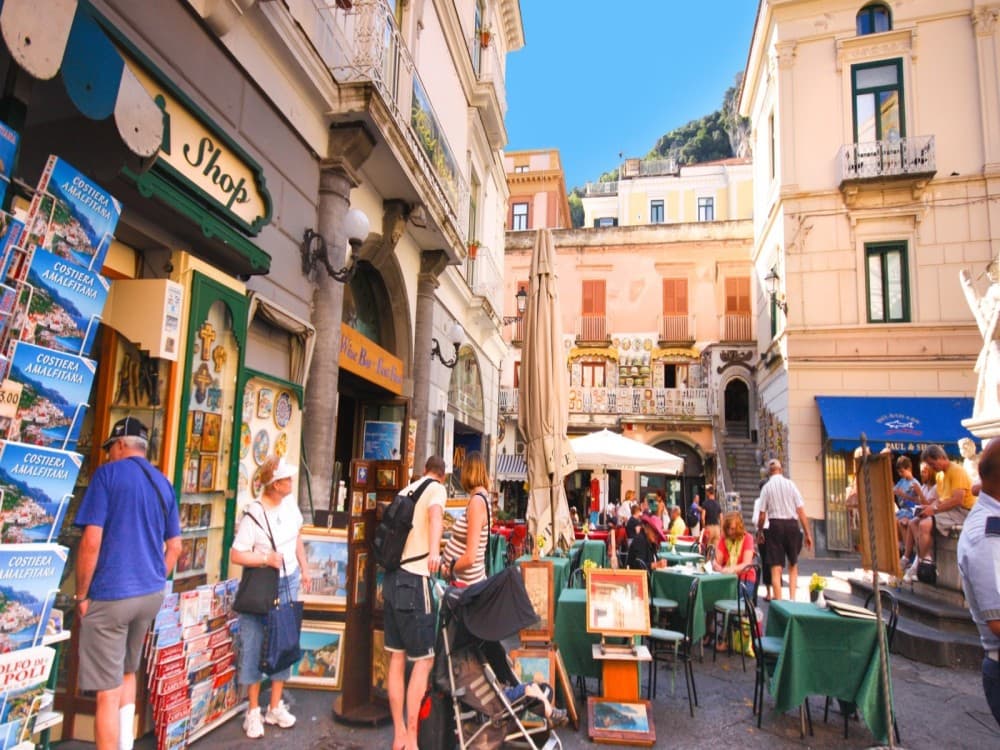
The Centro Storico of Salerno is a charming labyrinth of narrow alleys, small piazzas, and historic buildings tucked into the hills above the city’s waterfront. It reflects centuries of history, blending medieval, Renaissance, and Baroque architecture. You’ll pass hidden churches, old stone stairways, artisan workshops, and lively local life. The district feels intimate and authentic, offering a deep sense of place it’s where Salerno’s character truly comes alive.
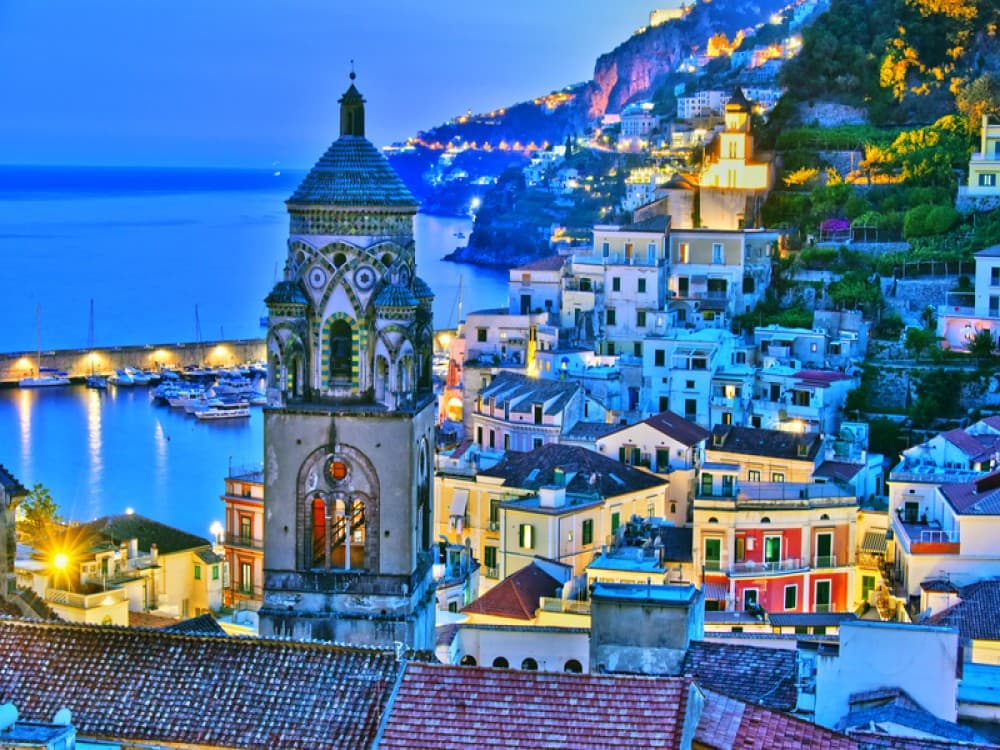
Es gibt noch keine Touren in Centro Storico Salerno.
The historic center spreads over a hillside overlooking the Gulf of Salerno, making it compact but vertically rich. There’s no entry fee you simply wander and explore. Key streets include Via dei Mercanti, which was once a bustling medieval trade route. Several historic religious buildings and palaces dot the area, such as the Church of San Gregorio and the Palazzo Genovese. The historic center is pedestrian-friendly, though some paths are steep or uneven — wear comfortable shoes.
Walking through the Centro Storico can feel like a real exploration: expect stairs, narrow lanes, and sudden viewpoints. Some of the alleys are very narrow, so avoid large luggage or bulky backpacks. It’s helpful to bring a map (or use offline GPS) since cellular reception can be patchy in tight, old alleys. Shop windows often display local crafts ceramics, leather goods, herbal shops so take your time browsing. Watch your step and take breaks, because the uphill nature of the area can be tiring.
The historic center is easily reached on foot from Salerno’s main train station or the waterfront promenade. If arriving by bus, there are local lines that cut through or around the old town. Driving is more challenging: the narrow lanes and limited parking make it less practical, so it’s better to park outside and walk in. Once you arrive, follow the winding alleys and stairways upward signs will guide you to major attractions like the cathedral or Minerva’s Garden.
The best times to visit Centro Storico are in the early morning or late afternoon, when the light softens and the narrow streets calm down. During summer evenings, the stone walls glow in the golden hour and cafés come alive, making for a magical walk. Weekdays tend to be quieter than weekends, giving you a more peaceful experience. Spring and autumn are ideal: the weather is mild for uphill exploring, and local life feels relaxed.