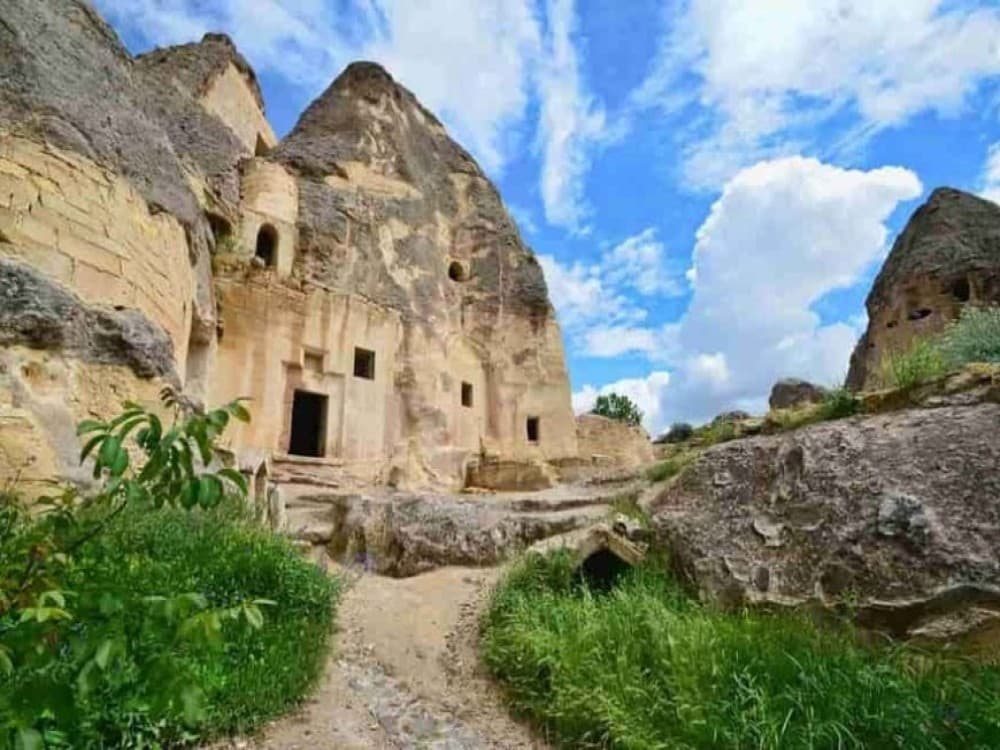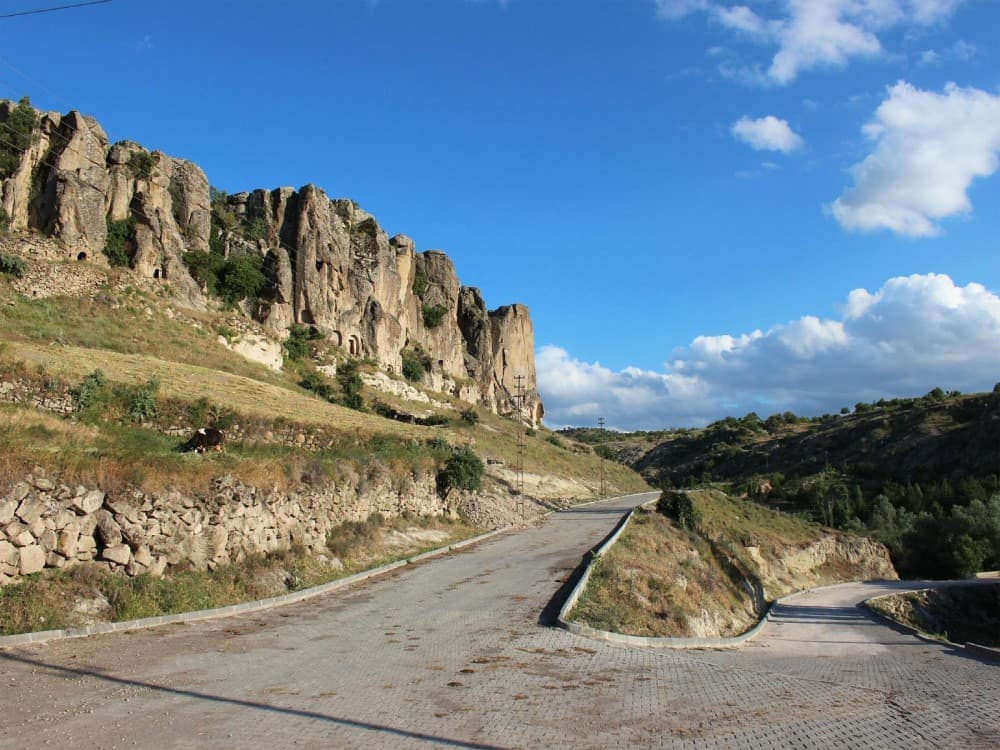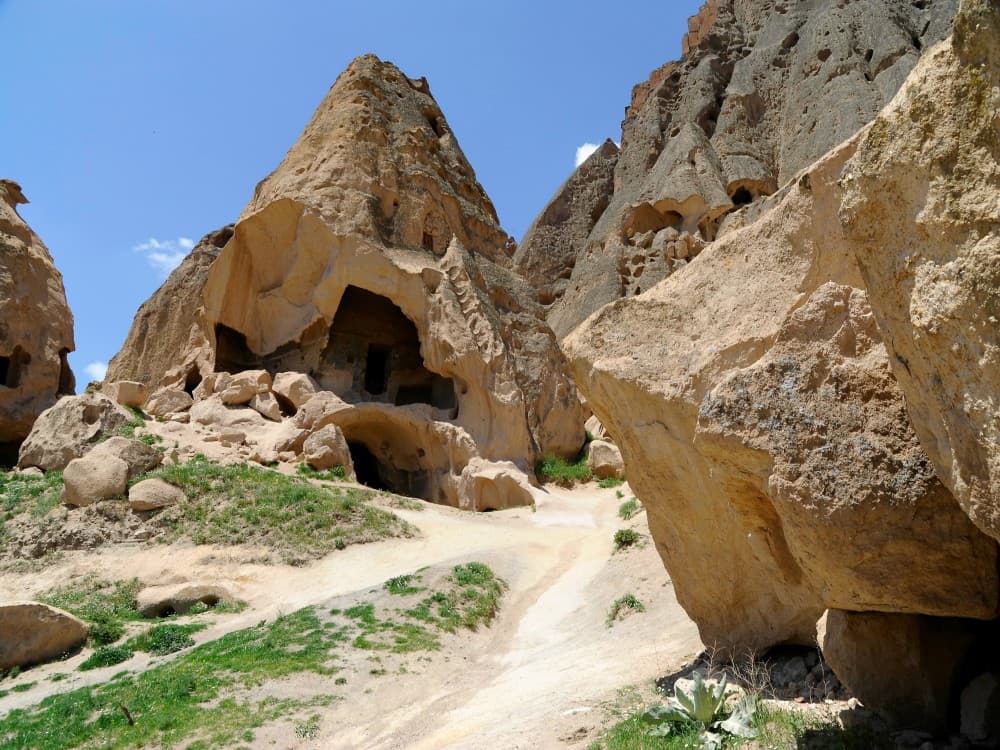
Monastery Valley (Manastırlar Vadisi) is a serene and lesser-known gem in the Güzelyurt district of Cappadocia. The valley stretches around 4–5 kilometers and features dozens of rock-carved churches, monastic dwellings, and underground refuges used by early Christian communities. Unlike the more tourist-heavy valleys, it offers a peaceful walking experience surrounded by nature. A small brook runs through the valley, adding to the tranquil atmosphere. As you stroll along the path, you can explore ancient chapels carved into soft volcanic tuff and imagine the lives of monks who lived in isolation and devotion centuries ago.
Es gibt noch keine Touren in Monastery Valley.
Monastery Valley is located southwest of Güzelyurt in Aksaray Province. The valley served as a significant monastic center during Byzantine times, with monks carving homes and churches into the soft volcanic rock. The terrain is relatively gentle but requires walking along uneven paths. The site is not heavily developed for tourism, meaning there are few facilities, but it provides an authentic and quiet glimpse into Cappadocia’s religious history. Visitors can explore the remains of rock-hewn churches, frescoes, and dwellings while enjoying the natural beauty of the valley.
The valley is peaceful but requires some preparation. The walking paths can be uneven, so wear sturdy shoes and bring water, especially during summer. Facilities are minimal, so don’t expect cafes or restrooms on site. Respect the fragile structures avoid climbing on rocks or entering unsafe areas. Dress modestly if you plan to enter any church interiors, and be mindful of weather: summer can be hot, and winter may bring short daylight and slippery paths. Visiting during quieter hours enhances the experience.
From Cappadocia’s main towns like Göreme, Ürgüp, or Avanos, drive toward Güzelyurt in Aksaray Province. From Güzelyurt, head to the nearby village of Sivrihisar, then follow the marked path into Monastery Valley. Public transport is limited, so the easiest way is by car or taxi. Guided tours often include the valley as part of a historical or cultural itinerary. Once at the site, a walk along the valley trail reveals churches, dwellings, and scenic views.
The best time to visit is early morning or late afternoon when the light is soft and the valley is quiet. Spring (April–May) and autumn (September–October) offer mild temperatures, while summer can be hot and winter may bring icy or slippery paths. Visitors typically spend 1–2 hours exploring the valley, but combining it with nearby attractions can make a half-day trip.