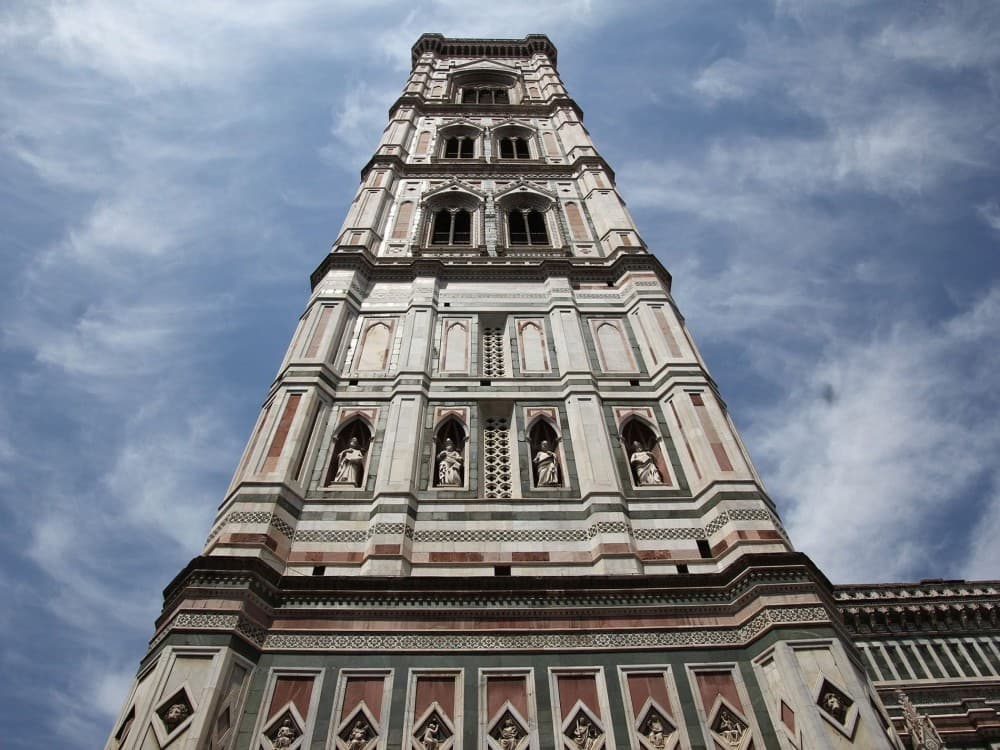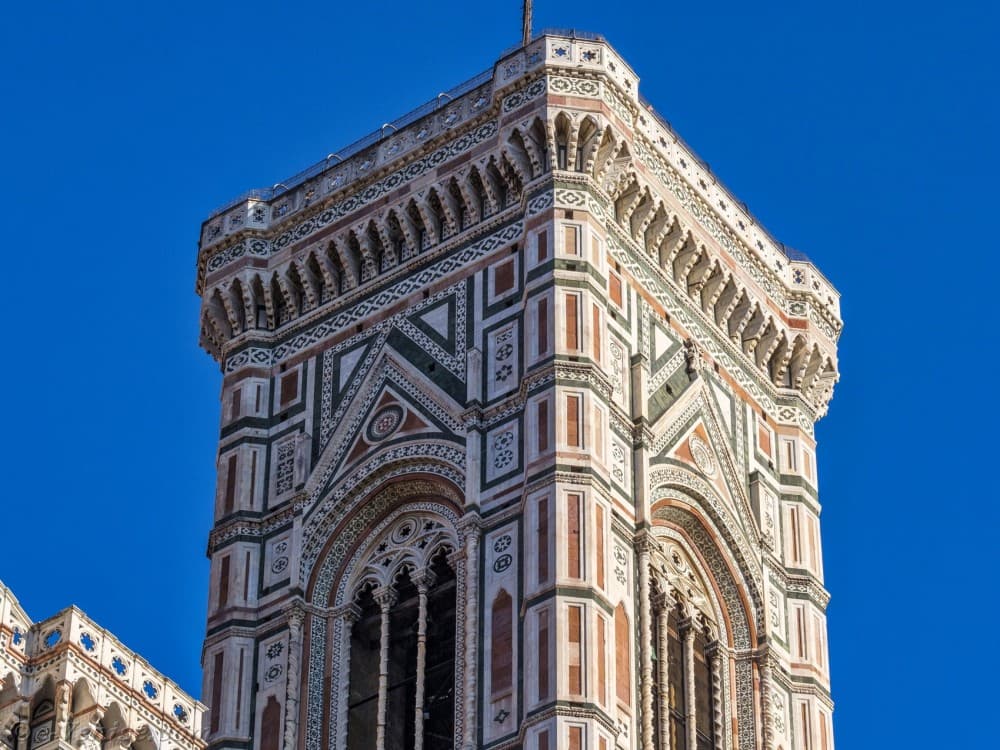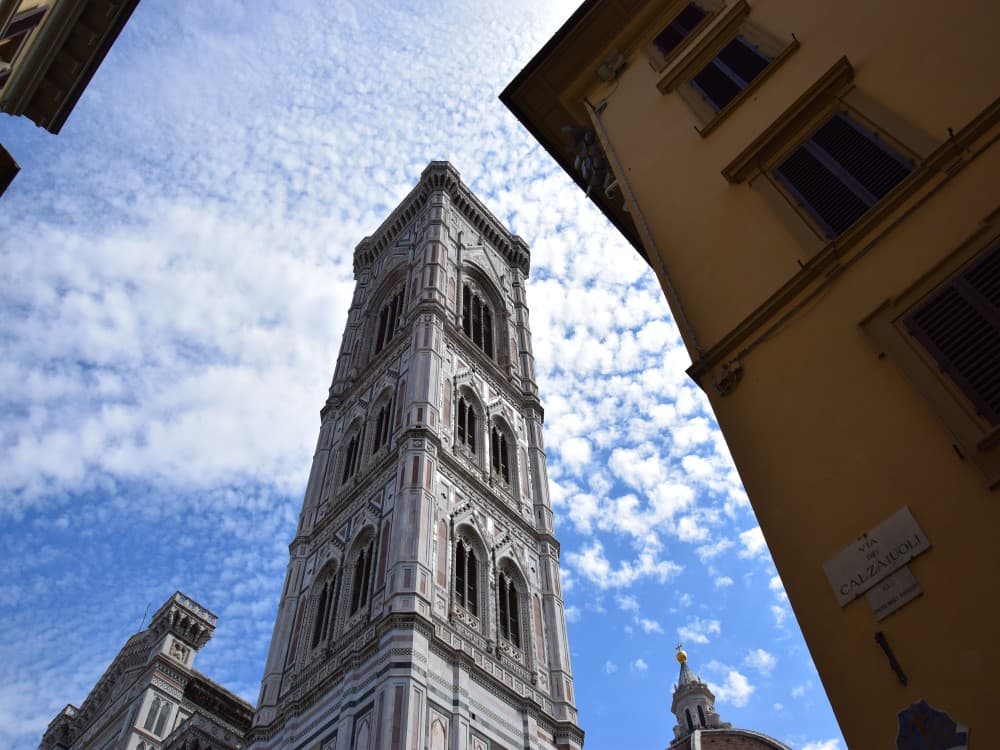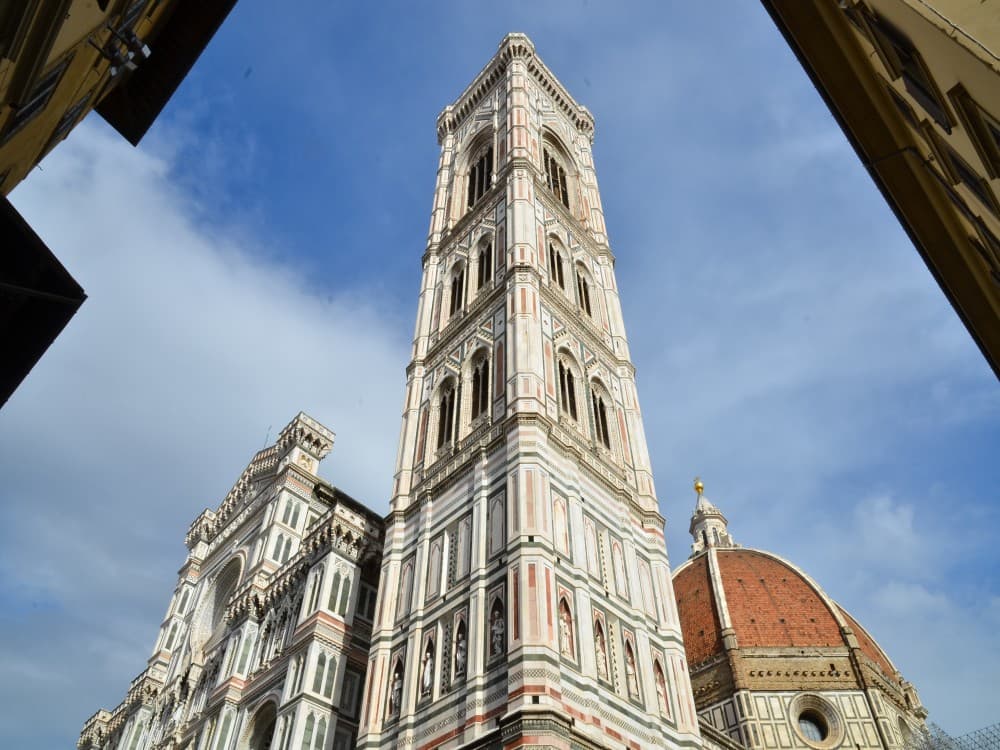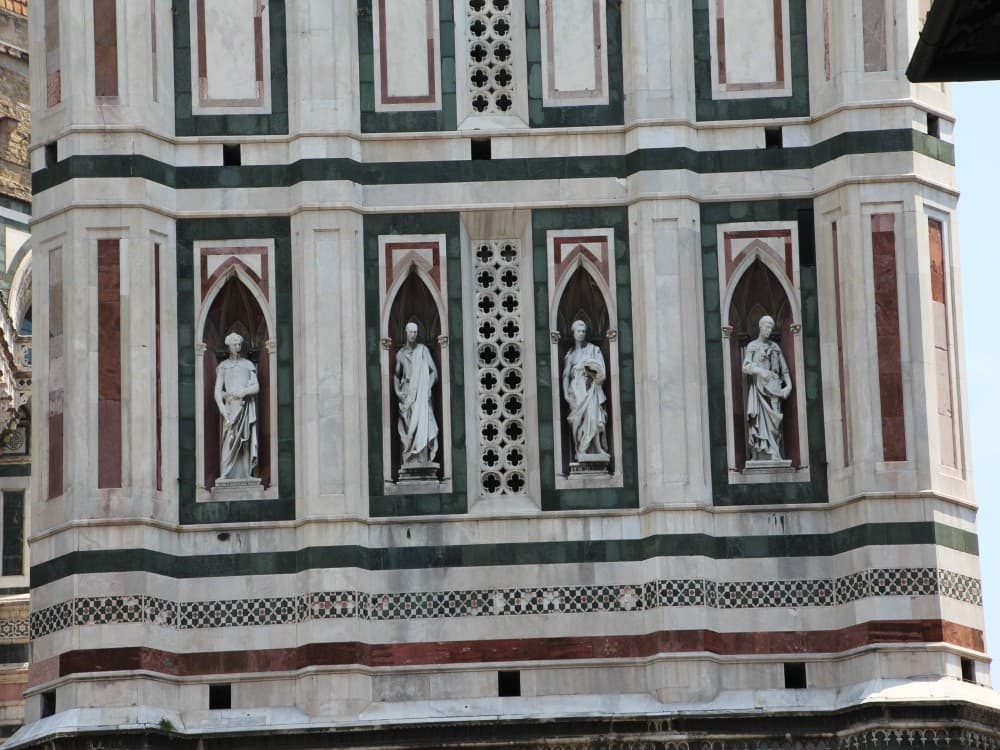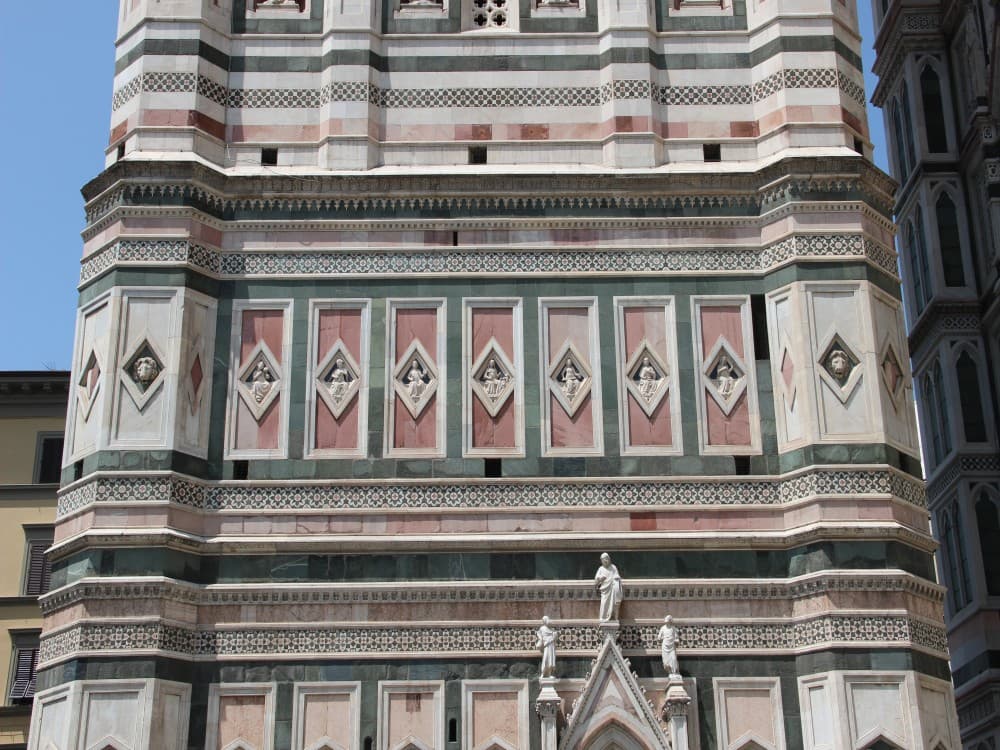
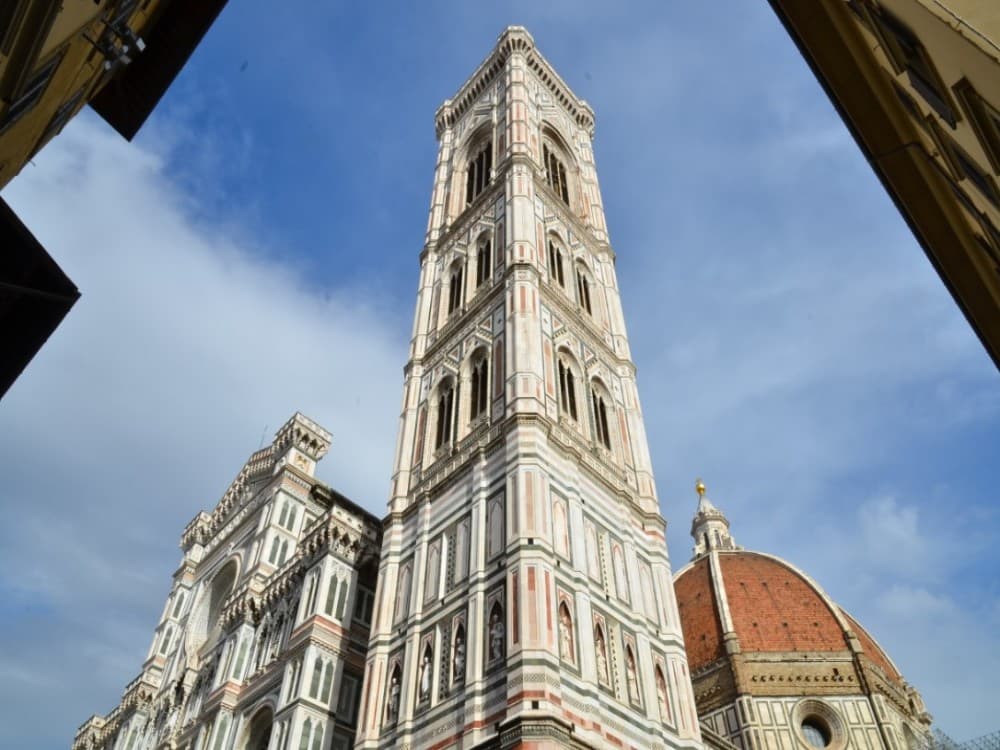
The Campanile di Giotto (Giotto’s Bell Tower) is one of the most striking pieces of Florentine Gothic architecture, standing next to the Cathedral of Santa Maria del Fiore in Piazza del Duomo. Designed originally by Giotto di Bondone starting in 1334, the tower is 84.7 metres tall. Its façade is decorated with polychrome marble (white, green, red) and rich sculptural reliefs and hexagonal panels at its base. The tower is divided into five levels and has polygonal buttresses at its corners. Climbing it gives you a panoramic view of Florence, including the Duomo, Baptistery, rooftops, and rolling hills.
Es gibt noch keine Touren in Campanile di Giotto.
Located in Piazza del Duomo in Florence, right beside the Cathedral of Santa Maria del Fiore and the Baptistery of St. John, Giotto’s Bell Tower stands as an architectural masterpiece of Gothic design. The tower reaches a height of 84.7 meters, with a square base measuring approximately 14.45 meters per side. There is no elevator, and visitors must climb 414 steps to reach the top, making it a physically demanding but rewarding experience. Entry is available through several combined ticket options. The Brunelleschi Pass provides full access to the entire Duomo complex, including the Dome, Bell Tower, Baptistery, Museo dell’Opera del Duomo, and Santa Reparata. The Giotto Pass offers access to all major monuments except the Dome. Children under 6 typically enter free of charge, while reduced rates apply for those aged 7 to 14. Due to its steep, narrow staircases and lack of lifts, the climb is not recommended for visitors with heart conditions, vertigo, mobility issues, or very young children unless supervised.
When planning your visit to Giotto’s Bell Tower, there are several important considerations to ensure a smooth and enjoyable experience. Advance booking is essential, as time-slot reservations are required—particularly with the Giotto Pass—and these bookings are non-refundable and cannot be modified. As the site is part of a religious and historical complex, visitors must adhere to a strict dress code: shoulders and knees must be covered, and entry may be denied for inappropriate attire. Large bags, backpacks, and suitcases are not permitted inside and must be stored in designated luggage storage facilities nearby. The climb to the top includes 414 steps, which can be challenging; visitors are advised to wear comfortable footwear, stay hydrated, and be prepared for a physically demanding ascent. Those with claustrophobia, mobility limitations, or health concerns may prefer to enjoy the view from the ground. Lastly, while the tower’s exterior is richly decorated, it’s important to note that the visible statues and reliefs are replicas—the original artworks are preserved and displayed in the Museo dell’Opera del Duomo.
Reaching Giotto’s Bell Tower is easy and convenient, especially if you're staying within Florence’s historic centre. From areas like Santa Maria Novella, Santa Croce, or near the Arno River, it's typically a 10 to 20-minute walk to Piazza del Duomo, where the tower is located. The historic centre is largely pedestrian, so walking is often the most efficient way to get around. Public transportation options, including buses and trams, can bring you close to the Duomo area—just follow signs for “Duomo”—though some walking will still be required from the nearest stops. If arriving by train, the Santa Maria Novella Station is only a 10-minute walk from the site. Traveling by car is not recommended, as the city centre falls within a ZTL (Limited Traffic Zone) with strict access restrictions and very limited parking. Visitors driving in should look for parking garages on the outskirts of the centre and continue on foot from there.
Giotto’s Bell Tower is open daily, typically from 08:15 to 18:45, with the last entry permitted 45 minutes before closing. For the best experience, plan your visit in the early morning, when crowds are minimal and temperatures are cooler—ideal for the demanding climb. Late afternoon also offers a magical atmosphere, with warm light perfect for capturing panoramic photos of Florence. Avoid midday visits during summer, as the heat can make the climb uncomfortable. Be sure to check for temporary closures, such as scheduled maintenance from 10 to 14 November 2025, and note that religious holidays may impact access to parts of the Duomo complex. In terms of seasons, summer sees the highest number of visitors, while winter is quieter but offers shorter daylight hours. For a balanced experience with pleasant weather and manageable crowds, spring and autumn are highly recommended.