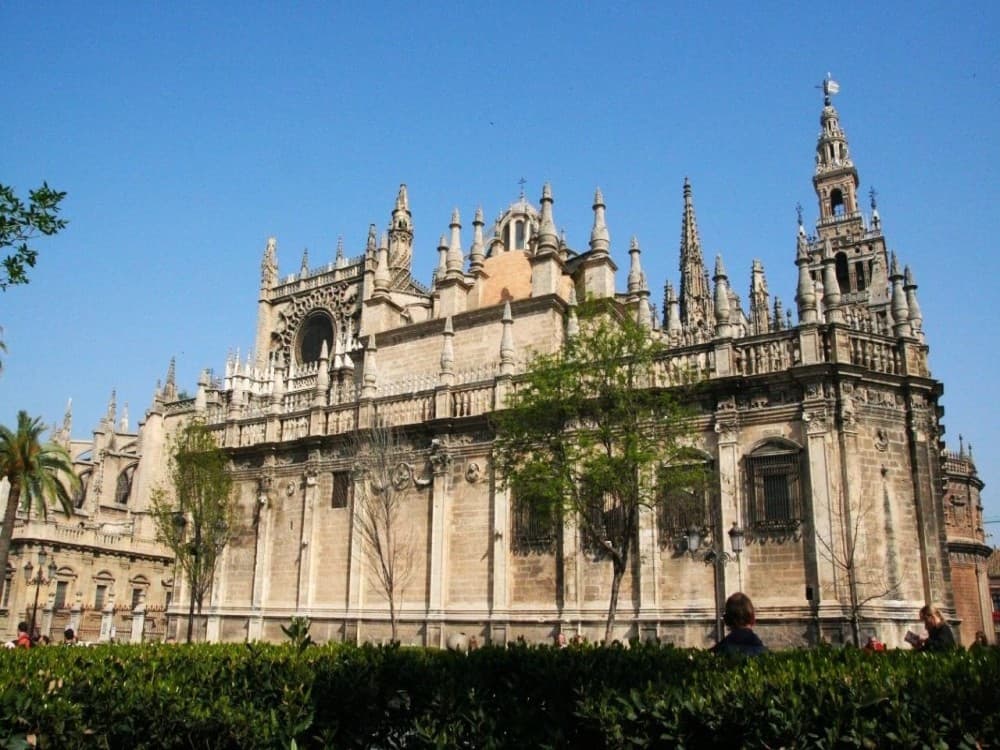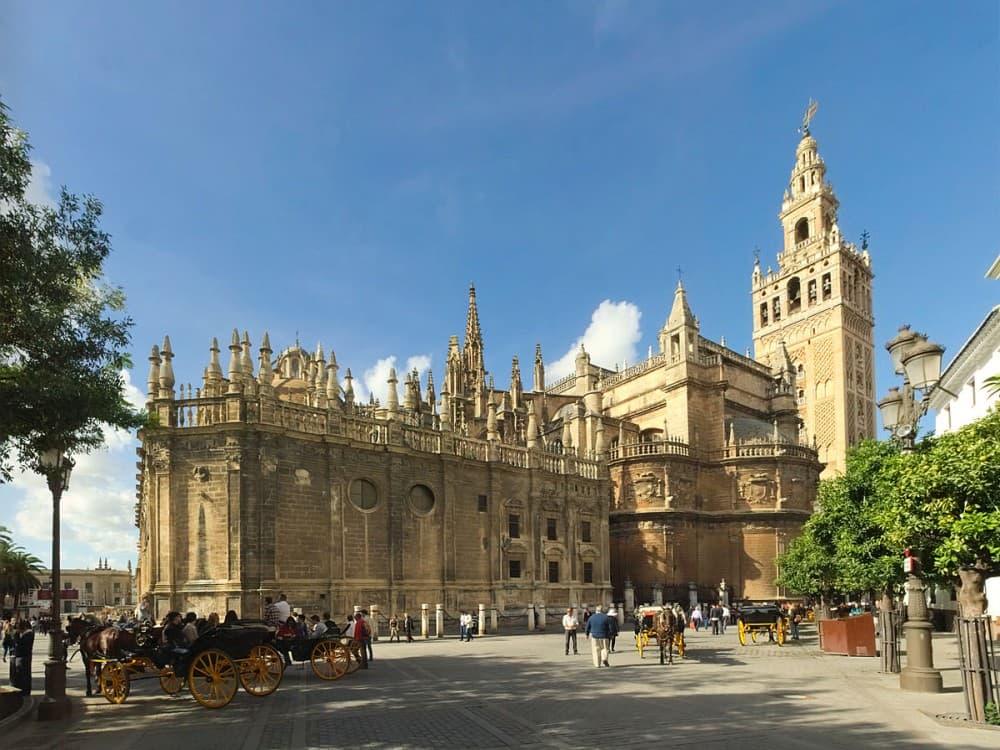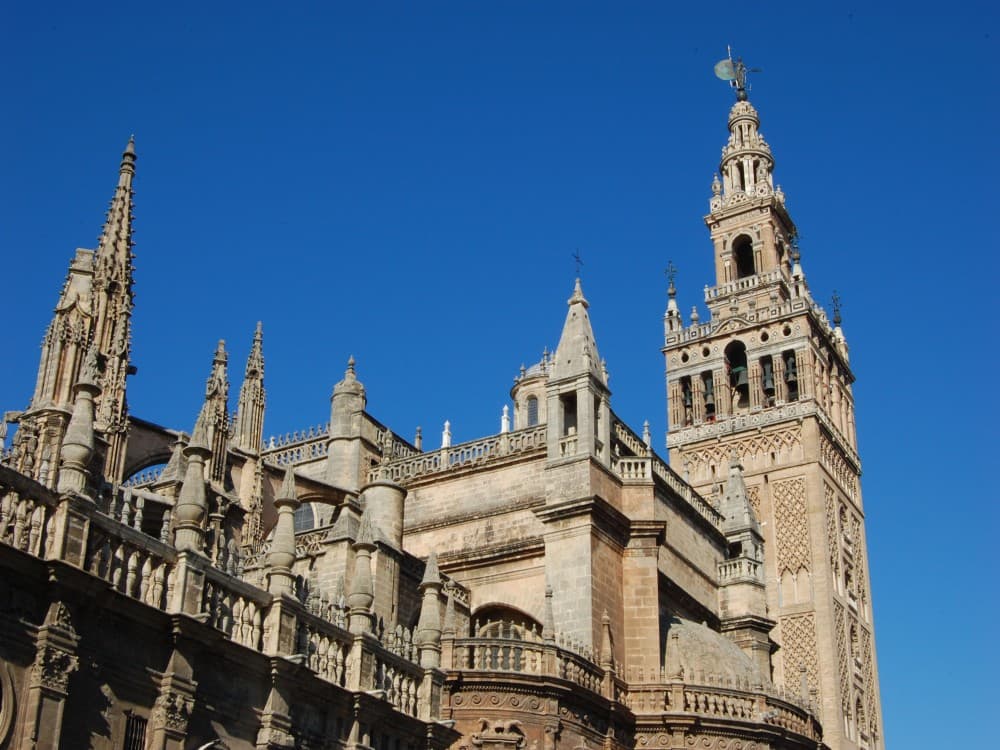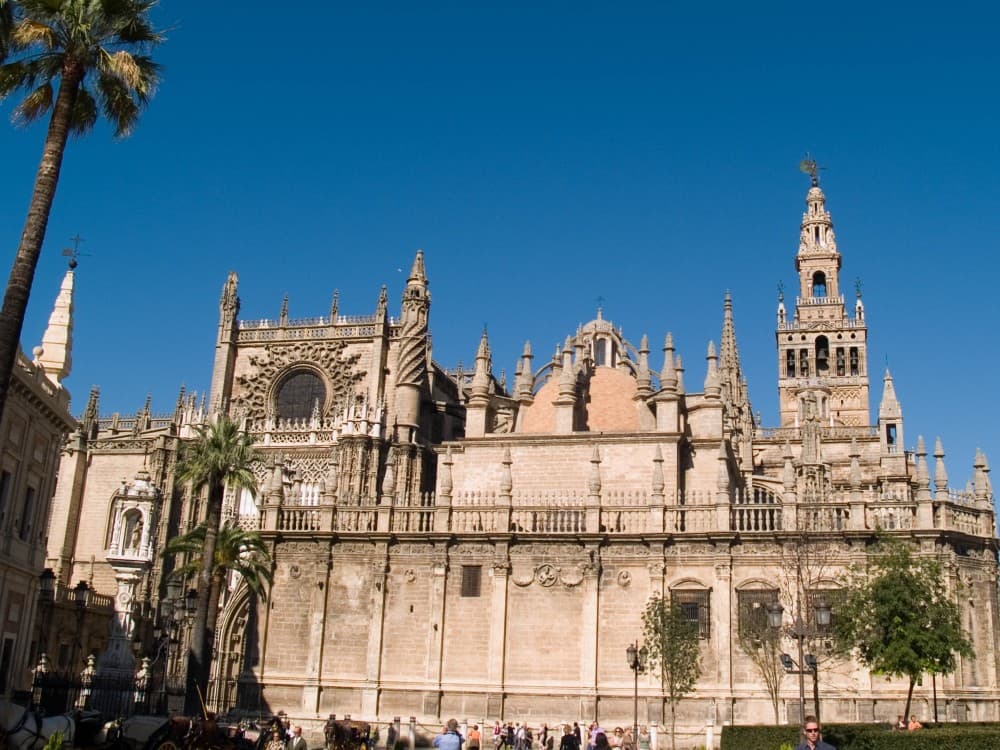
The Seville Cathedral, or Catedral de Santa María de la Sede, is one of the largest and most magnificent Gothic cathedrals in the world. Located in the heart of Seville, it was built on the site of a former mosque after the Reconquista in the 15th century. The cathedral is renowned for its sheer size, intricate details, and historical significance. It houses the tomb of Christopher Columbus, making it a key pilgrimage site. Visitors will be captivated by its impressive altarpiece, the grand chapels, and the soaring ceilings that stretch over 40 meters. The cathedral’s stunning blend of Gothic, Mudejar, and Renaissance elements makes it a must-see for architecture and history enthusiasts.
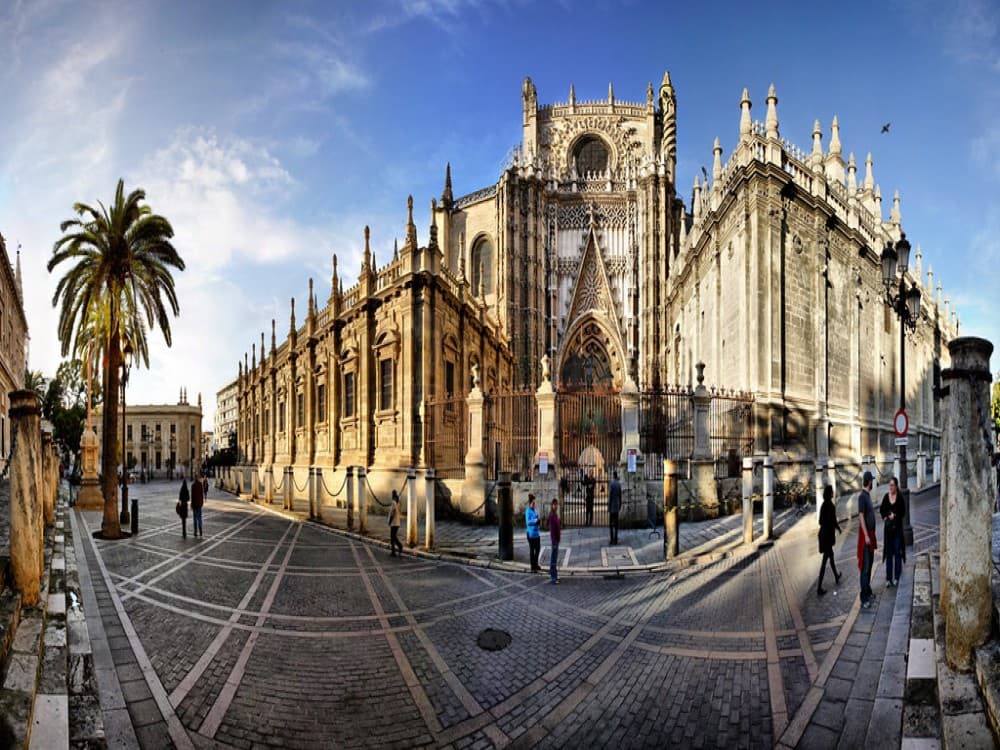
The Seville Cathedral is part of the UNESCO World Heritage Site along with the Giralda tower and the Royal Alcázar. It spans an area of over 11,000 square meters, making it the largest Gothic cathedral in the world. Inside, you’ll find a wealth of art and religious artifacts, including paintings by Murillo and Goya, as well as elaborate stained glass windows. The cathedral is home to the largest altarpiece in Spain, known as the Main Altarpiece, which is a masterpiece of Gothic art. Entry to the cathedral includes access to the Giralda tower, providing stunning views of the city.
Before visiting the Seville Cathedral, it’s important to note that the site can get crowded, especially in the high tourist season. Booking tickets in advance can save you time. The cathedral is an active place of worship, so visitors should be respectful of religious services that might be taking place. The dress code is modest—shoulders and knees should be covered. Photography is allowed in most areas, but flash photography is restricted. Also, be prepared for some stairs if you plan to visit the Giralda, which is part of the cathedral complex.
The Seville Cathedral is centrally located in Seville’s historic district, near the Giralda tower and the Royal Alcázar. If you’re staying in the city center, you can easily walk to the cathedral as it is located just a short distance from the main plazas and streets. Public transportation is available, with nearby bus stops and tram services, but walking allows you to soak in the beauty of Seville's charming streets along the way. Taxis and ride-sharing services like Uber are also options for those preferring a direct route.
The best time to visit the Seville Cathedral is early in the morning when the crowds are smaller, allowing you to explore the vast interior at your own pace. Mornings also offer the chance to enjoy the soft light streaming through the cathedral’s stained glass windows. Spring and fall are ideal times to visit, with mild weather and fewer tourists compared to the summer months. Be sure to check for special events or religious ceremonies, as the cathedral may close during mass or religious holidays.