Aktivitäten in Pula
Wohin möchten Sie reisen?

Insgesamt 0 Touren & Ausflüge in Pula

Es gibt noch keine Touren in Pula.
The best time to visit Pula is from May to September. Summer (June–August) offers warm sea temperatures around 23–25°C and a vibrant atmosphere, especially during the Pula Film Festival held in the Roman Arena. July and August are busiest, so book accommodation early. May, June, and September are excellent for sightseeing, with pleasant temperatures and fewer crowds. Spring is perfect for exploring historical sites and cycling trails, while early autumn offers warm seas and great local food experiences during truffle season in Istria.
Pula is easy to explore on foot, especially the historic center where major landmarks are within walking distance. Local buses connect the city center with beach areas such as Verudela, Valkane, and Stoja. Tickets are affordable and can be purchased at kiosks or via mobile apps. Taxis and ride-sharing services operate throughout the city. Renting a car is recommended if you plan to explore nearby towns like Rovinj, Fazana, or Cape Kamenjak. Pula also has an international airport located about 8 km from the city center.
Purchase a combined ticket for Pula’s main Roman sites to save money. Visit the Arena early in the morning or late afternoon to avoid peak crowds. Bring water shoes for rocky beaches. Try local specialties such as fuži pasta with truffles or grilled Adriatic fish. Many attractions accept card payments, but small cafés may prefer cash. English is widely spoken, and the city is considered very safe for tourists.
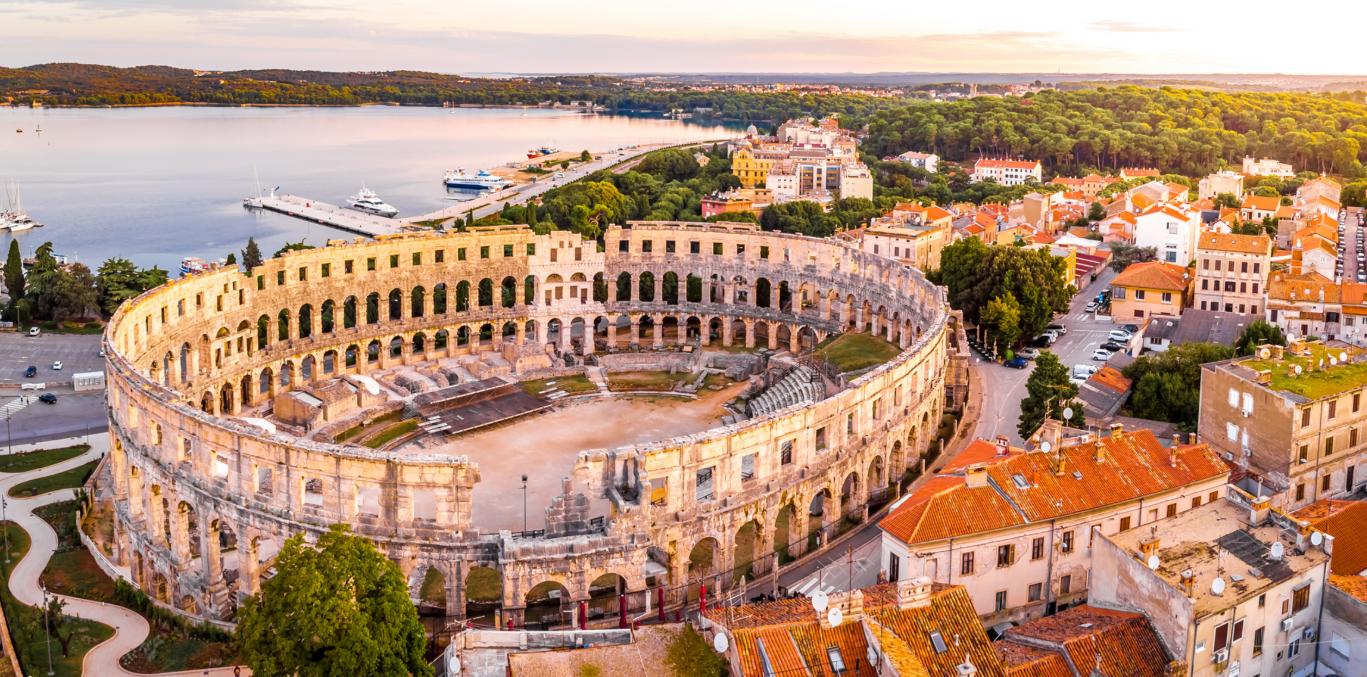
Pula is famous for its Roman Amphitheatre, one of the best-preserved arenas in the world. The city is also known for its Roman ruins, Adriatic beaches, and summer cultural festivals, especially the Pula Film Festival held inside the Arena.
Two to three days are ideal. This gives you enough time to explore Roman landmarks, relax at the beaches, and take a day trip to nearby towns like Rovinj or the Brijuni Islands.
Most beaches in Pula are rocky or pebble beaches with clear water. Some areas, like Bijeca Beach in nearby Medulin, offer sandy sections suitable for families with children.
Yes, the sea is clean and safe for swimming from late May to early October. Popular swimming areas include Verudela, Valkane, and Stoja. Water quality is regularly monitored and rated excellent.
Pula is moderately priced compared to other European coastal cities. Accommodation costs rise in summer, but dining and attractions remain reasonably priced, especially outside peak season.
Pula has its own international airport with seasonal European flights. You can also arrive by bus from Zagreb, Rijeka, or other Croatian cities. Driving from Italy or Slovenia is also convenient.
Yes, Pula is great for families. Beaches are safe, there are parks and open spaces, and boat trips to the Brijuni Islands are popular with children.
Try Istrian truffles, fuži pasta, fresh seafood, prosciutto, and local olive oil. Pair your meal with Malvasia or Teran wine, both produced in the Istrian region.
Yes, major sites like the Arena and Temple of Augustus are open year-round, with shorter hours in winter. Summer offers extended visiting hours and special evening events.
Yes, boats depart from nearby Fažana, about 15 minutes from Pula. The islands are a national park known for nature, Roman ruins, and safari park attractions. Advance booking is recommended in summer.
Die folgenden Antworten basieren auf vorherigen Antworten des Tour-Anbieters an Kunden.
Die besten Dinge, die man in Pula tun kann, sind:
Zu den besten Aktivitäten in Pula gehören:
Schauen Sie sich diese Top-Reiseideen für Pula an: