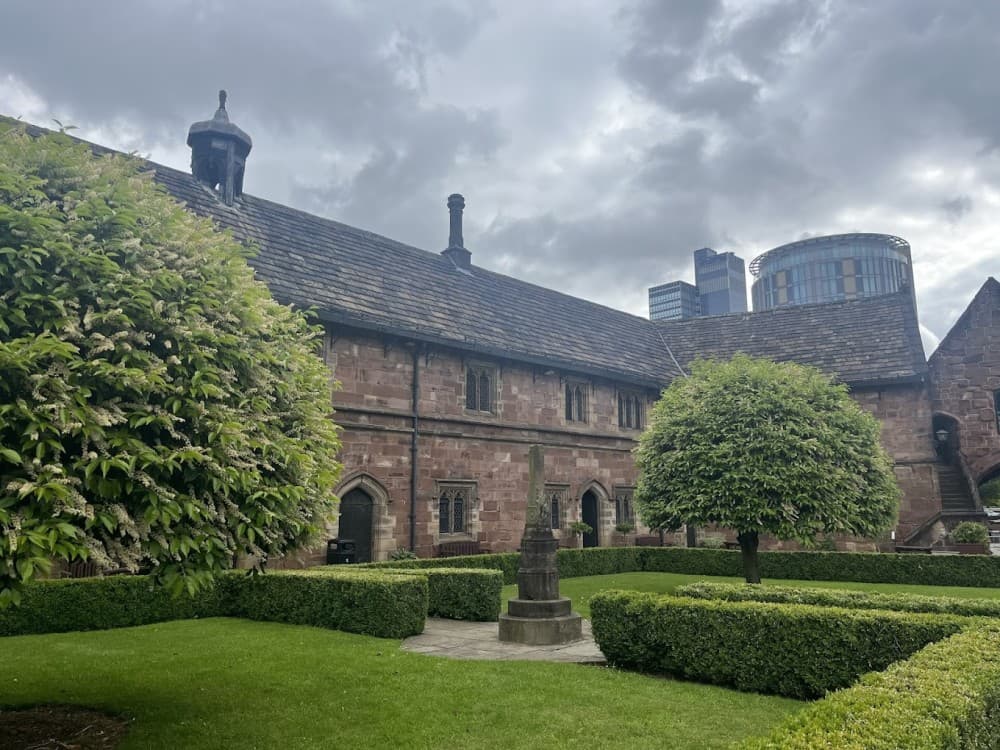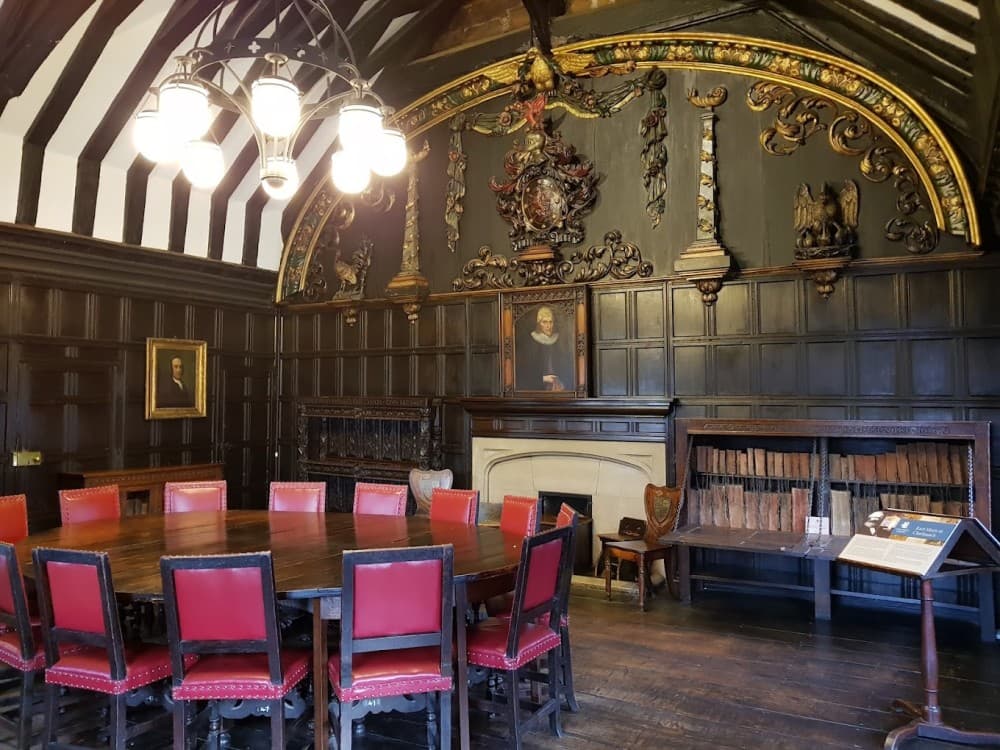
Chetham's Library is a hidden gem that feels like stepping directly into a Harry Potter film. Established in 1653, it holds the title of the oldest public library in the English-speaking world. The library is housed within a stunning sandstone building that dates back to 1421, originally built as a college for priests. Inside, you will find dark oak bookshelves, gated "Hogwarts-esque" stacks, and a tangible sense of history in every creaked floorboard. It is most famous as the meeting place of Karl Marx and Friedrich Engels; you can even sit in the exact window alcove where they began their research for The Communist Manifesto. With its ancient manuscripts, medieval architecture, and quiet cloistered courtyards, it offers a rare and magical glimpse into Manchester's pre-industrial past.
Es gibt noch keine Touren in Chetham's Library.
As of 2026, Chetham's Library is located at Long Millgate, Manchester, M3 1SB, sharing its site with the renowned Chetham's School of Music. Because it is an active school, access is strictly managed through pre-booked guided tours. These tours generally run Monday to Friday at set times, such as 11:00, 13:30, and 15:00, with occasionally expanded Saturday slots. Tickets for adults are approximately thirteen pounds and fifty pence, with concessions available for students and seniors. It is important to note that as of January 2026, children must be aged eight or older to join the guided tours. The tour lasts about sixty to seventy-five minutes and takes you through the Baronial Hall and the historic reading rooms. There is no public cafe on-site, but the library is just steps away from the city centre's many dining options.
The most important thing to know is that you cannot simply walk in; you must book your tour in advance via their website, as spaces are limited and often sell out weeks ahead. Please arrive at the Long Millgate gatehouse at least ten minutes before your tour starts, as latecomers are not admitted once the group has entered the secure school grounds. Photography is generally permitted for personal use, but you must not handle any of the ancient books on the shelves. Due to the medieval nature of the building, some areas have narrow passages and uneven stone floors, though the library has made significant efforts to be accessible with lifts and ramps where possible. As it is a working music school, you may hear talented students practicing in the background, adding a beautiful soundtrack to your historical journey.
Chetham's Library is located in the Medieval Quarter, making it one of the easiest sites to reach in the city. It sits directly opposite Manchester Victoria Station, which serves as a major hub for both local trains and the Metrolink tram network. If you are coming from Manchester Piccadilly, it is a quick ten-minute tram ride or a fifteen-minute walk. For those using the bus, many services stop at the nearby Shudehill Interchange or on Corporation Street. If you are traveling by the free city-centre bus, Route 2 will drop you very close to the entrance. For those driving, the Q-Park Deansgate North is the most convenient parking option, located just a five-minute walk away. The library’s entrance is via the security gate on Long Millgate, right across from the National Football Museum.
The best time to visit is during a weekday morning for the 11:00 tour, when the light through the leaded windows is particularly beautiful. Tours are generally available Monday through Friday year-round, except for bank holidays and the period between Christmas and New Year. In 2026, the library continues to offer occasional "After Hours" evening tours, which provide an even more atmospheric experience under low lighting; these are rare and highly sought after, so keep an eye on the seasonal calendar. If you are visiting in the summer, the cloistered courtyards are a peaceful place to wait before your tour begins. Since the site is a specialist music school, visiting during term time often allows you to catch the distant sound of rehearsals, making the experience feel even more alive and integrated with the city's modern culture.