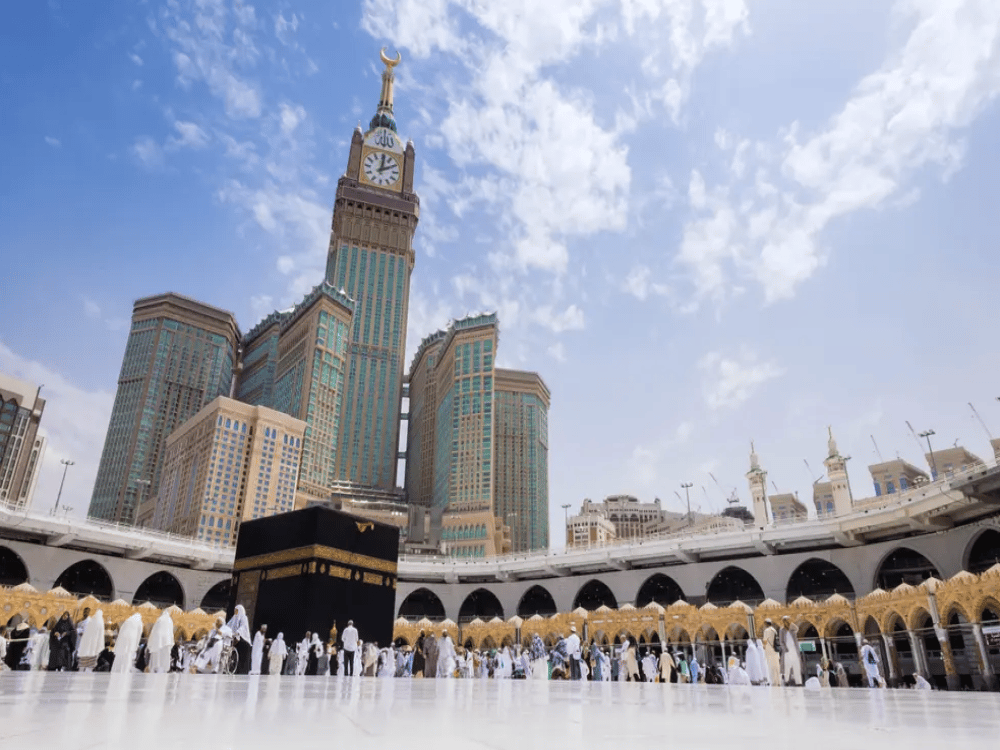
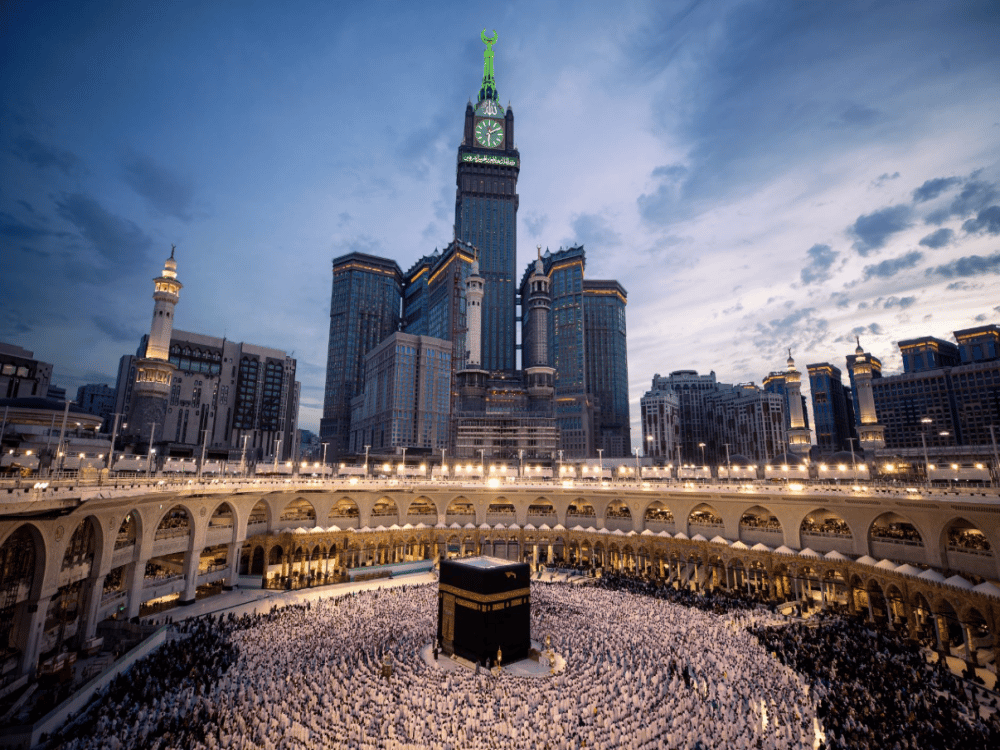
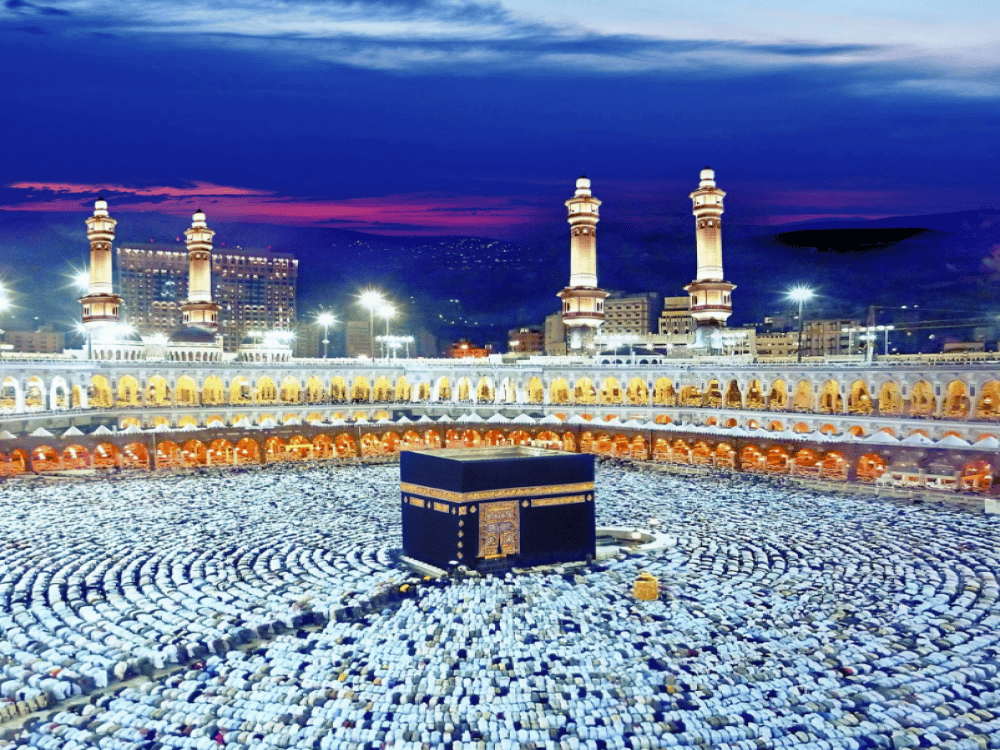
Mecca is best known as the holiest city in Islam and the spiritual heart of the Muslim world. Located in western Saudi Arabia, Mecca holds immense religious importance because it is the birthplace of the Prophet Muhammad and the site of the Kaaba. Every day, millions of Muslims around the world turn toward Mecca during their prayers, reinforcing its central role in Islamic faith and daily life. For Muslims, Mecca is not just a city but a symbol of unity, devotion, and spiritual purpose that connects believers across cultures and continents.
The Kaaba and Masjid al-Haram
At the center of Mecca’s global recognition is the Kaaba, a cube-shaped structure located inside Masjid al-Haram, the Grand Mosque. The Kaaba is considered the most sacred site in Islam. Muslims believe it was originally built by the Prophet Ibrahim (Abraham) and his son Ismail as a house of worship dedicated to one God. Pilgrims perform Tawaf, the act of walking around the Kaaba seven times, as a key ritual during both Hajj and Umrah. Masjid al-Haram itself is the largest mosque in the world and can accommodate millions of worshippers, especially during peak pilgrimage seasons.
The Hajj Pilgrimage
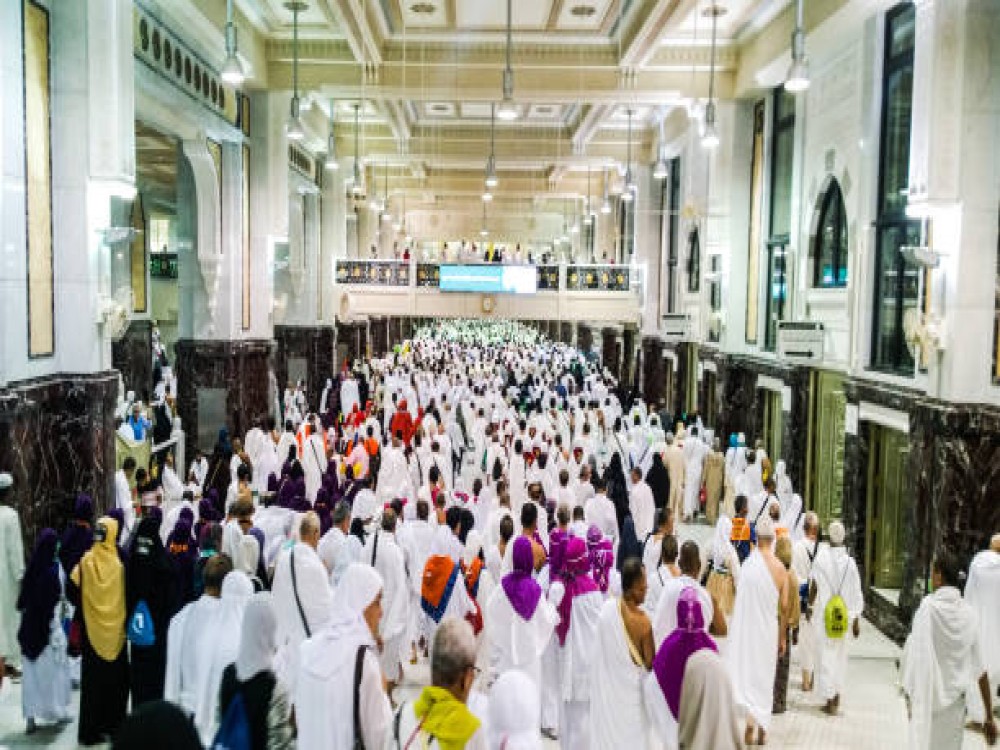
Mecca is also best known for hosting Hajj, one of the five pillars of Islam. Hajj is a mandatory religious duty for Muslims who are physically and financially able to perform it at least once in their lifetime. Each year, during the Islamic month of Dhu al-Hijjah, millions of pilgrims travel to Mecca from all over the world. The Hajj pilgrimage includes a series of deeply symbolic rituals performed in and around Mecca, such as standing at Arafat, staying in Mina, and performing Tawaf around the Kaaba. This massive annual gathering makes Mecca one of the most visited cities on Earth.
Umrah and Year-Round Pilgrimage
In addition to Hajj, Mecca is famous for Umrah, often called the lesser pilgrimage. Unlike Hajj, Umrah can be performed at any time of the year and attracts millions of visitors outside the Hajj season. Many Muslims plan their travel to Mecca specifically for Umrah due to its spiritual significance and flexibility. This constant flow of pilgrims has shaped Mecca into a city that operates around religious tourism throughout the year, with services, accommodations, and transportation designed to support worshippers.
A City Closed to Non-Muslims
Another aspect Mecca is known for is its restricted access. The city is open only to Muslims, and non-Muslims are not permitted to enter. This rule is based on Islamic tradition and Saudi regulations aimed at preserving the city’s sacred character. Road signs clearly indicate boundaries beyond which only Muslims may proceed. This exclusivity reinforces Mecca’s identity as a purely spiritual destination rather than a conventional tourist city.
Spiritual Atmosphere and Religious Education
Mecca is widely recognized for its deeply spiritual atmosphere. The city is filled with the sound of prayers, recitation of the Quran, and religious lectures. Many visitors describe a strong sense of peace and emotional connection when visiting Mecca. Religious education is also closely tied to the city, with scholars, study circles, and lectures taking place regularly within the Grand Mosque. For many Muslims, time spent in Mecca is both a spiritual retreat and an opportunity to strengthen religious knowledge.
Modern Development Around Sacred Traditions
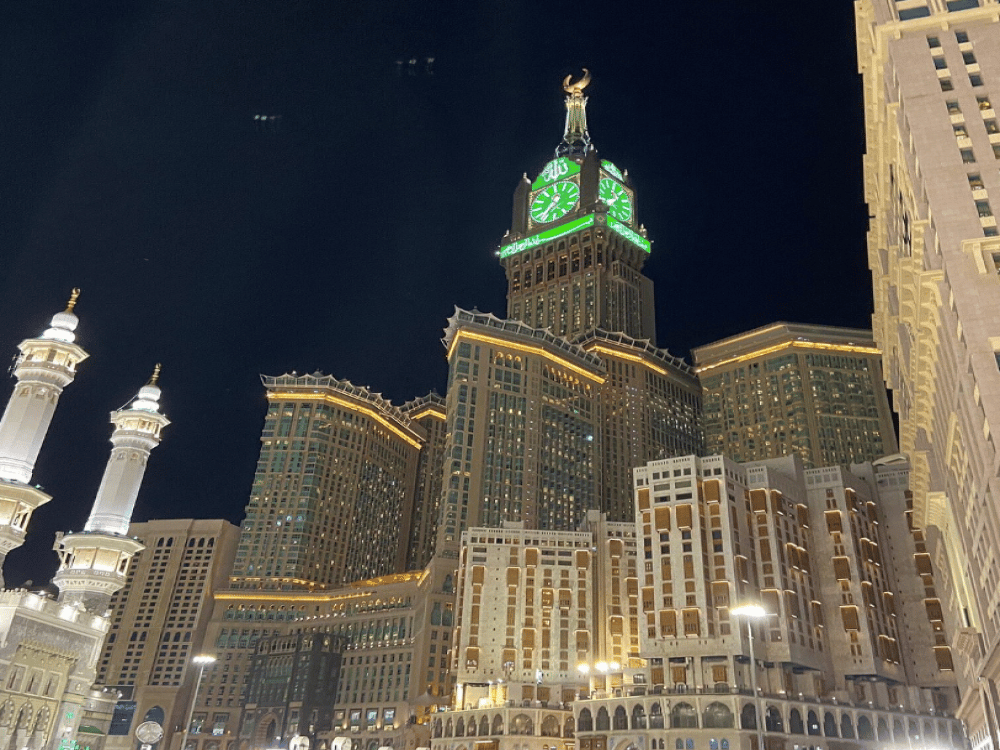
While Mecca is ancient in its religious roots, it is also known for rapid modern development. The city has undergone major infrastructure upgrades to accommodate the growing number of pilgrims. High-rise hotels, shopping complexes, and transportation systems now surround Masjid al-Haram. Projects such as the expansion of the Grand Mosque and improved crowd management systems aim to enhance safety and comfort while maintaining respect for the city’s sacred nature. This blend of tradition and modernity is a defining feature of contemporary Mecca.
Economic and Cultural Importance
Mecca is best known economically for its reliance on religious tourism. The pilgrimage industry supports hotels, transportation services, retail businesses, and employment for residents. Culturally, Mecca represents the unity of the Muslim world, as pilgrims from diverse backgrounds gather wearing simple white garments during Hajj, symbolizing equality and humility. This unique cultural experience highlights Mecca’s role as a meeting point of global Islamic identity.
A Symbol of Unity and Faith
Ultimately, Mecca is best known as a symbol of faith, unity, and devotion. It is a place where social status, nationality, and language fade in importance, replaced by shared belief and purpose. For Muslims, visiting Mecca is often one of the most meaningful experiences of their lives. Even for those who have not yet visited, Mecca holds a constant presence through daily prayers and religious consciousness.
Conclusion
Mecca is best known not for conventional tourism or historical monuments alone, but for its unmatched spiritual significance. As the holiest city in Islam, the home of the Kaaba, and the destination of Hajj and Umrah, Mecca occupies a unique place in the world. Its blend of ancient tradition, modern infrastructure, and profound religious meaning makes it unlike any other city, standing as a timeless center of worship and faith for millions of people worldwide.